Setup and loading
Attach an ankle strap to the low pulley, fasten it to one ankle and face the machine, holding it with both hands. Pick a weight that allows 12 to 15 reps per leg with a pause at the back and no back arching.
How to do the single-leg cable kickback step by step
- Clip an ankle strap to the low pulley, fasten it around one ankle and stand facing the machine about one step away.
- Hold the frame with both hands, lean your torso forward slightly and brace your abs.
- With a soft bend in your standing knee, exhale and drive the strapped leg back and slightly up.
- Extend your hip until your thigh is just behind your torso and squeeze your glute for one second.
- Inhale and return slowly, resisting the cable, until your foot is under your hip or slightly forward.
- Finish your reps on one leg, then move the strap to the other ankle and repeat.
Form cues
- Brace your abs so your back never arches
- The movement comes from your hip, not your lower back
- Pause and squeeze your glute at the back
- Return slowly while controlling the cable
Common mistakes
- Arching your back at the end: it loads your spine; stop once the hip is extended.
- Going too heavy: your body swings; reduce the weight and control every rep.
- Rotating your hip outward: it changes the muscles involved; keep your toes pointing down.
- Letting the cable yank your leg forward: you lose tension; brake the return.
How to make it easier or harder
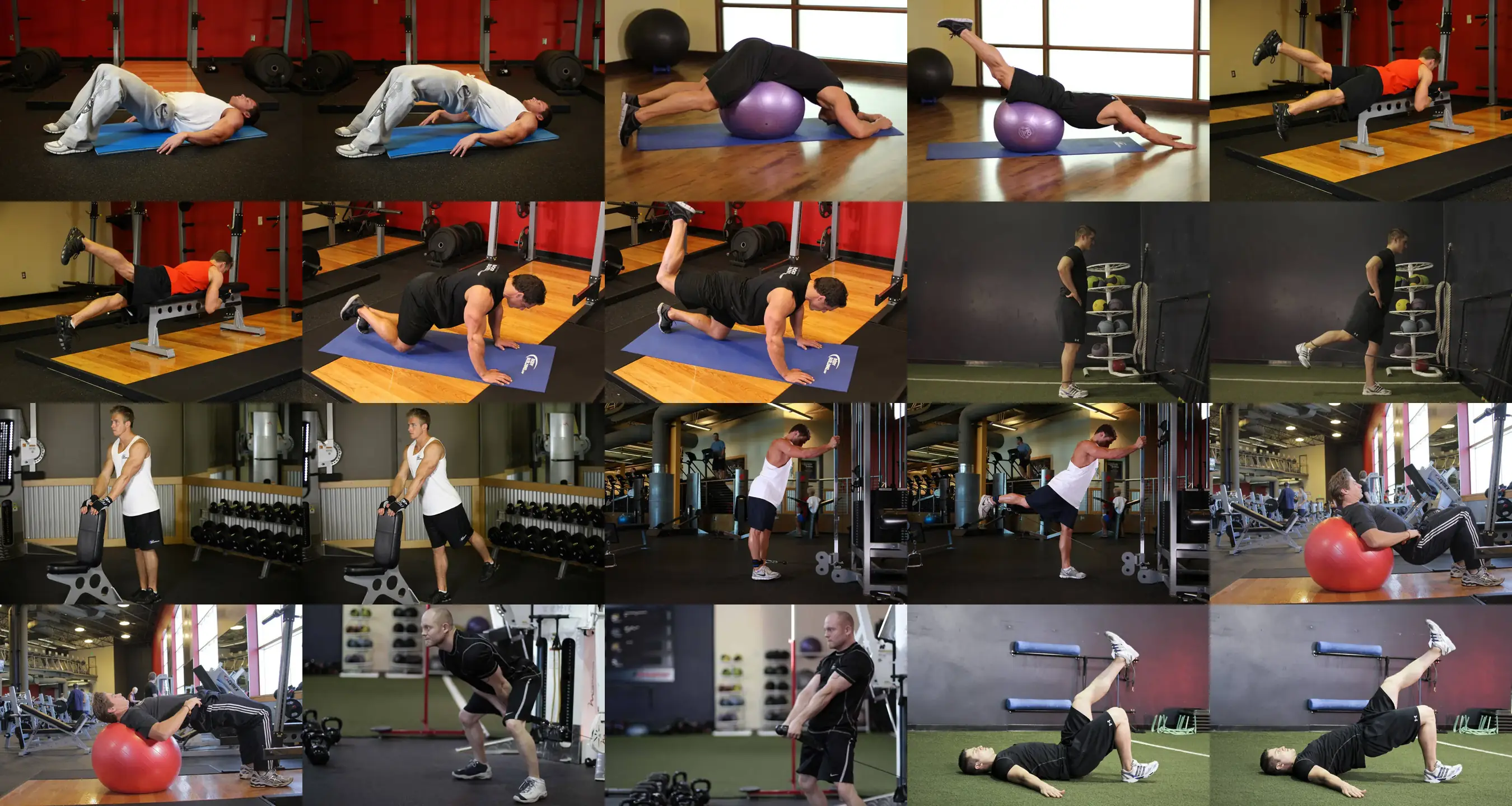
To make it easier, do the banded hip extension or the quadruped glute kickback. To progress, add weight, include three-second holds or pair it with hip thrusts for more complete glute training.
Sets and reps for your goal
Hypertrophy
3 x 10-15 · rest 60 s3-4 sets of 6-12 reps (up to 15-20 on isolation exercises) at 65-80% of your max. Rest 1 to 2 minutes.
Get close to failure (0-3 reps in reserve) and control the lowering for 2-3 seconds. Accumulate 10-20 sets per muscle per week.
A guide for healthy adults. Adjust the load to your level and see a professional if you have an injury.
Check your form
Film yourself from the side or ask someone to watch, then tick what you get right.
Frequently asked questions
Are cable kickbacks good for glutes?
Yes, they are one of the best isolation exercises for the gluteus maximus because the cable keeps tension constant and lets you progress with load. They work best alongside compound lifts like hip thrusts or squats.
Should my leg be straight or bent in cable kickbacks?
An almost straight leg brings in more hamstring; a slightly bent knee shifts more work to the glute. Both are valid; what matters is that the extension comes from your hip without arching your back.