Setup and loading
Anchor the band at ankle height, loop it around one ankle and face the anchor, stepping back until you feel tension. Pick a band that allows 12 to 20 slow reps without leaning your torso forward.
How to do the banded hip extension step by step
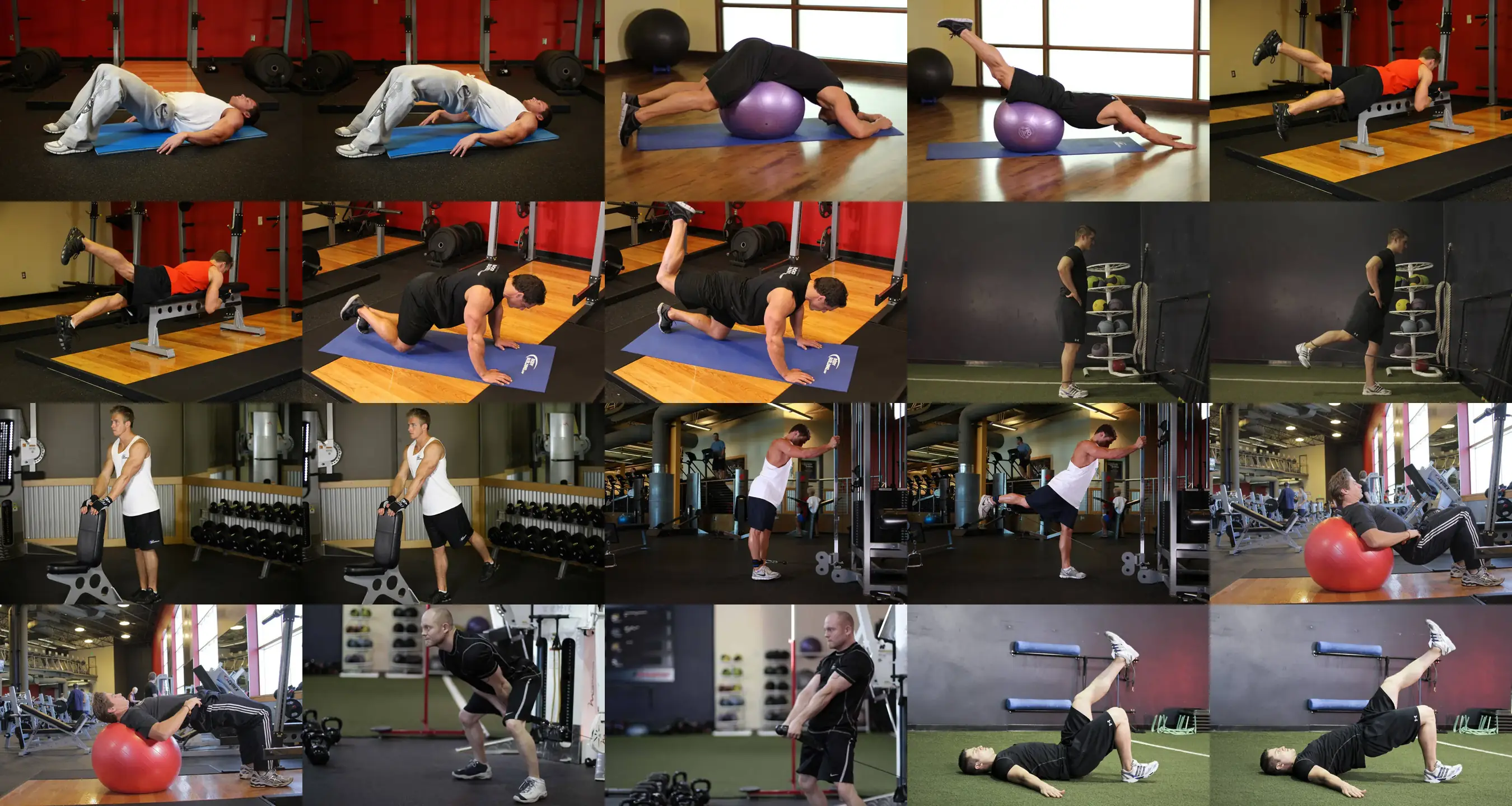
- Tie the band to a post at ankle height, loop it around one ankle and face the anchor.
- Step back until the band has light tension and hold the post or a wall if you need balance.
- Stand tall, brace your abs and shift your weight onto the standing leg with a soft knee.
- Exhale and drive the banded leg back, almost straight, squeezing your glute without arching your back.
- Stop when you feel your lower back start to arch and hold the contraction for one second.
- Inhale and return slowly to the start, resisting the band, and switch legs when you finish.
Form cues
- Stay tall and do not lean forward
- Move the leg from your hip, not your back
- Squeeze your glute at the end of the range
- Return slowly and control the band
Common mistakes
- Leaning forward: it reduces true hip extension; keep your chest tall.
- Arching your lower back to reach further: it loads your spine; shorten the range.
- Letting the band snap you back: you lose the eccentric phase; brake the return.
- Rotating the hip outward: the glute max works less; keep your toes pointing forward.
How to make it easier or harder
To make it easier, do it without a band or with a very light one. To progress, use a heavier band, add a three-second hold at the back or move on to the cable glute kickback with an ankle strap.
Sets and reps for your goal
Hypertrophy
3-4 x 8-12 · rest 60-90 s3-4 sets of 6-12 reps (up to 15-20 on isolation exercises) at 65-80% of your max. Rest 1 to 2 minutes.
Get close to failure (0-3 reps in reserve) and control the lowering for 2-3 seconds. Accumulate 10-20 sets per muscle per week.
Max Strength
4-5 x 3-6 · rest 2-3 min3-6 sets of 1-6 reps at 80-90% of your max (1RM). Rest 2 to 5 minutes.
Leave 1-3 reps in reserve. If your technique breaks down, lower the weight: strength is built with good reps.
A guide for healthy adults. Adjust the load to your level and see a professional if you have an injury.
Check your form
Film yourself from the side or ask someone to watch, then tick what you get right.
Frequently asked questions
What is the banded hip extension good for?
It strengthens your glutes and hamstrings in a standing position similar to running or brisk walking. It works well as a warm-up before leg training and as an activation drill for runners.
Why can't I move my leg very far back?
Hip extension naturally has a short range, around 10 to 20 degrees. Trying to go further usually means your lower back arches to compensate. A short movement is normal; the key is squeezing your glute.
Sports it suits
Gear for this exercise
- Resistance bandsSeveral strengths to progress and warm up before training.
As an Amazon Associate, Muscle Atlas earns from qualifying purchases.