Setup and loading
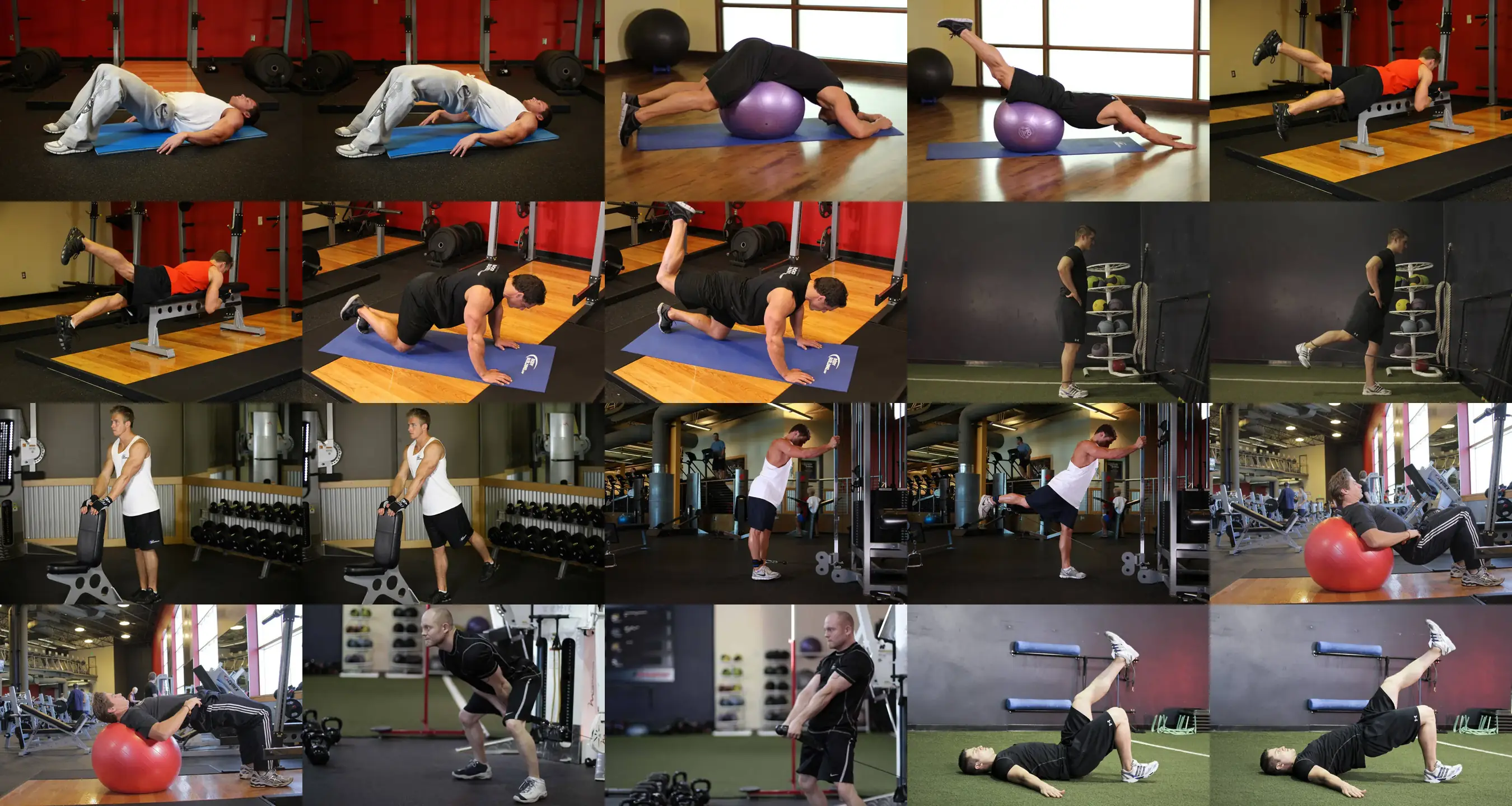
Lie on a mat with your feet flat about 12 inches from your glutes and your arms at your sides. Start with bodyweight, and once you can do 20 clean reps, add longer holds, go single-leg or loop a mini band above your knees.
How to do the glute bridge step by step
- Lie on your back with knees bent, feet hip-width apart and heels close to your glutes.
- Rest your arms straight at your sides, palms down, with your head relaxed on the floor.
- Inhale and tuck your pelvis slightly, as if pressing your lower back gently into the floor.
- Exhale and drive through your heels to lift your hips until you form a straight line from knees to shoulders.
- Squeeze your glutes hard at the top for one or two seconds without arching your back or flaring your ribs.
- Inhale and lower your hips slowly, one vertebra at a time, until they just touch the floor.
- Repeat, keeping your knees in line with your feet throughout the set.
Form cues
- Drive through your heels, not your toes
- Ribs down and pelvis tucked at the top
- Knees pointing forward, not caving in
- Squeeze your glutes at the top, not your back
Common mistakes
- Arching your lower back at the top: your back takes over; stop at a straight line and tuck.
- Feet too far from your glutes: hamstrings take over and may cramp; bring your heels closer.
- Knees caving in: you lose glute activation; press them out or use a mini band.
- Rushing up and down: you lose useful tension; pause at the top and lower over two seconds.
How to make it easier or harder
If it's hard, shorten the range or do short 10-second isometric bridge holds. To progress, move to the single-leg glute bridge, the feet-elevated bridge on a bench and, with equipment, the barbell hip thrust.
Sets and reps for your goal
Hypertrophy
3 x 10-15 · rest 60 s3-4 sets of 6-12 reps (up to 15-20 on isolation exercises) at 65-80% of your max. Rest 1 to 2 minutes.
Get close to failure (0-3 reps in reserve) and control the lowering for 2-3 seconds. Accumulate 10-20 sets per muscle per week.
Speed
4-6 x 10-30 m or 5-10 s · full rest4-8 reps of 10-40 meters (or 3-6 seconds). Full rest: 1 minute for every 10 meters.
Always at 95-100%. If your time gets more than 3-5% slower or your technique falls apart, stop: running tired trains endurance, not speed.
A guide for healthy adults. Adjust the load to your level and see a professional if you have an injury.
Check your form
Film yourself from the side or ask someone to watch, then tick what you get right.
Frequently asked questions
Do glute bridges make your butt bigger?
They're a solid starting point for activating and strengthening your glutes. To build size you'll need to progress to harder loads, like single-leg bridges or barbell hip thrusts, and eat enough protein and calories.
Why do I feel glute bridges in my hamstrings or lower back?
If you feel your hamstrings, bring your heels closer to your glutes. If you feel your lower back, you're arching at the top: tuck your pelvis, pull your ribs down and stop when knees, hips and shoulders line up.
Sports it suits
Gear for this exercise
- Exercise matThick (8-10 mm) for floor work.
As an Amazon Associate, Muscle Atlas earns from qualifying purchases.