Setup and loading
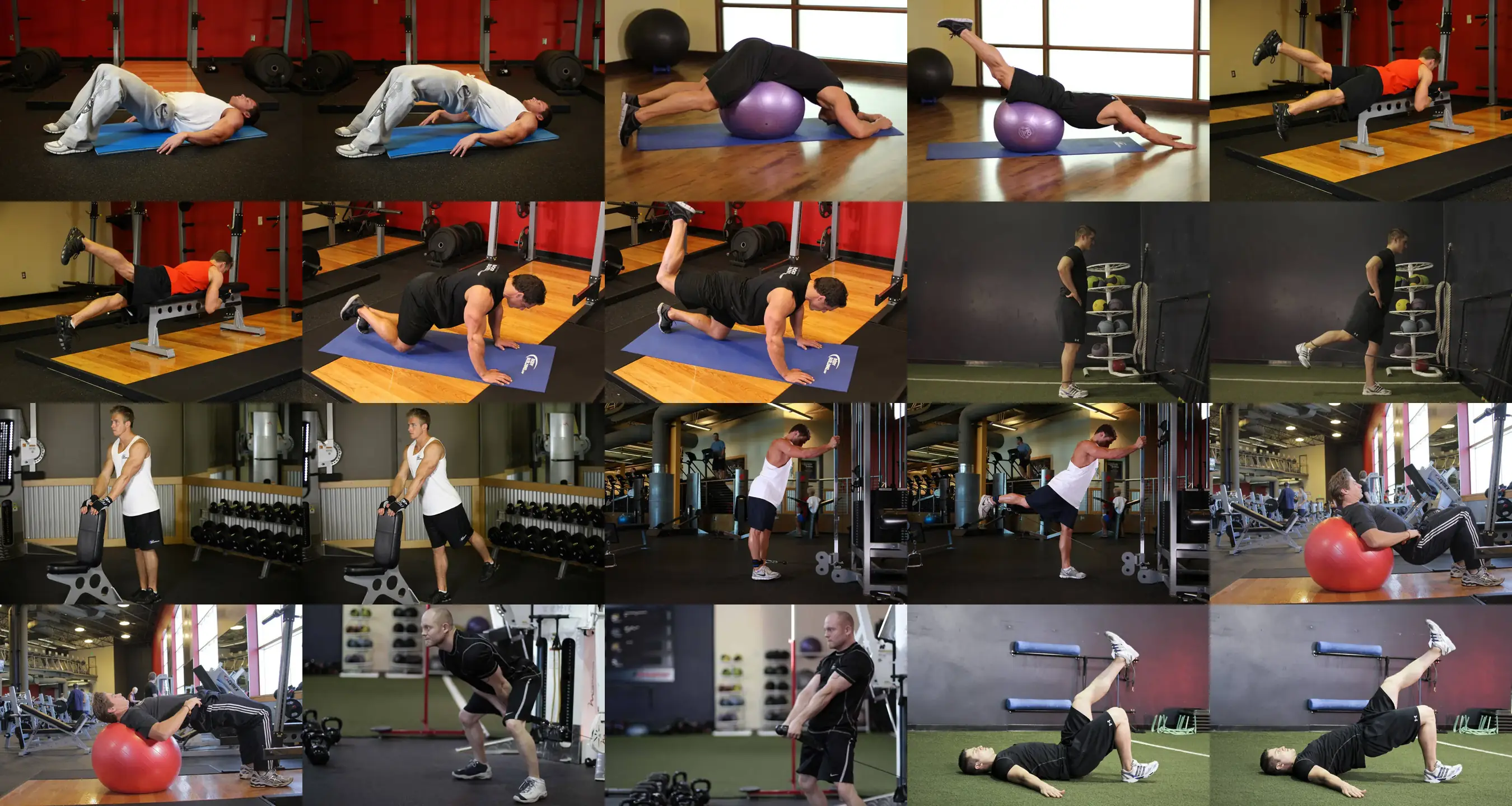
Lie face down on a flat bench with your hips right at the edge and grip the sides or legs of the bench. Adjust difficulty with set length, starting with 20 to 30 seconds.
How to do the flutter kicks step by step
- Lie face down on a flat bench with your hips at the edge and your legs hanging toward the floor.
- Grip the sides of the bench firmly with both hands to lock your torso in place.
- Squeeze your glutes and lift your straight legs together until they are level with the bench.
- Alternate lifting one leg and lowering the other about 6 to 8 inches in short, quick movements.
- Keep the rhythm while breathing continuously, without letting your legs drop below horizontal.
- When the set ends, lower both legs slowly to the floor and rest before repeating.
Form cues
- Straight legs, the movement starts at your hips
- Glutes squeezed for the entire set
- Short kicks that never rise above the bench
- Hips anchored at the edge of the bench
Common mistakes
- Arching your lower back to lift higher: it loads your spine; stop at horizontal.
- Bending your knees: hamstrings take over from glutes; keep your legs straight.
- Kicking too wide: you lose control; keep the movements short and quick.
- Holding your breath: you tire faster; breathe in a steady rhythm.
How to make it easier or harder
To make it easier, lie face down on the floor lifting alternate legs, or simply hold both legs up without kicking. To progress, lengthen the set, add ankle weights or move on to the reverse hyperextension.
Sets and reps for your goal
Hypertrophy
3-4 x 8-12 · rest 60-90 s3-4 sets of 6-12 reps (up to 15-20 on isolation exercises) at 65-80% of your max. Rest 1 to 2 minutes.
Get close to failure (0-3 reps in reserve) and control the lowering for 2-3 seconds. Accumulate 10-20 sets per muscle per week.
Max Strength
4-5 x 3-6 · rest 2-3 min3-6 sets of 1-6 reps at 80-90% of your max (1RM). Rest 2 to 5 minutes.
Leave 1-3 reps in reserve. If your technique breaks down, lower the weight: strength is built with good reps.
A guide for healthy adults. Adjust the load to your level and see a professional if you have an injury.
Check your form
Film yourself from the side or ask someone to watch, then tick what you get right.
Frequently asked questions
Do prone flutter kicks work glutes or abs?
This face-down version mainly works your glutes and hamstrings, since they extend your hips to hold your legs up. Face-up flutter kicks, by contrast, focus on your hip flexors and abs.
How long should I do flutter kicks?
Start with 3 sets of 20 to 30 seconds and build gradually to 45 or 60 seconds. Stop the set if your lower back arches or your legs drop below horizontal.
Sports it suits
Gear for this exercise
- Exercise matThick (8-10 mm) for floor work.
As an Amazon Associate, Muscle Atlas earns from qualifying purchases.