Setup and loading
Set cones or a low hurdle as distance markers on a firm, non-slip surface. Start with short hops and hold each landing for two to three seconds; add distance only when every landing is quiet and controlled.
How to do the single-leg forward hop step by step
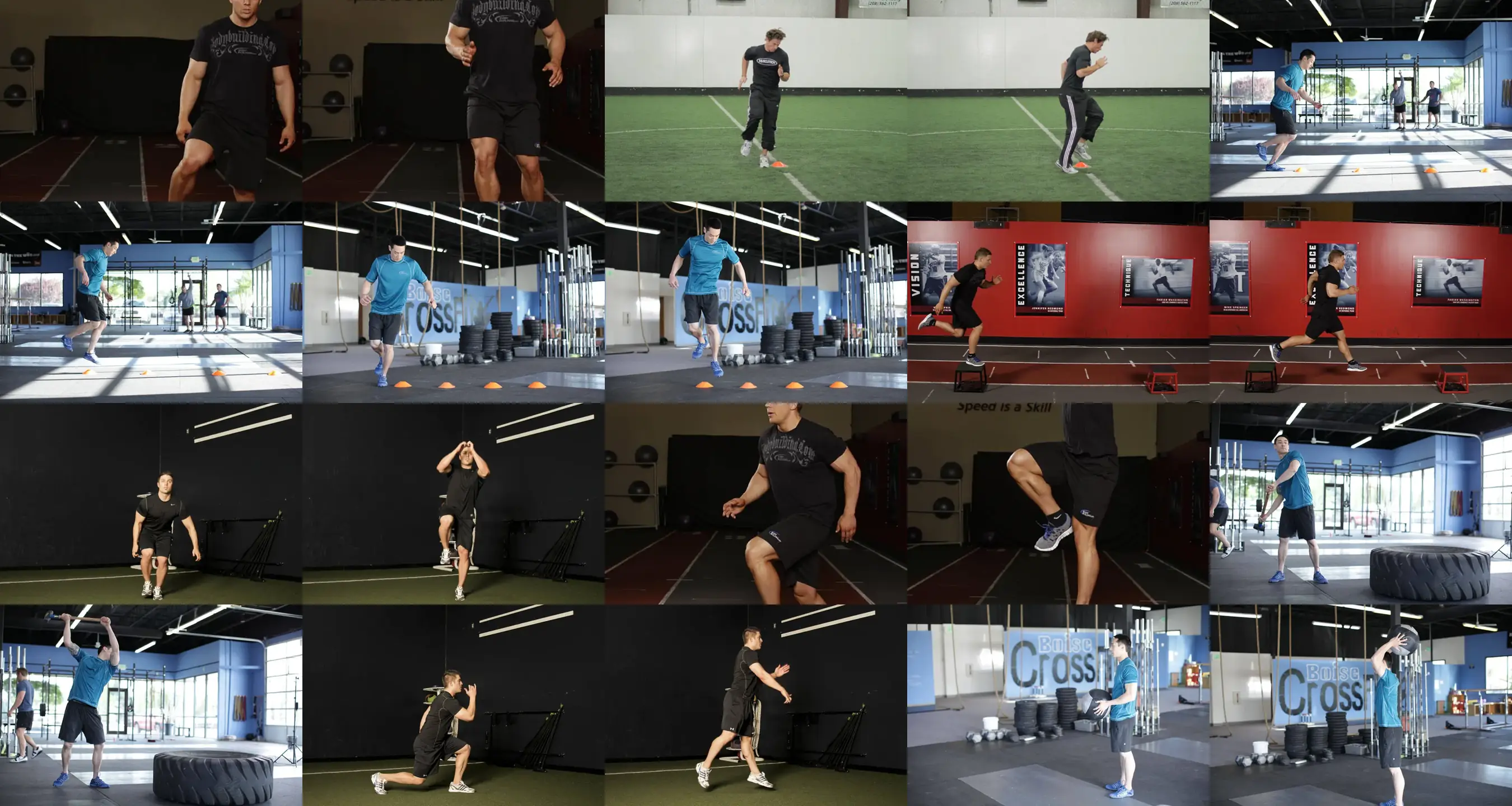
- Stand on one leg with a slight knee bend, foot pointing forward, and arms ready to swing.
- Sink into a quarter squat by bending your hip and knee, swinging your arms back as you breathe in.
- Hop forward by extending your hip, knee, and ankle together while driving your arms forward.
- Land on the same leg through the midfoot, bending your knee to absorb the impact quietly.
- Keep your knee in line with your toes and your hips level, then hold the landing for two to three seconds.
- Exhale, reset your posture, and repeat; finish the set before switching legs.
Form cues
- Knee tracks over your second toe
- Soft, quiet landing like a spring
- Hips back on landing, chest forward
- Freeze the landing before the next hop
Common mistakes
- Knee caving in on landing: it loads the ligaments; push the knee out and shorten the hop.
- Landing stiff-legged: impact travels into the knee; bend hip and knee as you land.
- Hopping too far too soon: control breaks down; prioritize stable landings over distance.
- Chaining hops without sticking them: you rehearse the error; pause on every landing first.
How to make it easier or harder
To make it easier, start with two-foot jumps landing on one leg, or small single-leg hops in place. To progress, increase distance, link continuous hops, add lateral or diagonal hops, and then hop over a low hurdle.
Sets and reps for your goal
Plyometrics
3-5 x 3-6 jumps · rest 1-2 min3-6 sets of 3-8 jumps. In total, 60-100 contacts per session (40-60 if you're a beginner). Rest 1 to 2 minutes between sets.
Short, quiet ground contact. If the jump loses height or your foot sticks to the ground, stop: the set is no longer training reactivity. Two sessions per week, 48 h apart.
A guide for healthy adults. Adjust the load to your level and see a professional if you have an injury.
Check your form
Film yourself from the side or ask someone to watch, then tick what you get right.
Frequently asked questions
What are single-leg hops good for?
They build single-leg power and the ability to land under control, which matters in sports with cutting and changes of direction. Coaches also use them to compare legs and spot strength imbalances worth addressing.
How many single-leg hops should I do?
When starting out, 3 sets of 4 to 6 hops per leg with full rest is enough. Quality beats volume, so end the set as soon as your landings stop being stable and quiet.
Sports it suits
Gear for this exercise
- Plyo boxFoam boxes forgive missed jumps.
As an Amazon Associate, Muscle Atlas earns from qualifying purchases.