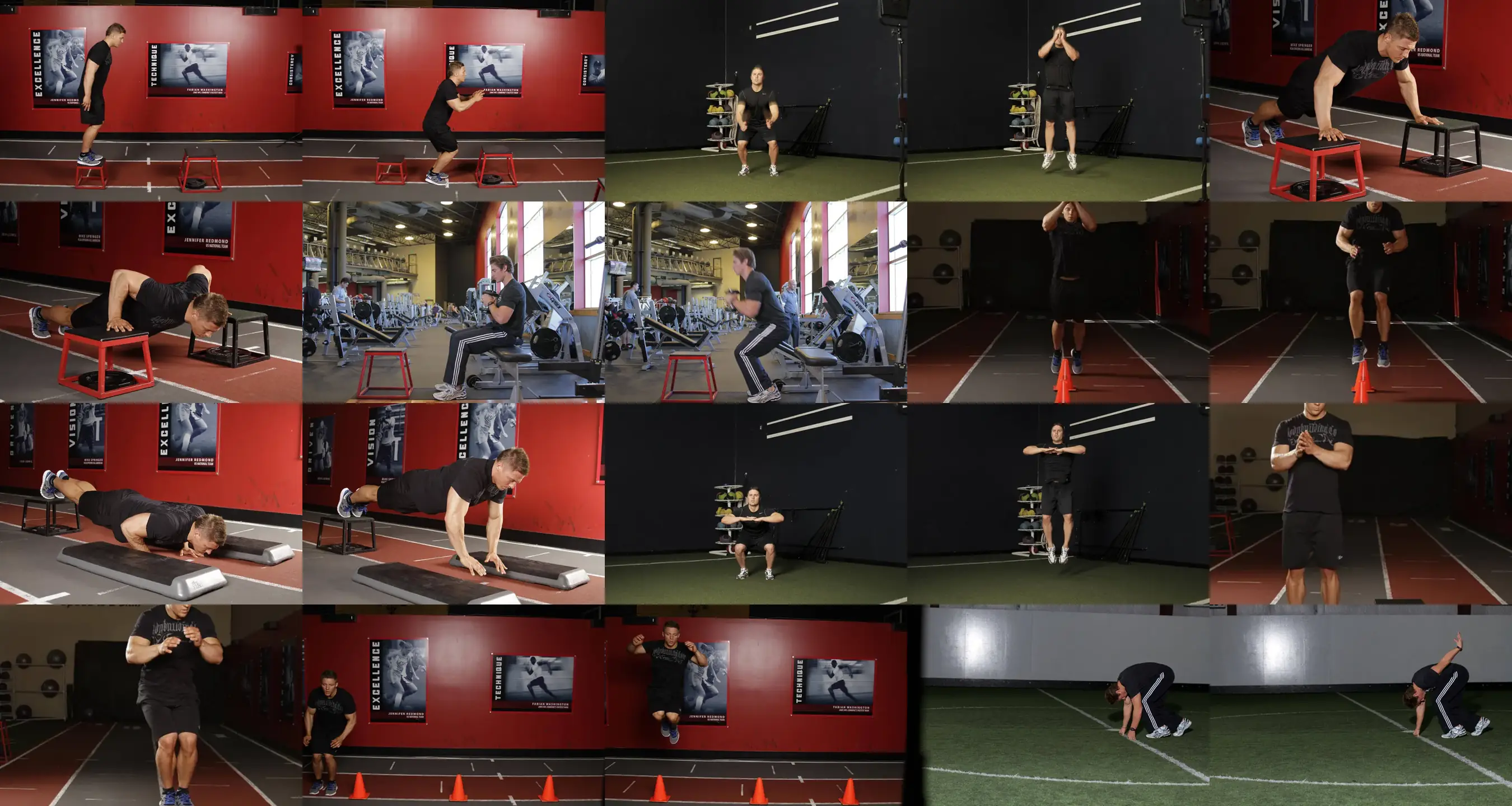
Setup and loading
Start with a drop box of 8 to 12 inches and a moderate second box 2 to 3 feet in front. The drop height is right if you can rebound without your heels sinking; if contact gets long, lower the first box.
How to do the depth jump to box step by step
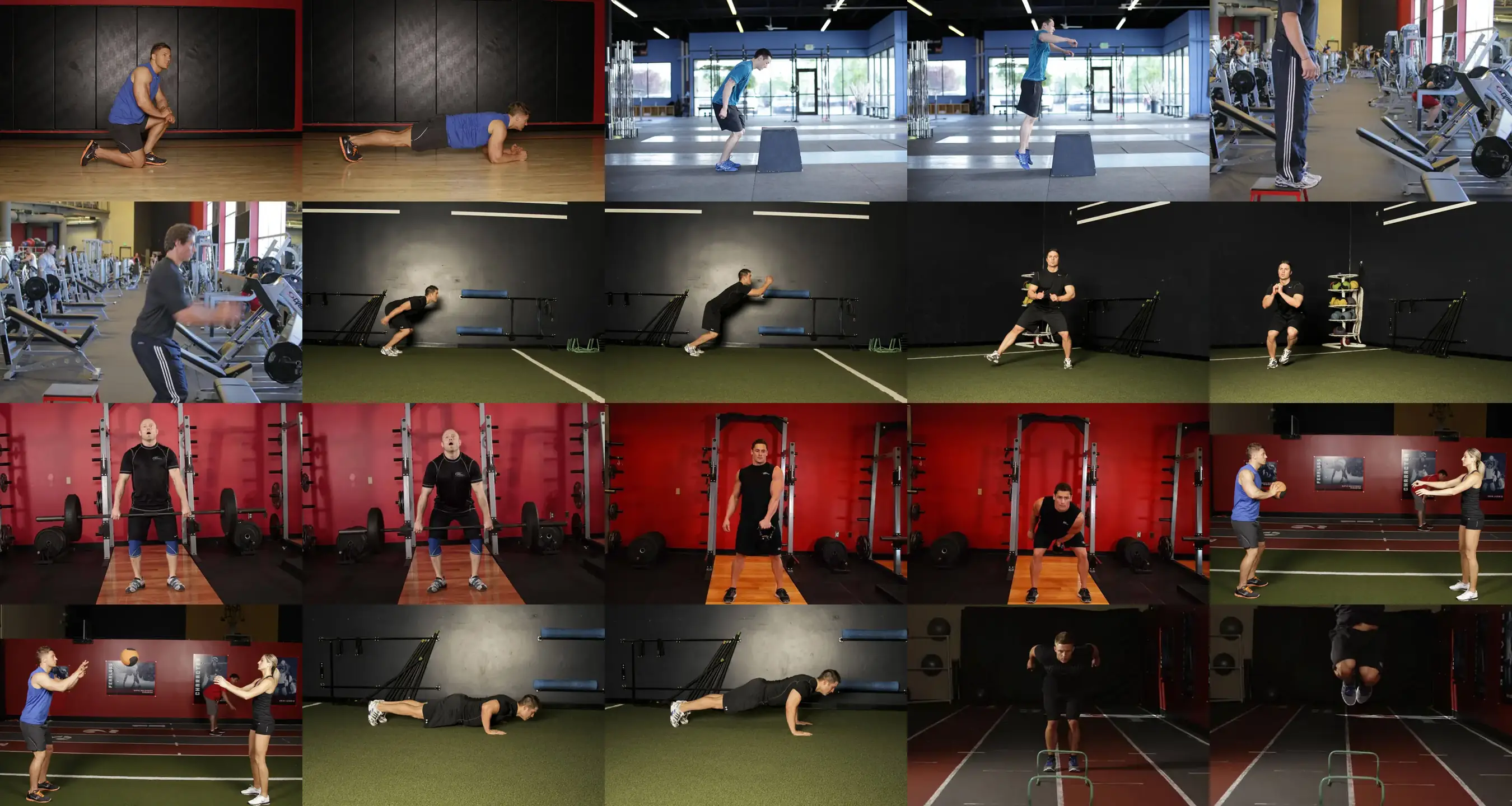
- Stand on the edge of the low box with the tall box in front at a distance you can reach in one jump.
- Step off with one foot, without jumping up, and let your body drop straight down.
- Land on both feet at once on the balls of your feet, with knees and hips slightly bent.
- Rebound instantly with the shortest possible ground contact, throwing your arms up and exhaling.
- Jump onto the tall box and land in the center with your whole foot, hips higher than knees.
- Step down, walk back to the start and rest fully between reps.
Form cues
- Step off, do not jump off
- Hot floor, touch and go
- Heels stay off the ground on contact
- Arms up on the rebound
Common mistakes
- Jumping up off the first box: it increases the real drop; just step off and fall.
- Long ground contact: you lose the reactive effect; lower the drop height.
- Knees caving on landing: it stresses ligaments; push your knees out.
- Doing too many reps: it is very taxing on tendons; stick to 3 sets of 3 to 5.
How to make it easier or harder
As a regression, step off a low box and stick the landing without jumping, or do single box jumps. To progress, gradually raise the drop or target box height, or rebound into a broad jump instead of a box.
Sets and reps for your goal
Plyometrics
3-5 x 3-6 jumps · rest 1-2 min3-6 sets of 3-8 jumps. In total, 60-100 contacts per session (40-60 if you're a beginner). Rest 1 to 2 minutes between sets.
Short, quiet ground contact. If the jump loses height or your foot sticks to the ground, stop: the set is no longer training reactivity. Two sessions per week, 48 h apart.
A guide for healthy adults. Adjust the load to your level and see a professional if you have an injury.
Check your form
Film yourself from the side or ask someone to watch, then tick what you get right.
Frequently asked questions
What height should you use for depth jumps?
For most people 8 to 16 inches is plenty. The ideal height is the one that lets you rebound quickly without your heels slamming down; more height does not always mean more benefit.
Are depth jumps safe for beginners?
They are an intense plyometric, so you should first master landings and box jumps. With low volume, low boxes and good technique, a beginner with a strength base can practice them safely.
Sports it suits
Gear for this exercise
- Plyo boxFoam boxes forgive missed jumps.
As an Amazon Associate, Muscle Atlas earns from qualifying purchases.