Setup and loading
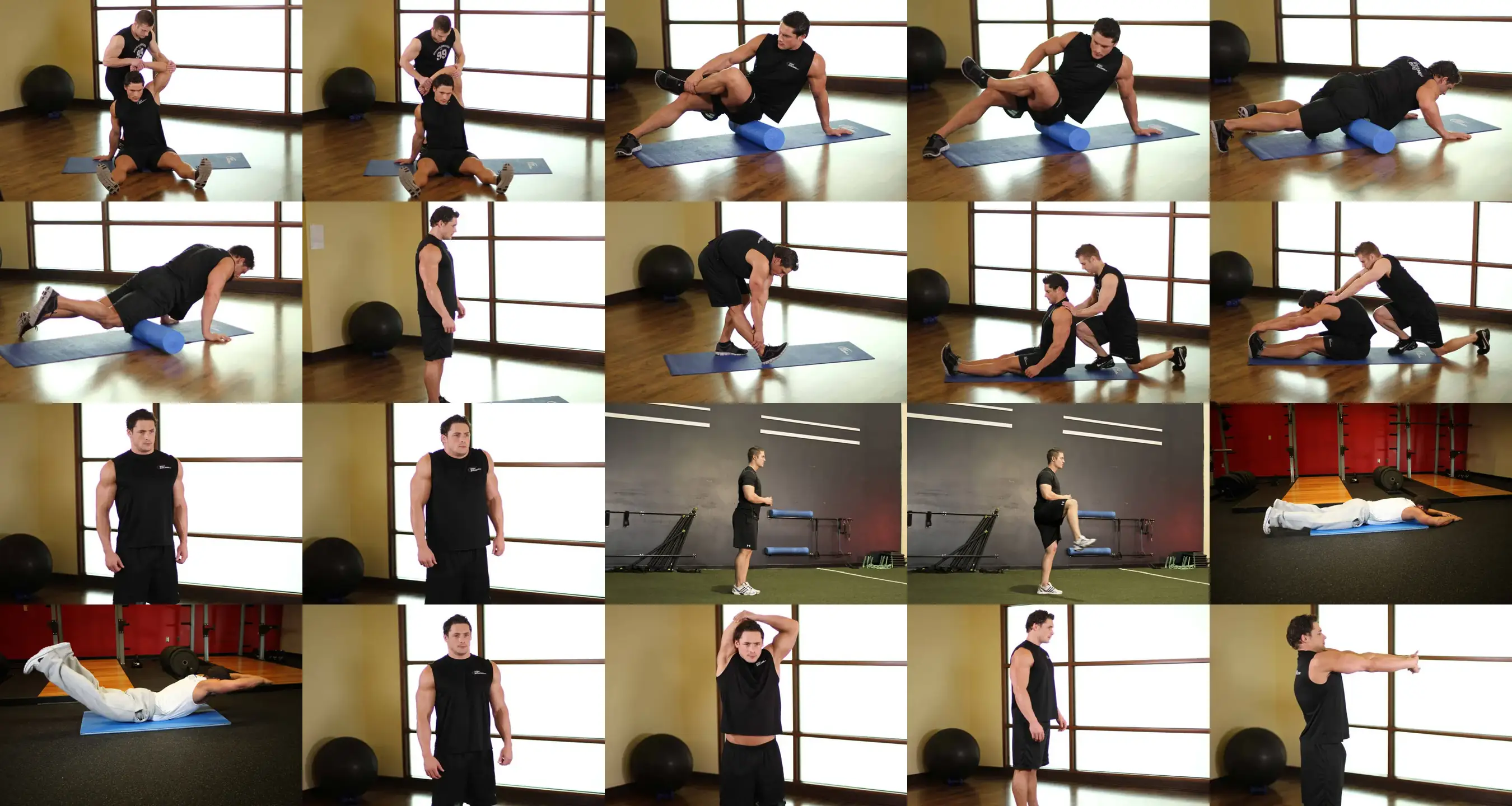
Lie on your side propped on your forearm, with the top leg crossed in front and its foot on the floor to offload weight. The less you lean on that top foot, the more pressure; if it hurts a lot, tilt slightly forward onto the quad.
How to do the it band foam roll step by step
- Lie on your side with the roller under your outer thigh just below the hip, propped on your forearm.
- Cross your top leg in front and plant that foot on the floor to control how much weight you load.
- Roll slowly toward the knee, stopping a couple of inches before the joint, then roll back toward the hip.
- On the tightest spots, pause 15 to 30 seconds and exhale slowly to let the thigh relax.
- Tilt slightly forward and back to work the edge of the quad and the back of the outer thigh.
- Spend 60 to 90 seconds per leg, then switch sides.
Form cues
- Top leg controls the pressure
- Stop before the knee
- Exhale on tight spots
- Tilt to find the muscle
Common mistakes
- Loading full weight on day one: usually very painful; start with the top foot planted firmly.
- Rolling over the knee or hip bone: presses on bone; stay on the thigh.
- Rolling fast through gritted teeth: raises tension; slow down and breathe.
- Treating it as the only fix: outer leg tightness often needs glute strength; add hip work.
How to make it easier or harder
For a gentler version, lean more on your top foot or roll standing against a wall with a large ball. For more intensity, stack your legs without the support foot or use a firmer roller, as long as the discomfort stays tolerable.
Sets and reps for your goal
Mobility
30-60 s per area2-3 sets of 30-60 seconds or 8-10 slow reps. Daily or before training.
Work in a pain-free range with slow breathing. A little often is better than a lot once in a while.
A guide for healthy adults. Adjust the load to your level and see a professional if you have an injury.
Check your form
Film yourself from the side or ask someone to watch, then tick what you get right.
Frequently asked questions
Why does foam rolling the IT band hurt so much?
The outer thigh has dense tissue and plenty of nerve endings, and it is often overworked in runners and cyclists. Lower the pressure with your top foot and focus on the vastus lateralis and tensor fasciae latae.
Should you foam roll your IT band at all?
It is not mandatory. Many experts suggest focusing on the glutes and tensor fasciae latae, which relax more easily. If it feels good and the discomfort is tolerable, it may reduce tightness, but it does not replace strengthening.
Sports it suits
Gear for this exercise
- Foam rollerMedium density to start.
As an Amazon Associate, Muscle Atlas earns from qualifying purchases.