Setup and loading
It is done with bodyweight only, in athletic shoes on a non-slip surface. Start with short bounds and two-second pauses on each landing; increase distance or go continuous only once every landing is stable, using 3 to 4 sets of 5 to 8 bounds per side.
How to do the lateral bound step by step
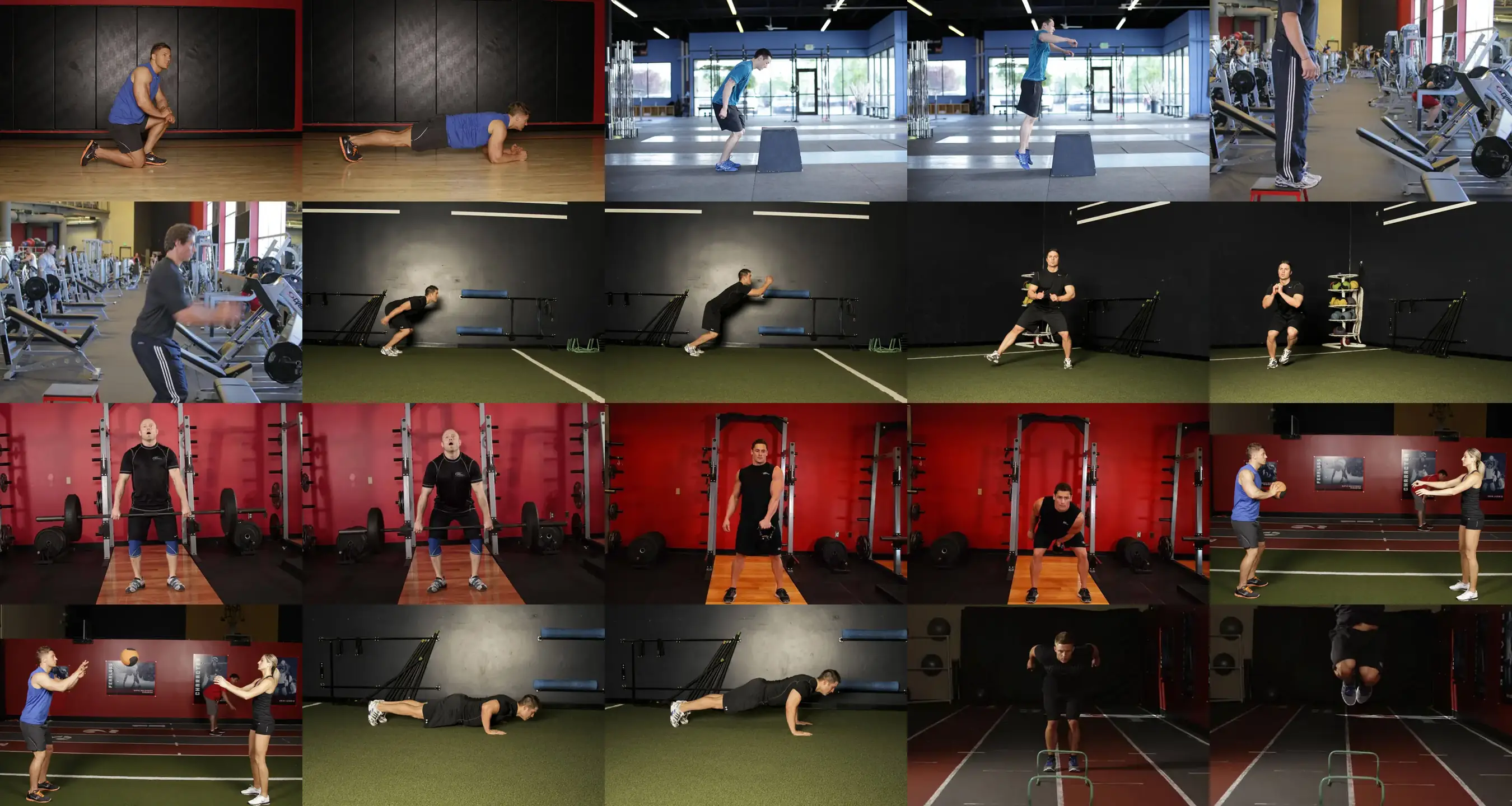
- Stand on your right leg with a slight knee bend, torso leaning forward a little and arms ready.
- Sink your hips slightly to load the glute of your standing leg, like a quarter single-leg squat.
- Push the ground away hard and bound sideways to the left, swinging your arms in the same direction.
- Land on your left leg with your whole foot, knee bent and stacked over your foot without caving in.
- Stick the landing for two seconds with your hips back before bounding back to the right.
- Breathe between bounds and end the set as soon as you lose control on a landing.
Form cues
- Push the ground out, not just up
- Knee lined up with your foot on landing
- Land soft and quiet
- Freeze the landing before the next bound
Common mistakes
- Knee caving in on landing: it raises joint stress; shorten the bound and push your knee out.
- Landing stiff-legged: the impact isn't absorbed; bend your hips and knees as you touch down.
- Bounding too far too soon: you lose stability; prioritize controlled landings over distance.
- Doing them while fatigued: technique breaks down; use short sets with full rest between them.
How to make it easier or harder
To start, do lateral step-and-holds or short lateral hops landing on both feet. To progress, increase the distance, link continuous bounds without pausing, or bound over a mini hurdle or onto a marked target to train precision and speed.
Sets and reps for your goal
Plyometrics
3 x 6 per side3-6 sets of 3-8 jumps. In total, 60-100 contacts per session (40-60 if you're a beginner). Rest 1 to 2 minutes between sets.
Short, quiet ground contact. If the jump loses height or your foot sticks to the ground, stop: the set is no longer training reactivity. Two sessions per week, 48 h apart.
Speed
3 x 4 per side, maximum distance4-8 reps of 10-40 meters (or 3-6 seconds). Full rest: 1 minute for every 10 meters.
Always at 95-100%. If your time gets more than 3-5% slower or your technique falls apart, stop: running tired trains endurance, not speed.
A guide for healthy adults. Adjust the load to your level and see a professional if you have an injury.
Check your form
Film yourself from the side or ask someone to watch, then tick what you get right.
Frequently asked questions
What are lateral bounds good for?
They improve sideways power and your ability to brake and stabilize your knee on one leg. They are very useful for sports with changes of direction and help prepare your body for safer landings and cuts.
How many lateral bounds should I do?
As a power exercise, quality matters more than quantity. Three to four sets of 5 to 8 bounds per side with one to two minutes of rest work well, placed early in your session when you are fresh.
Sports it suits
Gear for this exercise
- Exercise matThick (8-10 mm) for floor work.
As an Amazon Associate, Muscle Atlas earns from qualifying purchases.