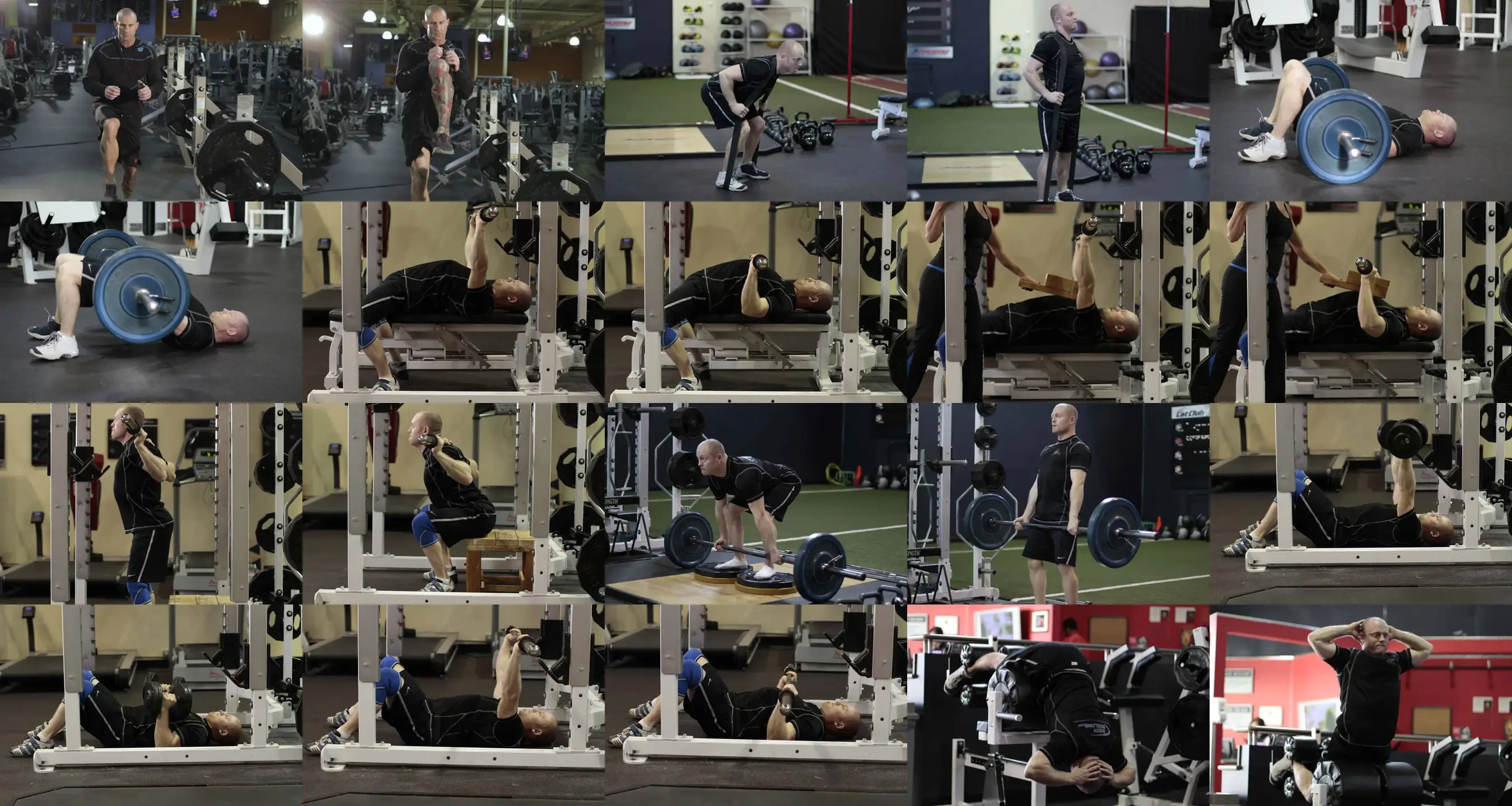
Setup and loading
Use a sturdy box set so your knee sits at about 90 degrees or a little less with your foot on top. Start with bodyweight and, once your balance is solid, hold dumbbells at your sides.
How to do the step-up with knee drive step by step
- Stand facing the box and place your whole right foot on top, with your knee lined up over your toes.
- Lean your torso slightly forward, shift your weight onto the top foot, and brace your abs.
- Exhale and drive through your right heel to straighten the leg and stand up, without pushing off the bottom foot.
- At the top, drive your left knee up to hip height and hold your balance on one leg for one second.
- Inhale and lower your left foot to the floor under control, then the right, or keep the right foot up for the next rep.
- Finish all reps on one side before switching legs, or alternate every rep for a more dynamic pace.
Form cues
- Drive through the heel of the top leg
- Stay tall with a slight forward lean
- Bring the free knee to hip height
- Lower slowly instead of dropping down
Common mistakes
- Pushing off the bottom leg: it steals work from the top leg; keep only your bottom toes down.
- Box too high: it forces your back to round; pick a height that keeps your knee near 90 degrees.
- Knee caving in as you rise: it stresses the joint; track it over your second toe.
- Dropping on the way down: you skip the eccentric; control the descent over two seconds.
How to make it easier or harder
To regress, use a lower step or skip the knee drive while touching a wall for balance. To progress, hold dumbbells, raise the box, or make the knee drive explosive.
Sets and reps for your goal
Hypertrophy
3-4 x 8-12 · rest 60-90 s3-4 sets of 6-12 reps (up to 15-20 on isolation exercises) at 65-80% of your max. Rest 1 to 2 minutes.
Get close to failure (0-3 reps in reserve) and control the lowering for 2-3 seconds. Accumulate 10-20 sets per muscle per week.
Max Strength
4-5 x 3-6 · rest 2-3 min3-6 sets of 1-6 reps at 80-90% of your max (1RM). Rest 2 to 5 minutes.
Leave 1-3 reps in reserve. If your technique breaks down, lower the weight: strength is built with good reps.
A guide for healthy adults. Adjust the load to your level and see a professional if you have an injury.
Check your form
Film yourself from the side or ask someone to watch, then tick what you get right.
Frequently asked questions
What box height should I use?
For most people, a box between 12 and 20 inches works well. The benchmark is that your knee sits at about 90 degrees or less with your foot on top and you can step up without rounding your back.
Are step-ups with knee drive good for runners?
Yes, they train single-leg strength, balance, and the knee lift that mirrors your running stride. Doing them twice a week makes a solid complement to your running program.
Sports it suits
Gear for this exercise
- Exercise matThick (8-10 mm) for floor work.
- Plyo boxFoam boxes forgive missed jumps.
As an Amazon Associate, Muscle Atlas earns from qualifying purchases.