Setup and loading
Place the bar on your upper back as in a back squat, using your wide snatch grip. Start with an empty bar and add weight only when you land stable; with practice many lifters work near their snatch.
How to do the snatch balance step by step
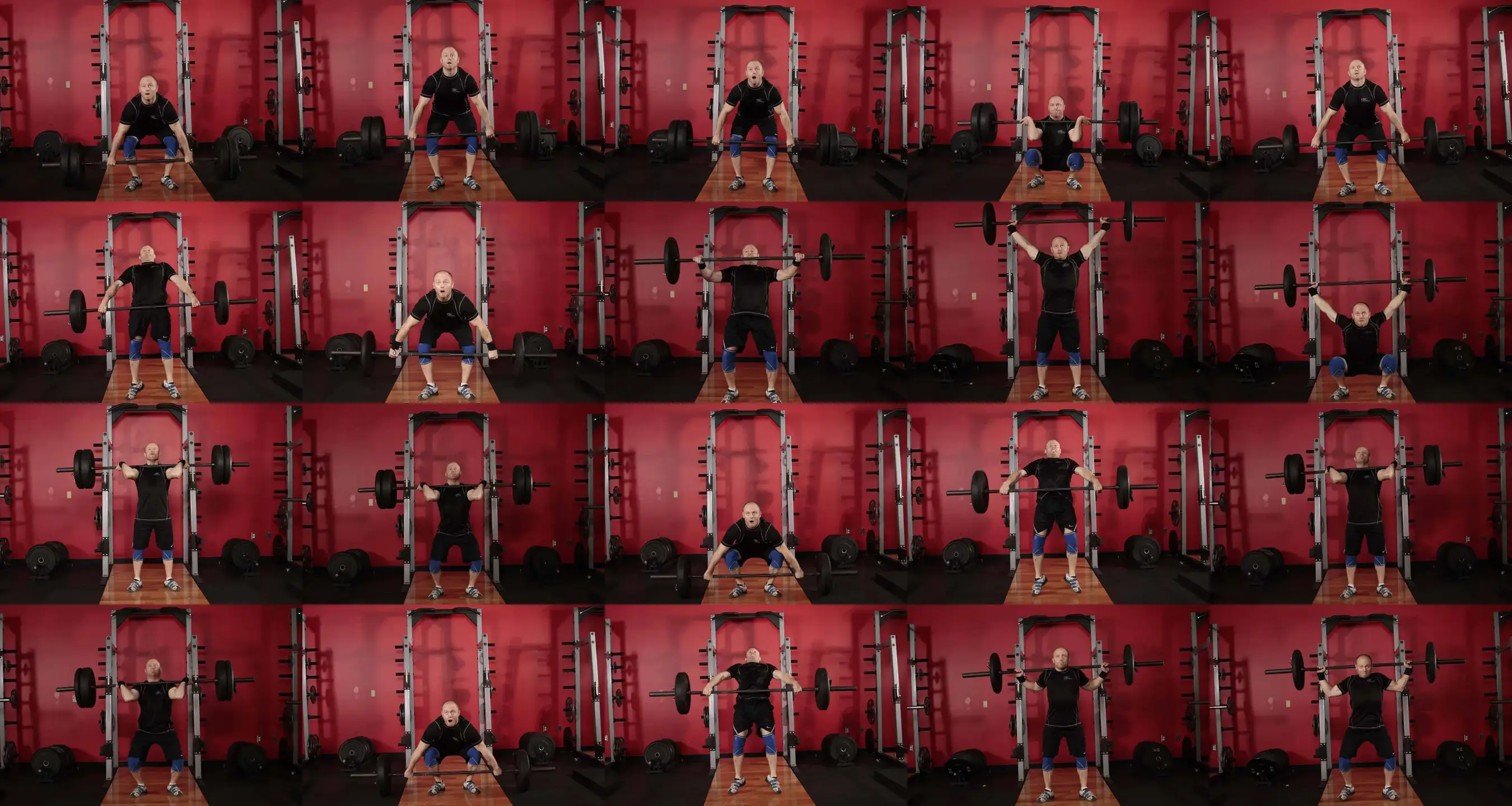
- Unrack the bar onto your traps with a wide snatch grip and feet about hip width apart.
- Breathe in, brace, and perform a short, vertical dip like you would for a jerk.
- Drive just enough to unweight the bar, then push against it with your arms to drop yourself down fast.
- Move your feet into your squat stance as you descend and lock your arms with the bar over your neck.
- Catch in a deep, stable squat with the bar over midfoot, without letting it drift forward.
- Stand up while holding the lockout, exhale at the top, and return the bar to the rack or your back.
Form cues
- Push yourself down, do not throw the bar
- Lock your arms before you hit bottom
- Move your feet fast into squat stance
- Bar stays over neck and midfoot
Common mistakes
- Throwing the bar high: it delays the catch; push to move yourself down, not the bar up.
- Locking out late: the bar lands on bent arms; punch the lockout as you drop.
- Catching high then riding down: it defeats the drill; drop straight to the bottom.
- Bar too far forward in the catch: you lose balance; push your head through under it.
How to make it easier or harder
To make it easier, start with overhead squats and behind the neck snatch presses, or do a pressing snatch balance with no dip. To progress, add load or perform the heaving snatch balance with a full foot transition.
Sets and reps for your goal
Power
4-6 x 2-5 · full rest3-6 sets of 1-5 reps with light or moderate loads (30-60% of your max on the main lifts), or with a ball or your bodyweight. Rest 2 to 3 minutes.
Every rep at the highest possible speed. As soon as you notice it moving slower (a 10-20% velocity loss), end the set. Train power fresh, never fatigued.
Max Strength
4-5 x 3-6 · rest 2-3 min3-6 sets of 1-6 reps at 80-90% of your max (1RM). Rest 2 to 5 minutes.
Leave 1-3 reps in reserve. If your technique breaks down, lower the weight: strength is built with good reps.
A guide for healthy adults. Adjust the load to your level and see a professional if you have an injury.
Check your form
Film yourself from the side or ask someone to watch, then tick what you get right.
Frequently asked questions
What does the snatch balance help with?
It improves speed and confidence dropping under the bar, overhead lockout and stability in the bottom squat. It is especially useful if you hesitate in the snatch or catch the bar with soft arms.
How heavy should snatch balances be?
Start with an empty bar until the catch is fast and stable. With practice many lifters train at 80 to 100 percent of their snatch, but only if they land well and lock out confidently.
Sports it suits
Gear for this exercise
- Olympic barbell and platesTo keep progressing on the big lifts with heavy loads.
As an Amazon Associate, Muscle Atlas earns from qualifying purchases.