Setup and loading
Get the kettlebell overhead with a clean and press or push press, arm locked and biceps near your ear. Start very light, even 10 to 18 lb, because shoulder mobility and stability usually limit you long before your legs do.
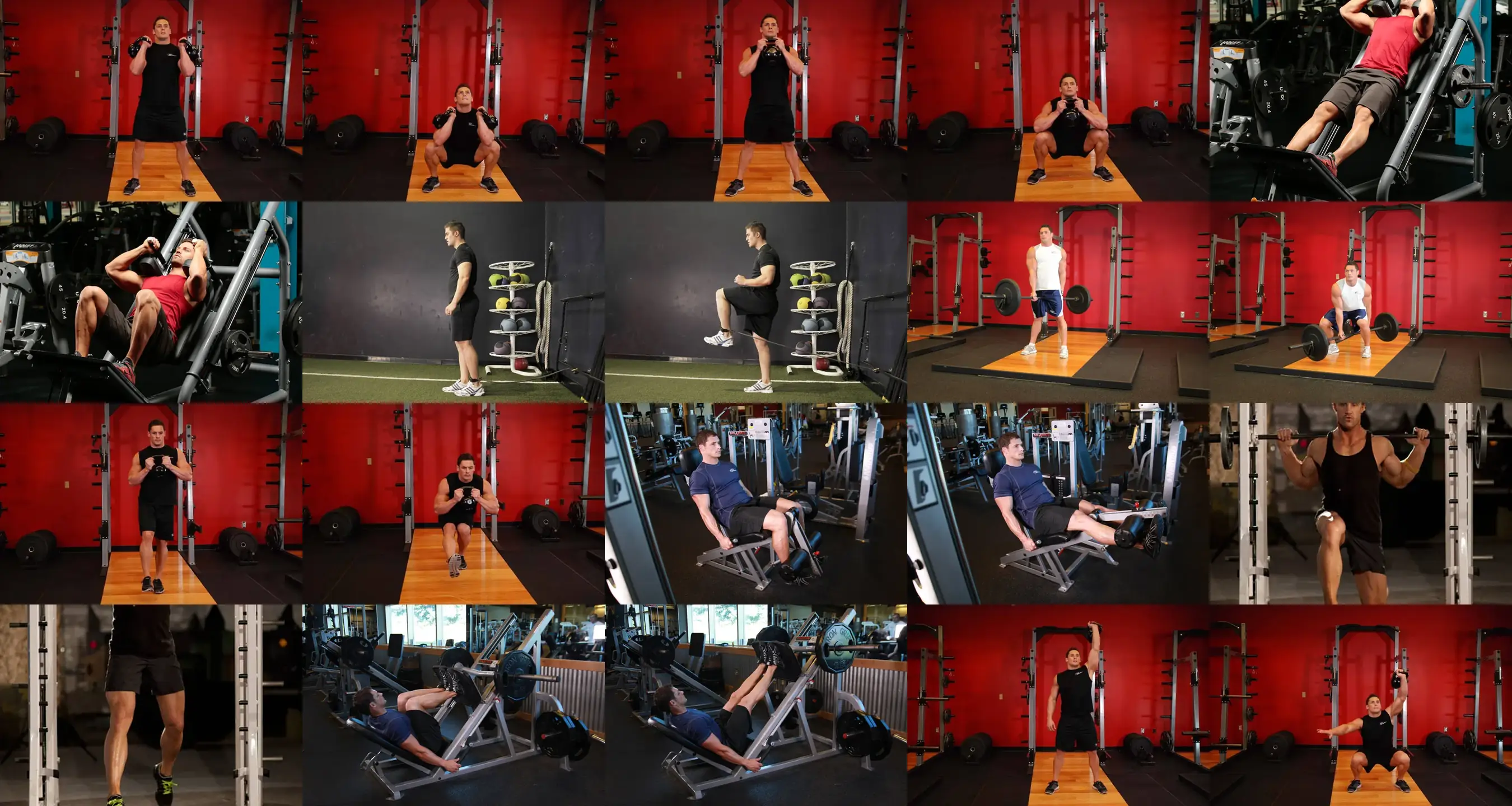
How to do the single-arm overhead kettlebell squat step by step
- Clean the kettlebell to your shoulder and press it overhead to full lockout, wrist straight and knuckles pointing at the ceiling.
- Set your feet shoulder width or slightly wider with toes turned out, and fix your gaze on a point ahead.
- Inhale, brace your abs and actively push the bell toward the ceiling with your shoulder packed.
- Lower slowly by bending your hips and knees, keeping the kettlebell stacked over your midfoot the whole time.
- Go as deep as you can while your arm stays vertical, your back stays neutral and your torso does not lean sideways.
- Drive up, exhale at the top, and when finished lower the bell to your shoulder under control before switching arms.
Form cues
- Arm locked with knuckles always pointing at the ceiling
- Keep the bell over your midfoot, never drifting forward
- Push the bell up as if trying to grow taller
- Ribs down, do not arch your lower back
Common mistakes
- Bending the loaded elbow: the bell can crash down; go lighter and lock out actively.
- Letting the bell drift forward: you lose balance; improve thoracic mobility and squat shallower.
- Leaning toward the free side: alignment breaks; brace your obliques and reduce the load.
- Squatting deeper than your mobility allows: posture collapses; limit depth for now.
How to make it easier or harder
To prepare, practice goblet squats and overhead kettlebell carries. To progress, add a pause at the bottom, increase the weight gradually or move on to the barbell overhead squat.
Sets and reps for your goal
Hypertrophy
3-4 x 8-12 · rest 60-90 s3-4 sets of 6-12 reps (up to 15-20 on isolation exercises) at 65-80% of your max. Rest 1 to 2 minutes.
Get close to failure (0-3 reps in reserve) and control the lowering for 2-3 seconds. Accumulate 10-20 sets per muscle per week.
Max Strength
4-5 x 3-6 · rest 2-3 min3-6 sets of 1-6 reps at 80-90% of your max (1RM). Rest 2 to 5 minutes.
Leave 1-3 reps in reserve. If your technique breaks down, lower the weight: strength is built with good reps.
A guide for healthy adults. Adjust the load to your level and see a professional if you have an injury.
Check your form
Film yourself from the side or ask someone to watch, then tick what you get right.
Frequently asked questions
What do I need to do an overhead kettlebell squat?
You need good shoulder and thoracic mobility to keep the arm vertical, mobile ankles so you can stay upright, and a strong core. If any of these is lacking, the bell drifts forward, so address that limitation first.
Why do it with one arm instead of a barbell?
A single bell creates an uneven load, so your core fights side bending harder and you spot differences between sides. The kettlebell also lets your shoulder find its natural position more freely than a fixed barbell.
Sports it suits
Gear for this exercise
- KettlebellStart with 12-16 kg (26-35 lb) for women or 16-24 kg (35-53 lb) for men.
As an Amazon Associate, Muscle Atlas earns from qualifying purchases.