Setup and loading
Use a moderate box around 12 to 20 inches, ideally foam, well below your max box jump height. The rule is that you can link every rep while landing with hips higher than your knees.
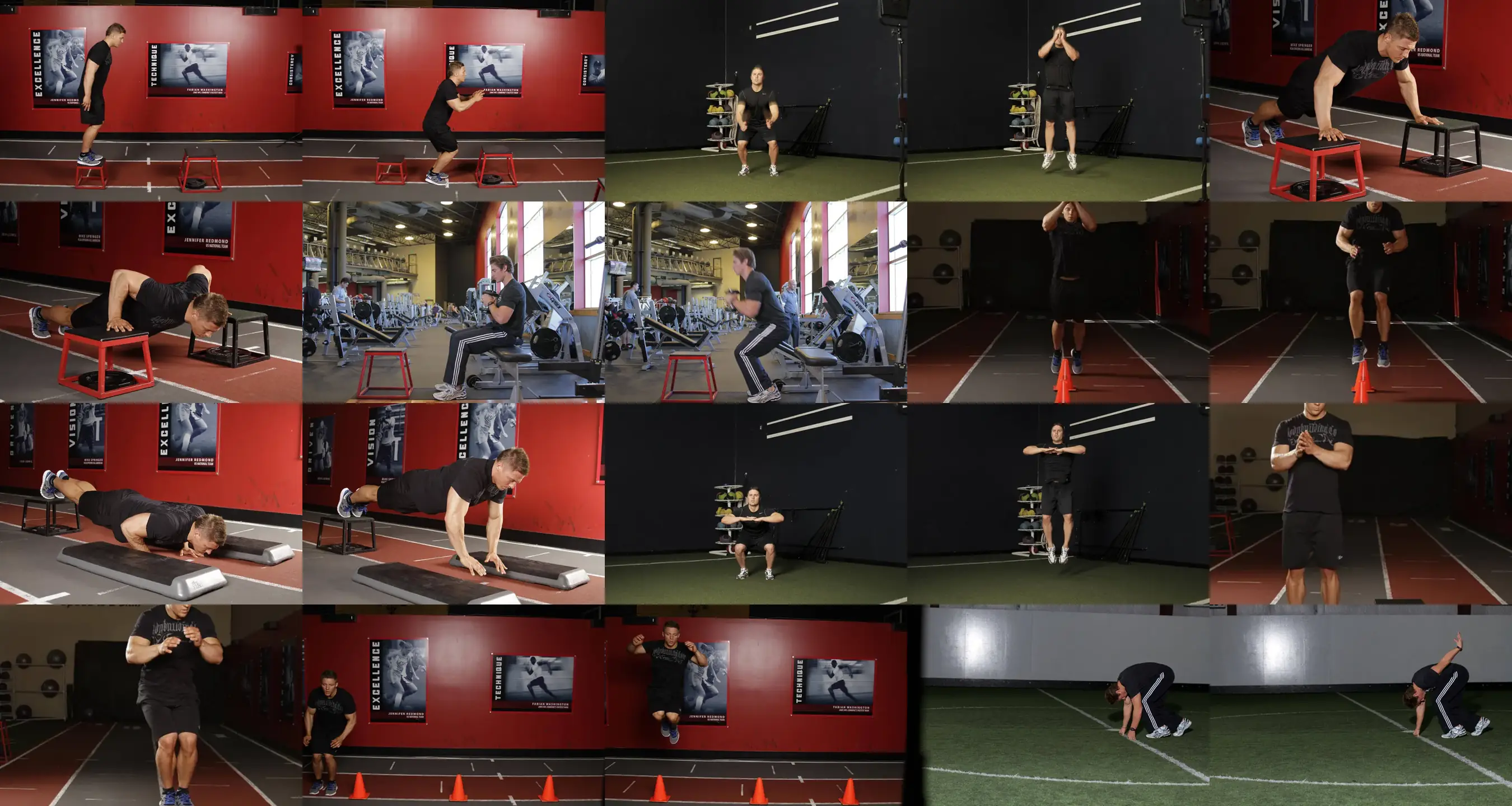
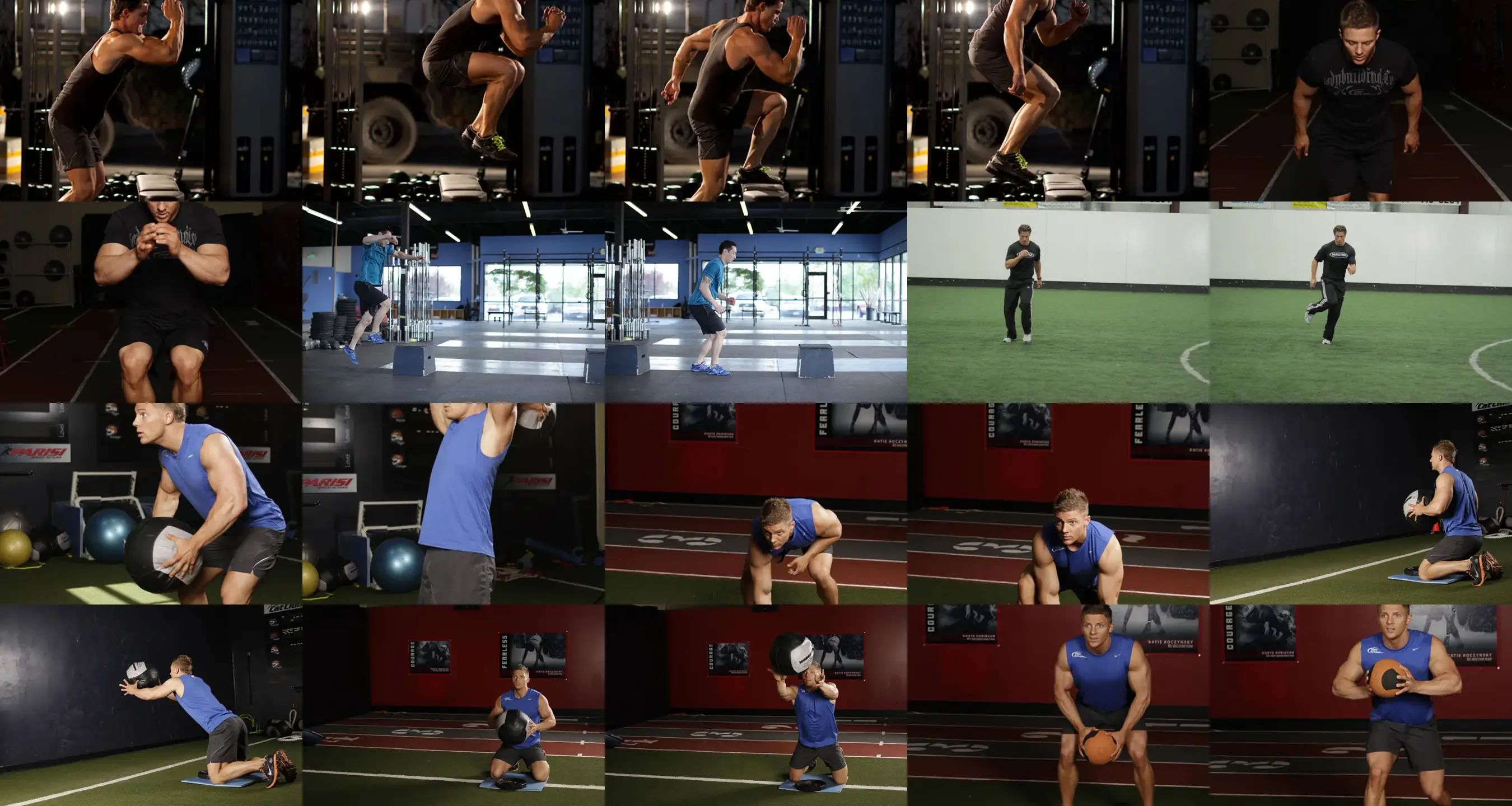
How to do the repeated box jumps step by step
- Stand facing the box about one arm length away, feet hip width apart and arms relaxed.
- Make a quick countermovement into a half squat with arms back while you breathe in.
- Jump off both feet together, throwing your arms up, and land in the middle of the box with your whole foot.
- Stand tall on the box, then step or hop down under control, landing softly on both feet.
- As soon as you touch the floor, rebound with a short contact and jump back up, exhaling on each landing.
- Link 4 to 6 reps and stop if you struggle to clear the edge or your landings get heavy.
Form cues
- Short ground contact
- Soft landing on the box
- Arms throw you upward
- Hips above knees on top
Common mistakes
- Using a box that is too tall: you land in a deep squat; go lower so you can rebound with quality.
- Hopping down stiff legged: it beats up your tendons; come down controlled and absorb.
- Long pauses on the floor: you lose the rebound effect; launch the next jump right after touchdown.
- Linking reps while fatigued: you risk hitting your shin; end the set when height drops.
How to make it easier or harder
As a regression, do single box jumps with a pause and step down. To progress, raise the box slightly, shorten ground contact, or alternate with depth jumps once your landing base is solid.
Sets and reps for your goal
Plyometrics
3-5 x 3-6 jumps · rest 1-2 min3-6 sets of 3-8 jumps. In total, 60-100 contacts per session (40-60 if you're a beginner). Rest 1 to 2 minutes between sets.
Short, quiet ground contact. If the jump loses height or your foot sticks to the ground, stop: the set is no longer training reactivity. Two sessions per week, 48 h apart.
A guide for healthy adults. Adjust the load to your level and see a professional if you have an injury.
Check your form
Film yourself from the side or ask someone to watch, then tick what you get right.
Frequently asked questions
How many repeated box jumps should you do per set?
Four to six is usually ideal to keep power and safety high. If you want more reps, lower the box, because fatigue raises the risk of tripping.
Is it bad to jump down from a box?
Jumping down adds impact load that can be useful for training the rebound, but it demands good landing technique. If you are new, step down and save jumping down for when your landings are well controlled.
Sports it suits
Gear for this exercise
- Plyo boxFoam boxes forgive missed jumps.
As an Amazon Associate, Muscle Atlas earns from qualifying purchases.