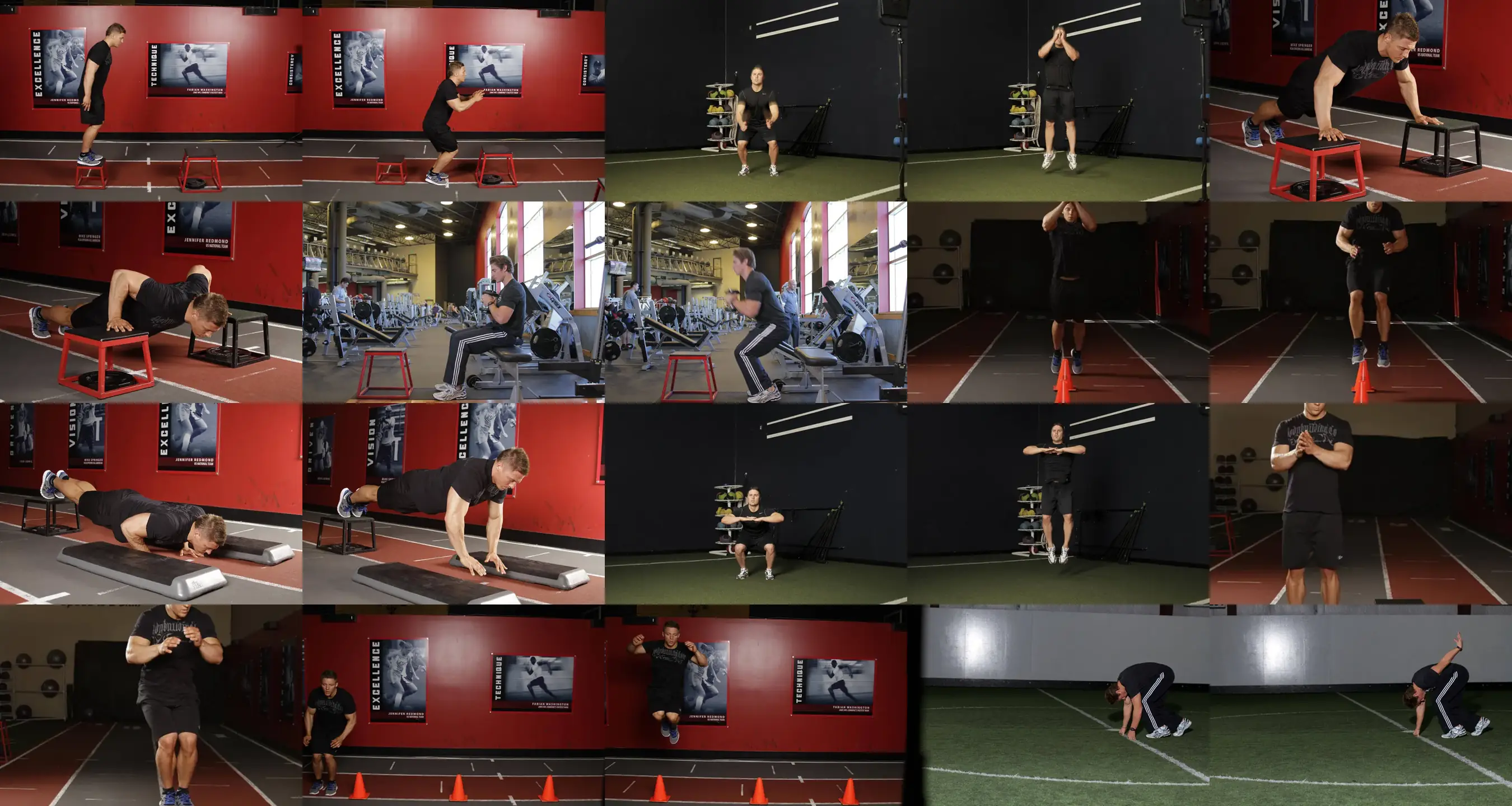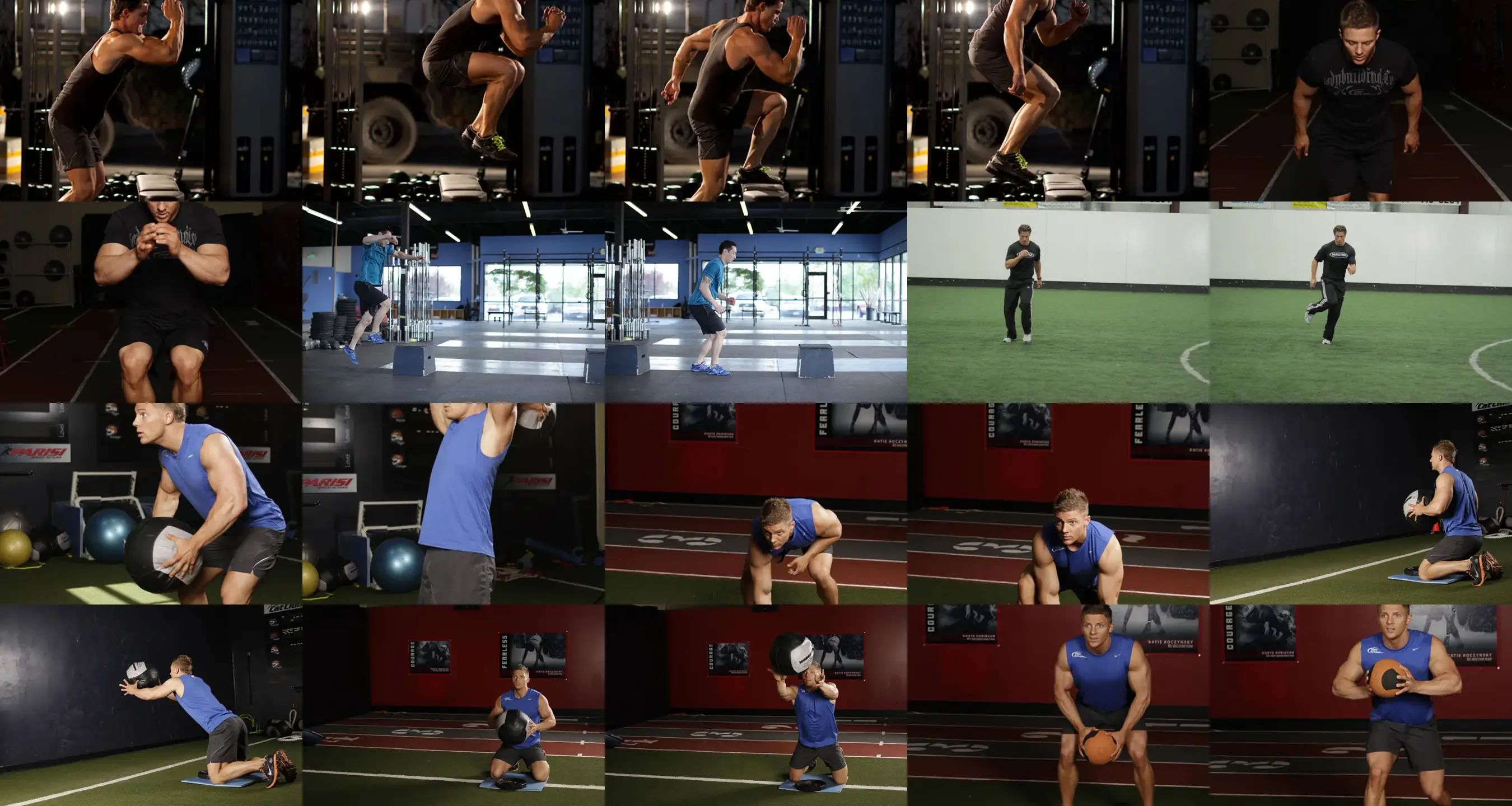
Setup and loading
Set three to five low, stable boxes, 6 to 12 inches high, spaced about 6 to 8 feet apart depending on your stride. Adjust difficulty with box height and spacing, starting with a comfortable layout.
How to do the box skip step by step
- Line the boxes up in a straight row and stand behind the first one with one foot slightly forward.
- Take a short lead in step and push off the back leg, driving the opposite knee and hip upward.
- Step onto the first box with the raised leg, landing on the ball of the foot with the knee slightly bent.
- Push off the box to land on the floor between boxes and, without pausing, skip toward the next one.
- Drive your arms like a sprint and breathe rhythmically, exhaling on each push.
- Run the full row, walk back, and switch the leg that contacts the boxes on the next set.
Form cues
- High knee on every push
- Land on the box with the forefoot
- Hips high, torso tall
- Steady rhythm box to box
Common mistakes
- Boxes spaced too far: you overstride and lose control; adjust the spacing to your rhythm.
- Stepping on the edge of the box: your foot can slip; aim for the center.
- Landing on a locked knee: impact goes into the joint; absorb with a slight bend.
- Sinking your hips on each contact: you lose spring; keep hips high and torso firm.
How to make it easier or harder
As a regression, skip on the ground over lines or low cones. To progress, use taller boxes, space them a bit farther apart, or shorten your contact time between them.
Sets and reps for your goal
Speed
4-6 x 10-30 m or 5-10 s · full rest4-8 reps of 10-40 meters (or 3-6 seconds). Full rest: 1 minute for every 10 meters.
Always at 95-100%. If your time gets more than 3-5% slower or your technique falls apart, stop: running tired trains endurance, not speed.
Plyometrics
3-5 x 3-6 jumps · rest 1-2 min3-6 sets of 3-8 jumps. In total, 60-100 contacts per session (40-60 if you're a beginner). Rest 1 to 2 minutes between sets.
Short, quiet ground contact. If the jump loses height or your foot sticks to the ground, stop: the set is no longer training reactivity. Two sessions per week, 48 h apart.
A guide for healthy adults. Adjust the load to your level and see a professional if you have an injury.
Check your form
Film yourself from the side or ask someone to watch, then tick what you get right.
Frequently asked questions
What is the difference between a box skip and a regular skip?
In a regular skip your height comes only from your push. With boxes you must project your hips higher and farther to reach each surface, so the power and precision demand is greater.
Which sports benefit from box skips?
They are very useful for track, soccer, football and basketball, where a powerful stride and knee drive matter. They also improve single leg coordination for any running sport.
Sports it suits
Gear for this exercise
- Plyo boxFoam boxes forgive missed jumps.
As an Amazon Associate, Muscle Atlas earns from qualifying purchases.