Setup and loading
Use bodyweight with your arms straight out in front, or hold a light medicine ball to lengthen the lever during the twist. If balance is an issue, shorten your stride before adding any weight.
How to do the lunge with torso rotation step by step
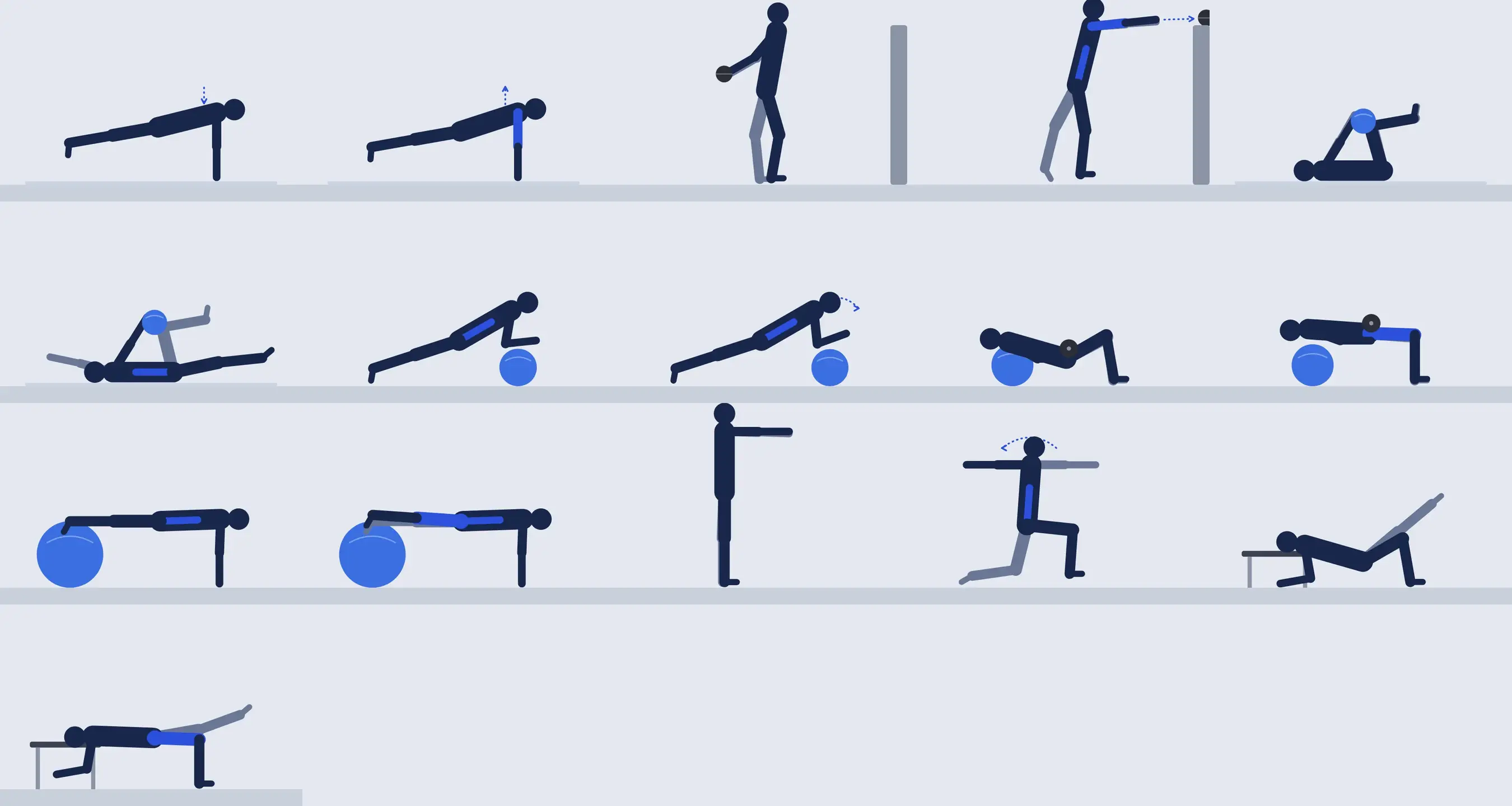
- Stand with feet hip-width apart and extend your arms straight out in front of you at chest height.
- Take a long step forward and lower until both knees reach about 90 degrees, back knee hovering just above the floor.
- Keeping your hips square, exhale and rotate your torso and arms toward the side of your front leg.
- Hold for one or two seconds and feel the stretch through the back hip and mid-back.
- Inhale as you bring your torso back to center without rising out of the lunge.
- Drive through your front heel to return to standing, then repeat on the other leg.
Form cues
- Front knee tracks over your toes, not inward
- Turn from your chest, not your hips
- Stay tall with your core lightly braced
- Exhale into the twist and avoid bouncing
Common mistakes
- Rotating with your hips: you lose the upper-back mobility; keep your pelvis facing forward and turn your chest.
- Front knee caving in: it stresses the joint; push the knee out in line with your pinky toe.
- Stride too short: the knee drifts far past the toes; step longer so both knees form right angles.
- Rushing the twist: bouncing limits real range; rotate slowly and pause briefly at the end.
How to make it easier or harder
To make it easier, do a static split stance with the back knee resting on a pad and rotate without stepping. To make it harder, try a walking lunge with rotation, hold a medicine ball at arm's length, or move on to the world's greatest stretch.
Sets and reps for your goal
Mobility
2-3 x 6 per side2-3 sets of 30-60 seconds or 8-10 slow reps. Daily or before training.
Work in a pain-free range with slow breathing. A little often is better than a lot once in a while.
Injury Prevention
2 x 8 per side2-3 sets of 10-15 slow reps with a light or moderate load, 2-3 times per week.
Control the lowering (about 3 seconds). This is quality work, not fatigue work: finish every set feeling good.
A guide for healthy adults. Adjust the load to your level and see a professional if you have an injury.
Check your form
Film yourself from the side or ask someone to watch, then tick what you get right.
Frequently asked questions
When should I do lunges with rotation?
They work best in your warm-up before leg training, running, or sports like tennis, soccer, or golf. One or two sets of 6 to 8 reps per side is enough to loosen your hips and upper back without creating fatigue.
Which way should I rotate?
Most people rotate toward the front leg, so if your right foot is forward, you turn right. This keeps the pelvis stable and forces the rotation to come from your upper back. Twisting away from the front leg is a valid variation but demands more balance.
Sports it suits
Gear for this exercise
- Exercise matThick (8-10 mm) for floor work.
As an Amazon Associate, Muscle Atlas earns from qualifying purchases.