Setup and loading
Place a pad or folded towel under your back knee and keep your front foot flat with that knee at 90 degrees. There is no load: you adjust intensity by how much you tuck your pelvis and shift your hips, aiming for a clear but pain-free stretch for 20 to 30 seconds.
How to do the kneeling hip flexor stretch step by step
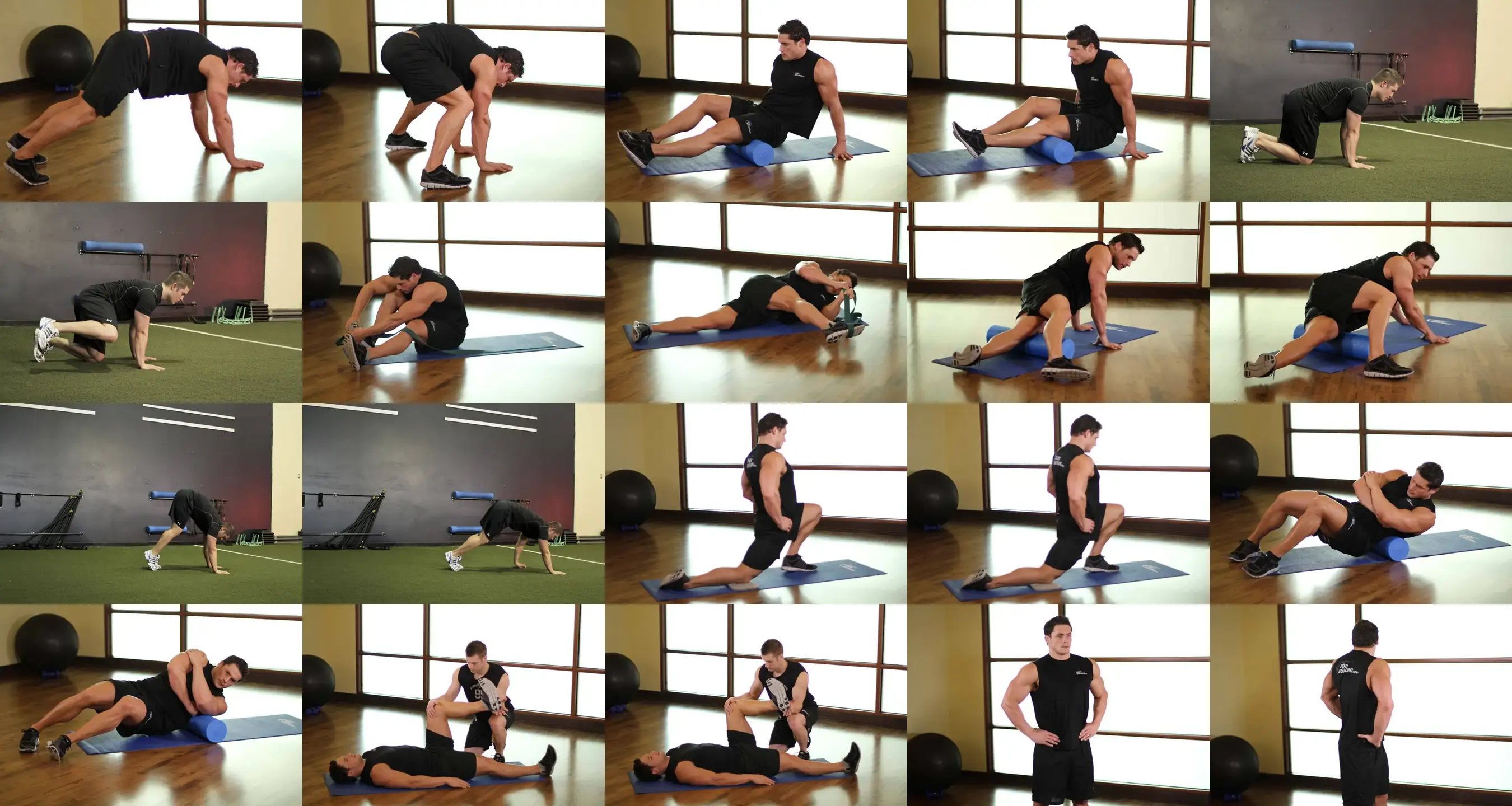
- Kneel on a pad with your right knee down and your left foot in front, both knees at about 90 degrees.
- Stand your torso tall with your hands on your hips or front thigh.
- Tuck your pelvis by bringing your pubic bone toward your belly button and squeeze your back glute hard.
- Keeping that pelvic position, shift your weight forward a few inches until you feel the stretch at the front of your right hip.
- Hold for 20 to 30 seconds while breathing slowly and deeply, without arching your lower back.
- Ease back, switch legs and repeat two or three times per side.
Form cues
- Pubic bone toward belly button
- Squeeze the back glute
- Stay tall, ribs down
- Shift your hips only a few inches
Common mistakes
- Arching your back: the stretch moves to your lower back; tuck your pelvis before shifting forward.
- Lunging too far: your spine compensates instead of your hip; a few inches is enough.
- Relaxed back glute: your pelvis tips and the stretch fades; keep it squeezed the whole time.
- No padding under the knee: discomfort makes you tense up; always use a pad or towel.
How to make it easier or harder
For a gentler version, do it standing in a short lunge or lying on the edge of a bed with one leg hanging off. To advance, reach the arm on the stretched side overhead with a slight side lean, or grab your back foot to add a rectus femoris stretch in the couch stretch.
Sets and reps for your goal
Mobility
2-3 x 20-40 s per side2-3 sets of 30-60 seconds or 8-10 slow reps. Daily or before training.
Work in a pain-free range with slow breathing. A little often is better than a lot once in a while.
A guide for healthy adults. Adjust the load to your level and see a professional if you have an injury.
Check your form
Film yourself from the side or ask someone to watch, then tick what you get right.
Frequently asked questions
Why are my hip flexors so tight?
Sitting for long periods keeps these muscles in a shortened position, and over time you notice stiffness when standing up or running. Stretching them often and strengthening your glutes usually helps your hips feel looser.
How long should I hold the stretch?
The usual recommendation is 20 to 30 seconds per side, repeated two or three times. To see mobility changes, do it several times a week, even daily if you spend a lot of time sitting.
Sports it suits
Gear for this exercise
- Exercise matThick (8-10 mm) for floor work.
As an Amazon Associate, Muscle Atlas earns from qualifying purchases.