Setup and loading
Attach a rope to the low pulley, face away, and walk out two steps with your feet a bit wider than hip width. Use a weight that allows 12 to 15 reps where you feel your glutes, not your arms or back.
How to do the cable pull-through step by step
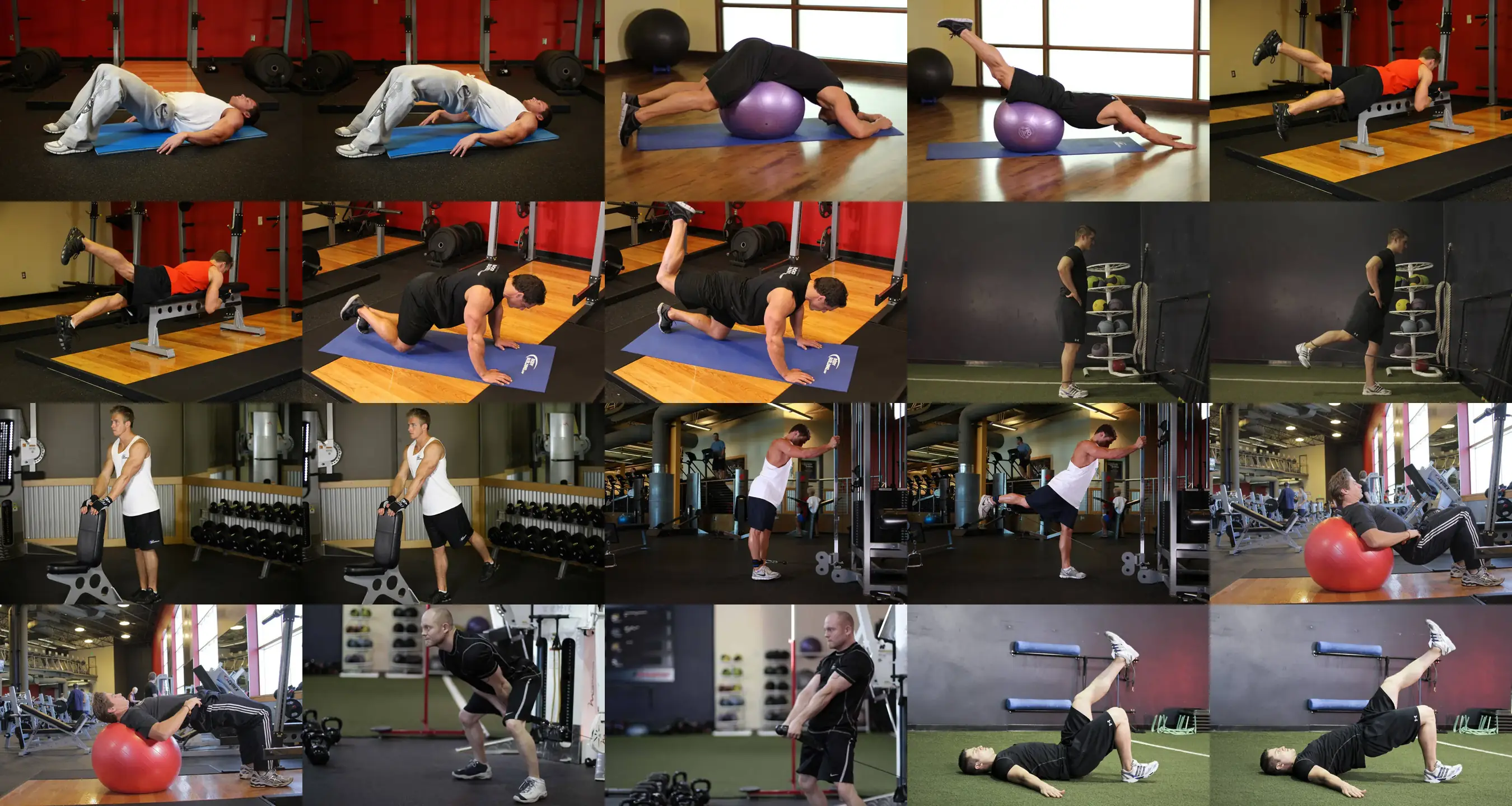
- Face away from the low pulley, grab the rope between your legs with both hands, and take two big steps forward.
- Set your feet slightly wider than hip width, knees soft, chest up, and arms straight and relaxed between your thighs.
- Inhale and push your hips back with a neutral spine, letting the rope travel between your legs until your hamstrings stretch.
- Exhale and drive your hips forward, squeezing your glutes until you stand tall.
- Finish with hips fully extended and abs braced, without leaning your shoulders back or arching your lower back.
- Send your hips back again under control and repeat, using your arms only as hooks.
Form cues
- Push your hips back like closing a door
- Your arms are ropes; they do not pull
- Neutral spine and tall chest on the hinge
- Stand tall and squeeze your glutes hard
Common mistakes
- Pulling the rope with your arms: it takes work off your glutes; keep arms straight and relaxed.
- Squatting instead of hinging: it loads your quads; push your hips back with shins close to vertical.
- Rounding your back on the way down: it stresses your lower back; keep your chest up and brace.
- Leaning back at the top: it loads your lower back; finish with a neutral pelvis and tight glutes.
How to make it easier or harder
To regress, practice the hip hinge with a dowel along your back or do floor glute bridges. To progress, add weight, use a band instead of a cable, or move to the barbell Romanian deadlift.
Sets and reps for your goal
Hypertrophy
3-4 x 8-12 · rest 60-90 s3-4 sets of 6-12 reps (up to 15-20 on isolation exercises) at 65-80% of your max. Rest 1 to 2 minutes.
Get close to failure (0-3 reps in reserve) and control the lowering for 2-3 seconds. Accumulate 10-20 sets per muscle per week.
Max Strength
4-5 x 3-6 · rest 2-3 min3-6 sets of 1-6 reps at 80-90% of your max (1RM). Rest 2 to 5 minutes.
Leave 1-3 reps in reserve. If your technique breaks down, lower the weight: strength is built with good reps.
A guide for healthy adults. Adjust the load to your level and see a professional if you have an injury.
Check your form
Film yourself from the side or ask someone to watch, then tick what you get right.
Frequently asked questions
What is the cable pull-through good for?
It teaches the hip hinge, trains your glutes and hamstrings, and strengthens hip extension with little spinal load. It works well as a deadlift accessory or a beginner-friendly substitute.
Pull-through or hip thrust for glutes?
The hip thrust lets you load heavier and peaks tension at full hip extension. The pull-through trains the standing hinge and stretches the hamstrings more. Both work and pair well in a glute program.