Setup and loading
Place two matching kettlebells on the floor in front of your feet, about shoulder width apart. Choose a weight for 8 to 12 reps without rounding your back; holding the hinge usually limits you more than pulling strength.
How to do the two-arm kettlebell row step by step
- Stand with feet hip width apart and both kettlebells on the floor in front of your feet.
- Bend your knees, push your hips back, and grab the handles with a neutral grip, flat back and torso nearly parallel to the floor.
- Lift the bells off the floor and let your arms hang straight under your shoulders, taking a breath and bracing.
- Exhale and row both kettlebells toward your stomach, driving your elbows back and close to your sides.
- Squeeze your shoulder blades for one second at the top without raising your torso.
- Inhale and lower the bells slowly to straight arms, holding the hinge for the next rep.
Form cues
- Flat back, torso nearly parallel
- Elbows tight toward your hips
- Both bells rise together
- Hips back, soft knees
Common mistakes
- Rounding your back: it increases lumbar load; reduce weight or raise your torso slightly.
- Standing up each rep: your back loses tension; lock in your hinge angle.
- One bell rising higher: it signals an imbalance; lighten up and control both sides.
- Dropping the bells: you lose the eccentric; lower over two seconds.
How to make it easier or harder
To make it easier, do one-arm kettlebell rows with your free hand braced, or row chest-supported on a bench. To progress, use heavier bells, pause at the top, or alternate arms while holding the other bell up.
Sets and reps for your goal
Hypertrophy
3-4 x 8-12 · rest 60-90 s3-4 sets of 6-12 reps (up to 15-20 on isolation exercises) at 65-80% of your max. Rest 1 to 2 minutes.
Get close to failure (0-3 reps in reserve) and control the lowering for 2-3 seconds. Accumulate 10-20 sets per muscle per week.
Max Strength
4-5 x 3-6 · rest 2-3 min3-6 sets of 1-6 reps at 80-90% of your max (1RM). Rest 2 to 5 minutes.
Leave 1-3 reps in reserve. If your technique breaks down, lower the weight: strength is built with good reps.
A guide for healthy adults. Adjust the load to your level and see a professional if you have an injury.
Check your form
Film yourself from the side or ask someone to watch, then tick what you get right.
Frequently asked questions
Two kettlebells or one for rows?
Two bells train both sides at once and save time, but your lower back works harder without support. One bell lets you brace on your thigh, row heavier per side, and focus on each lat separately.
Why does my lower back tire before my lats?
Holding an unsupported hinge demands a lot from your spinal erectors. If that happens, lower the weight, shorten the sets, or use a chest-supported variation so your back muscles become the limiting factor.
Sports it suits
Gear for this exercise
- KettlebellStart with 12-16 kg (26-35 lb) for women or 16-24 kg (35-53 lb) for men.
As an Amazon Associate, Muscle Atlas earns from qualifying purchases.
Variations and similar exercises
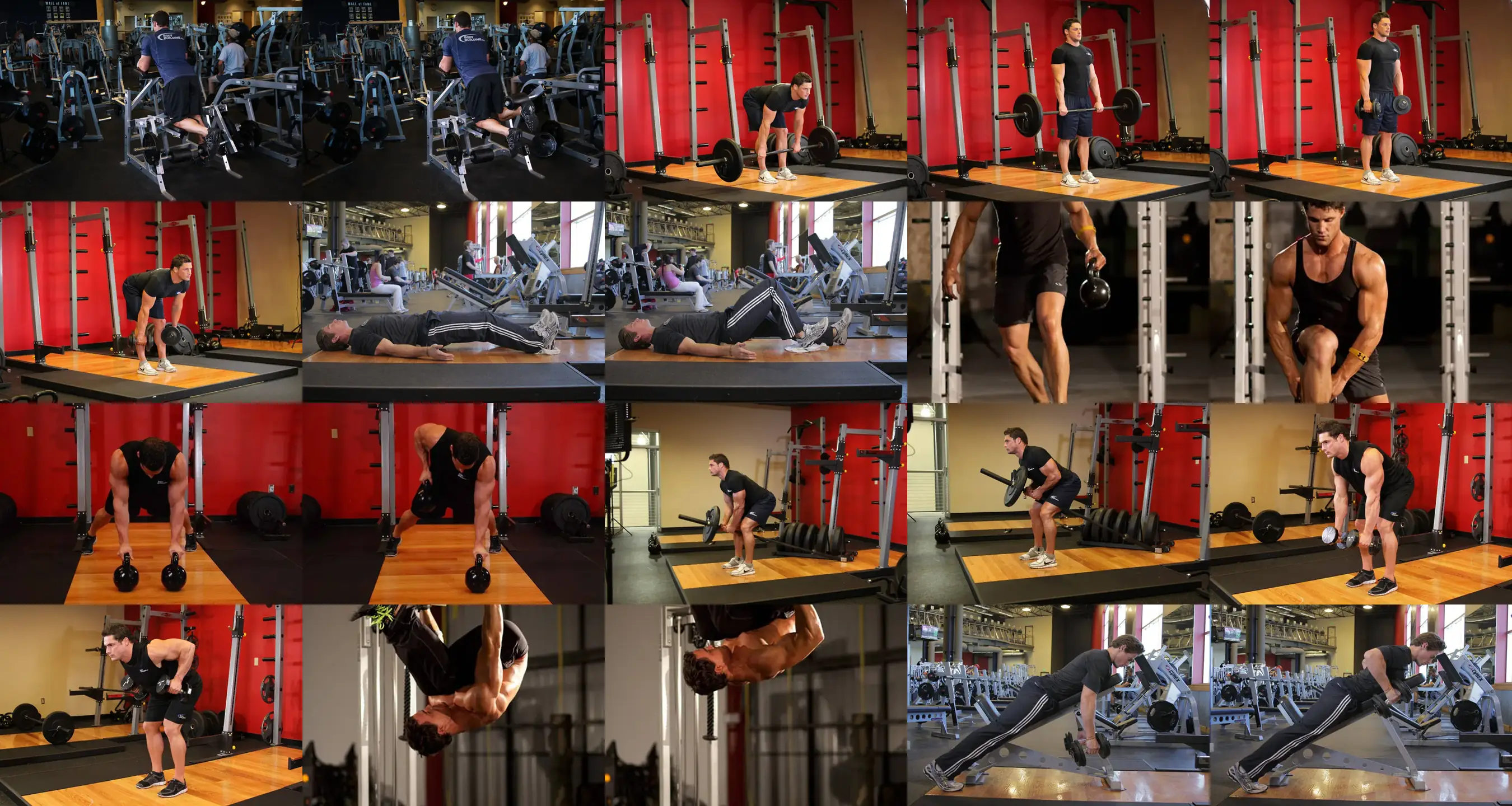
Alternating Renegade Row
Landmine T-Bar Row
Bent-Over Dumbbell Row
Bodyweight Bar Row
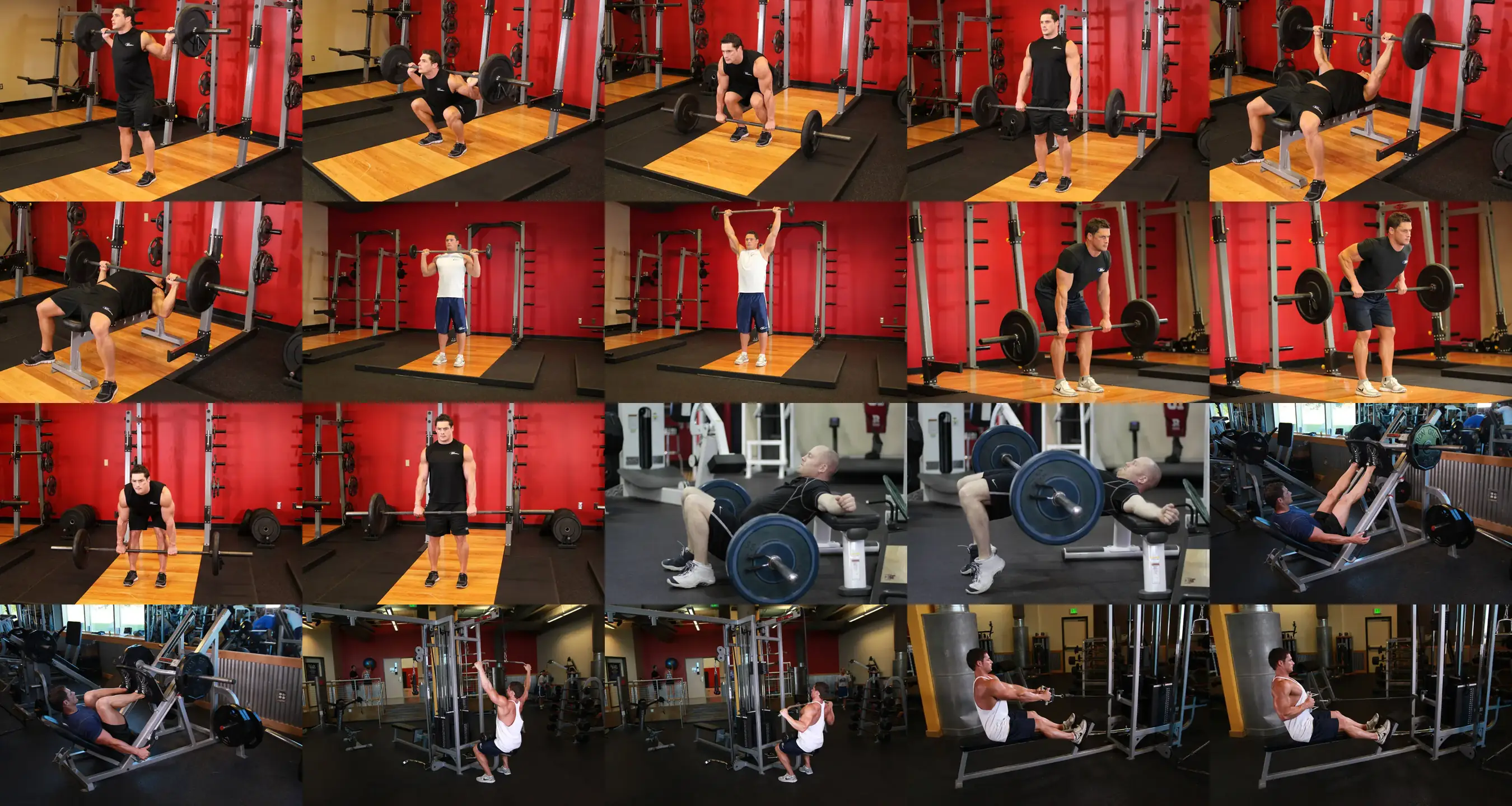
Bent-Over Barbell Row
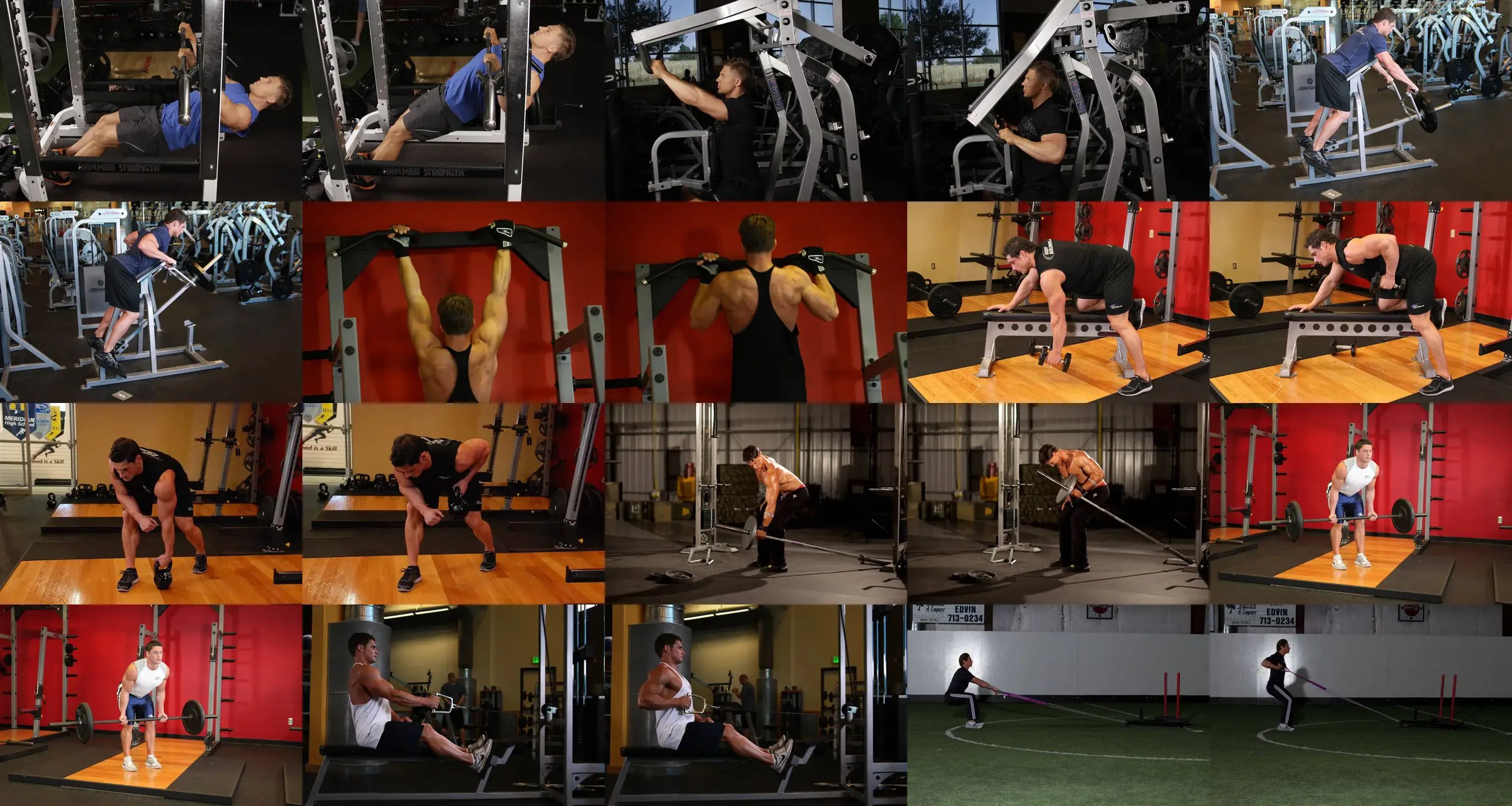
Chest-Supported T-Bar Row
One-Arm Kettlebell Row