Setup and loading
Unrack the bar at thigh height with an overhand grip slightly wider than shoulder width, then step back. Pick a weight you can row for 6 to 12 reps without your torso moving; if you need hip drive to finish, it is too heavy.
How to do the bent-over barbell row step by step
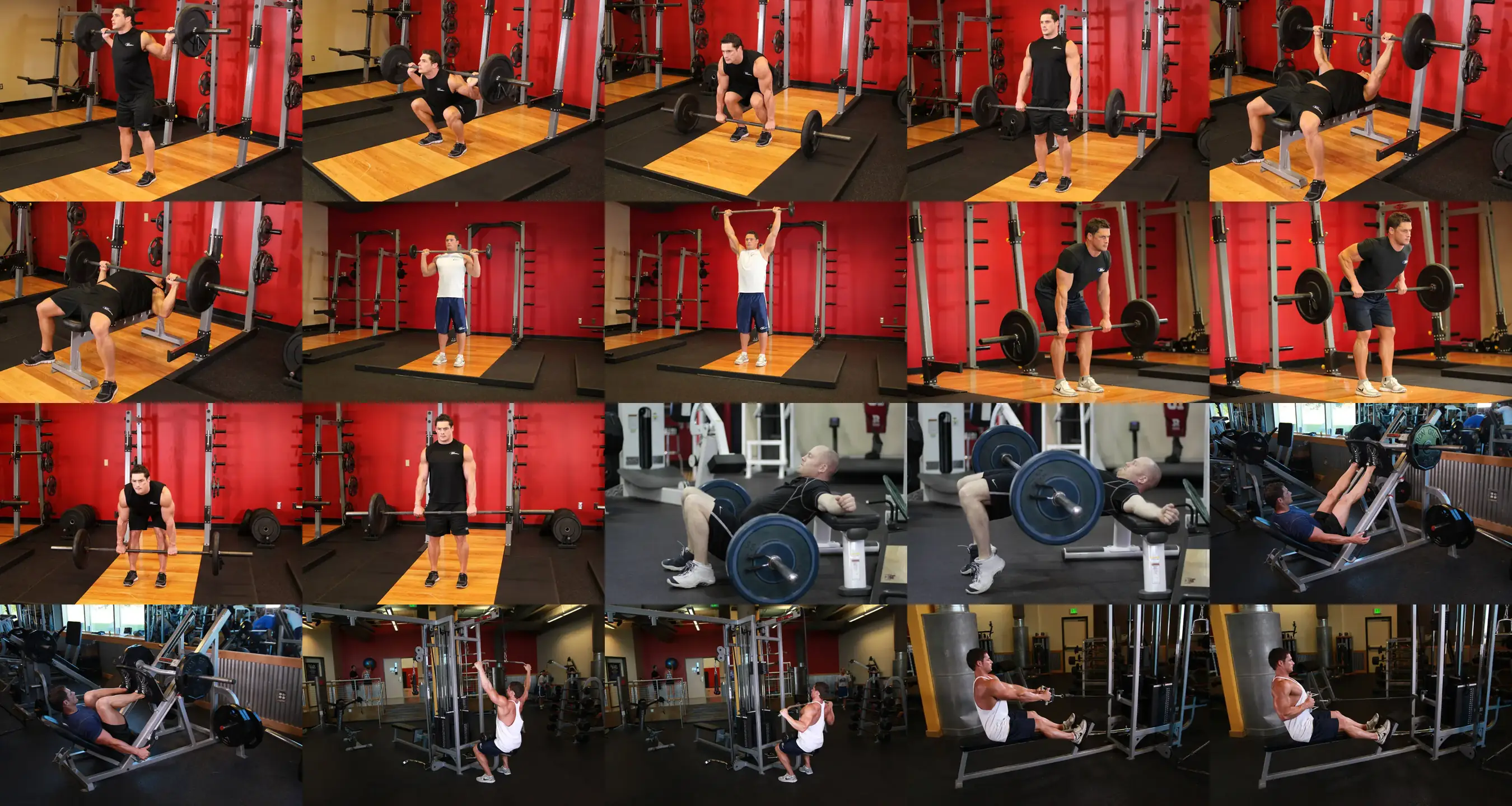
- Stand holding the bar with your feet hip-width apart and your knees slightly bent.
- Push your hips back and hinge your torso to about 45 degrees or lower, keeping a neutral spine and the bar close to your thighs.
- Let the bar hang under your shoulders with straight arms and take a deep breath into your belly.
- Row the bar toward your belly button, driving your elbows back and up at about 45 degrees from your body.
- Squeeze your shoulder blades for one second with the bar touching your lower stomach, without lifting your torso.
- Lower the bar over two seconds until your arms are straight, exhaling at the top or on the way down.
Form cues
- Your torso angle stays locked the whole set
- Drive your elbows toward your back pockets
- Neck in line with your spine, eyes on the floor
- Chest proud and abs braced throughout
Common mistakes
- Using hip momentum: it steals work from your back; drop the weight and lock your torso angle.
- Rounding your back: it stresses your lower back; keep your chest up and hinge at the hips.
- Pulling with your arms only: your biceps tire first; start each rep by squeezing your shoulder blades.
- Rowing to your chest: it turns the row into a shrug; aim for your belly button instead.
How to make it easier or harder
If holding a neutral spine is still hard, start with a chest-supported incline dumbbell row or a one-arm dumbbell row. To progress, try Pendlay rows from the floor each rep, underhand Yates rows, or add two-second pauses at the top.
Sets and reps for your goal
Hypertrophy
3-4 x 8-123-4 sets of 6-12 reps (up to 15-20 on isolation exercises) at 65-80% of your max. Rest 1 to 2 minutes.
Get close to failure (0-3 reps in reserve) and control the lowering for 2-3 seconds. Accumulate 10-20 sets per muscle per week.
Max Strength
4 x 5-63-6 sets of 1-6 reps at 80-90% of your max (1RM). Rest 2 to 5 minutes.
Leave 1-3 reps in reserve. If your technique breaks down, lower the weight: strength is built with good reps.
A guide for healthy adults. Adjust the load to your level and see a professional if you have an injury.
Check your form
Film yourself from the side or ask someone to watch, then tick what you get right.
Frequently asked questions
Should I row with an overhand or underhand grip?
An overhand grip hits more upper back and rear delts, while an underhand grip (Yates row) allows a more upright torso and brings in more lower lats and biceps. Both work; rotate them based on your goals and wrist and elbow comfort.
Is the barbell row bad for your lower back?
Not when you use good form and sensible loads. Your lower back works isometrically and gets stronger. If it bothers you, lighten the weight, focus on a neutral spine, or switch to a chest-supported row for a while.
Sports it suits
Gear for this exercise
- Olympic barbell and platesTo keep progressing on the big lifts with heavy loads.
As an Amazon Associate, Muscle Atlas earns from qualifying purchases.