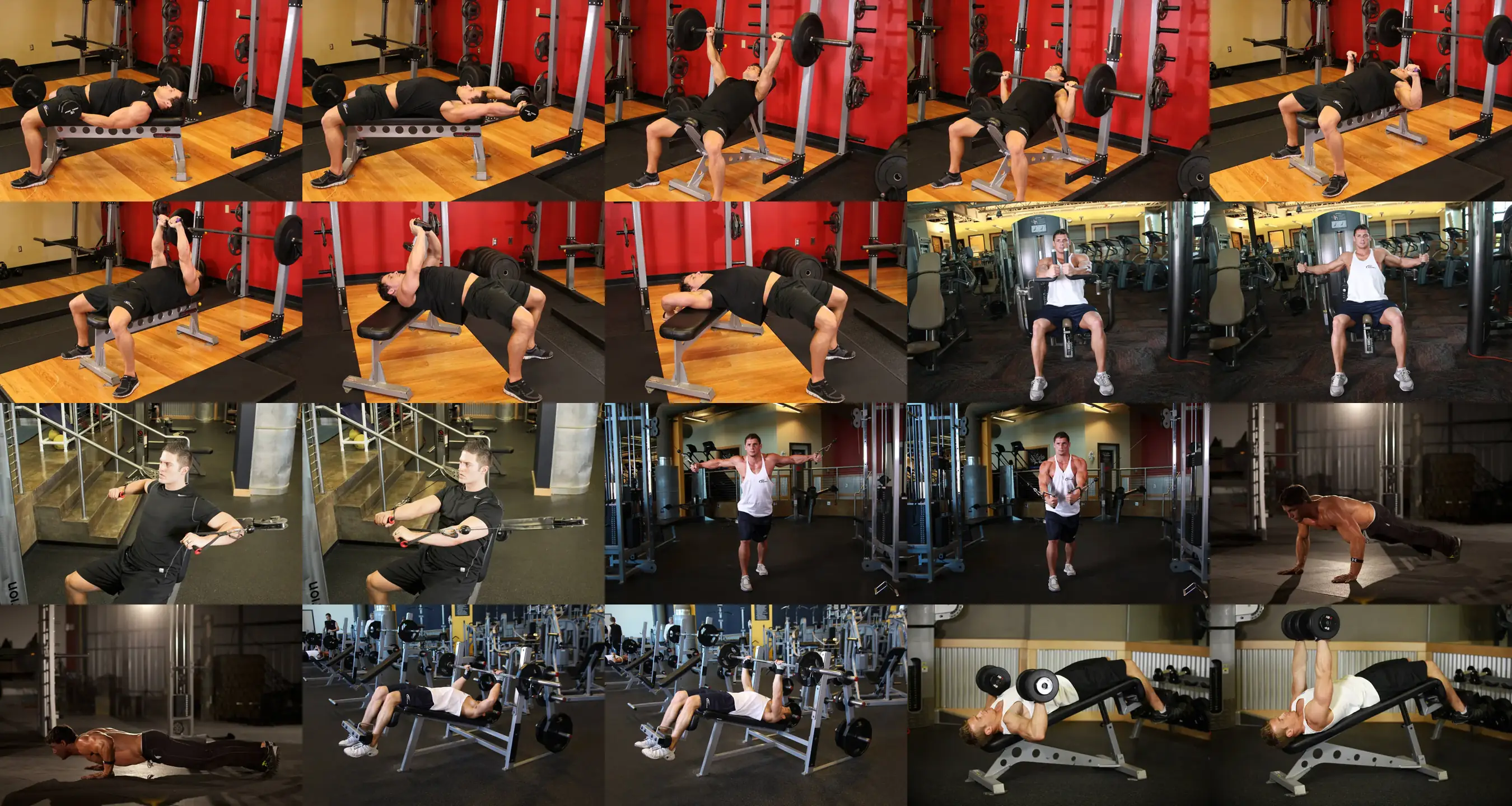
Setup and loading
Set the pulleys at chest height or slightly lower and stand in front with one foot forward and your weight split evenly. Choose a weight you can press for 10 to 15 reps without your torso tipping or your back arching; if it moves you, it is too heavy.
How to do the standing cable chest press step by step
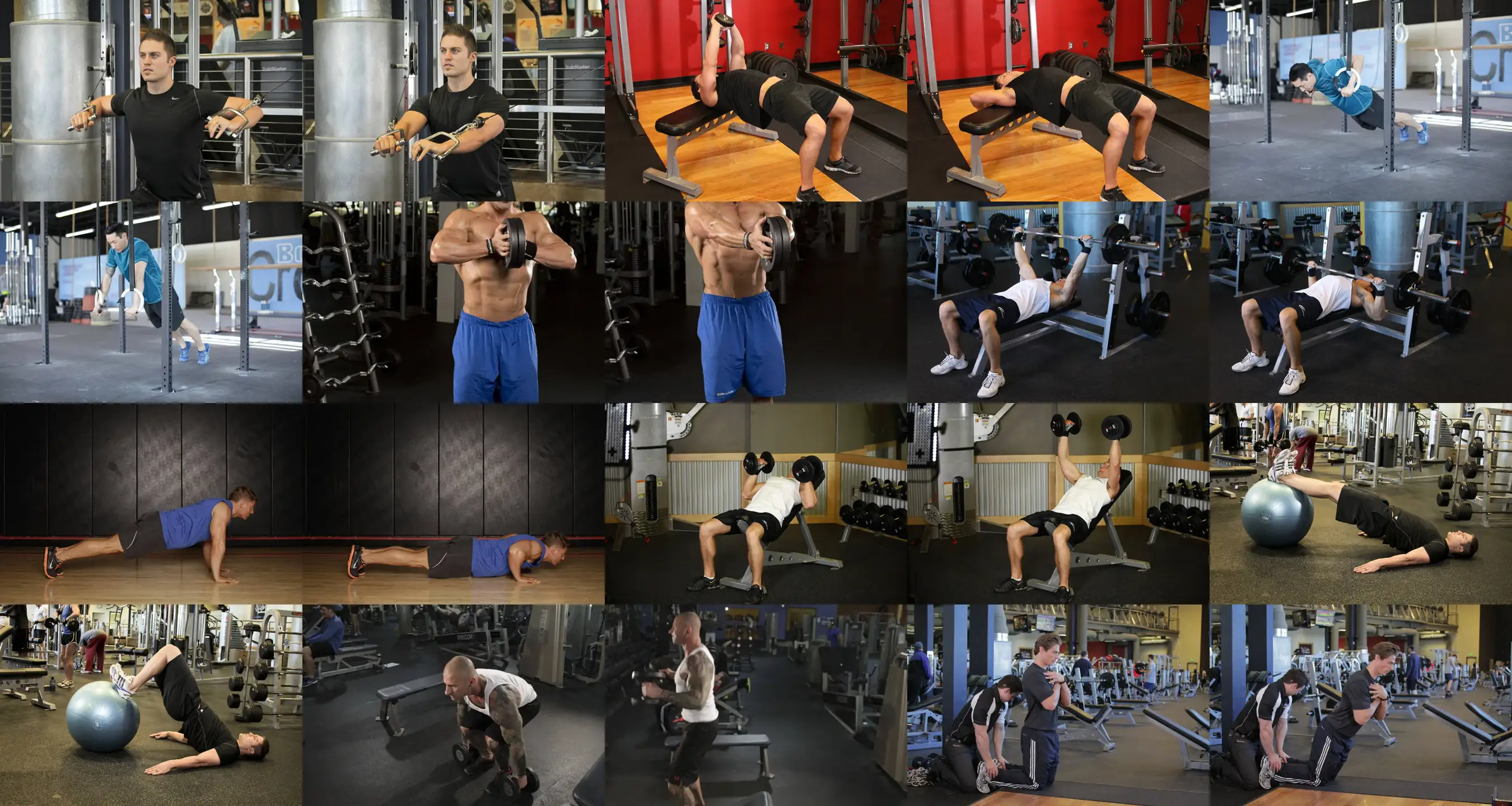
- Set both pulleys at chest height and grab a handle in each hand, facing away from the machine.
- Step forward until the cables are taut and take a staggered stance with your knees softly bent.
- Bring the handles beside your chest with your elbows bent about 90 degrees and slightly below shoulder level.
- Brace your abs, breathe out, and press the handles forward until your arms are nearly straight and your hands meet.
- Hold the squeeze for a second without letting your hips or head drift forward.
- Breathe in and let the handles return slowly to your chest, resisting the pull of the cable.
Form cues
- Brace hard so the cable never moves you
- Staggered stance with weight on both feet
- Press straight ahead at chest height
- Hands come together at the finish
Common mistakes
- Leaning far forward: your bodyweight does the work; keep your torso close to upright.
- Arching your low back: your core is not resisting; brace abs and squeeze the back leg's glute.
- Letting the cables yank you back: you lose control; slow the handles on the way back.
- Pulleys set too high: the press angles downward; line them up with your chest.
How to make it easier or harder
To make it easier, use a seated machine chest press or reduce the weight with a wider stance. To progress, try the single-arm version, which adds an anti-rotation challenge, or alternate arms without letting your torso twist.
Sets and reps for your goal
Hypertrophy
3-4 x 8-12 · rest 60-90 s3-4 sets of 6-12 reps (up to 15-20 on isolation exercises) at 65-80% of your max. Rest 1 to 2 minutes.
Get close to failure (0-3 reps in reserve) and control the lowering for 2-3 seconds. Accumulate 10-20 sets per muscle per week.
Max Strength
4-5 x 3-6 · rest 2-3 min3-6 sets of 1-6 reps at 80-90% of your max (1RM). Rest 2 to 5 minutes.
Leave 1-3 reps in reserve. If your technique breaks down, lower the weight: strength is built with good reps.
A guide for healthy adults. Adjust the load to your level and see a professional if you have an injury.
Check your form
Film yourself from the side or ask someone to watch, then tick what you get right.
Frequently asked questions
What is the benefit of a standing cable chest press?
Besides your chest, it forces your core and legs to stabilize you without a back pad, which carries over to sports and standing pushes. The load is lower than in a lying press, so pair it with a main pressing lift.
What height should the pulleys be for a standing cable press?
Set them at chest height or a bit lower. That keeps the press horizontal and hits your mid chest; raising them angles the press down and lowering them angles it up, which shifts the emphasis.