Setup and loading
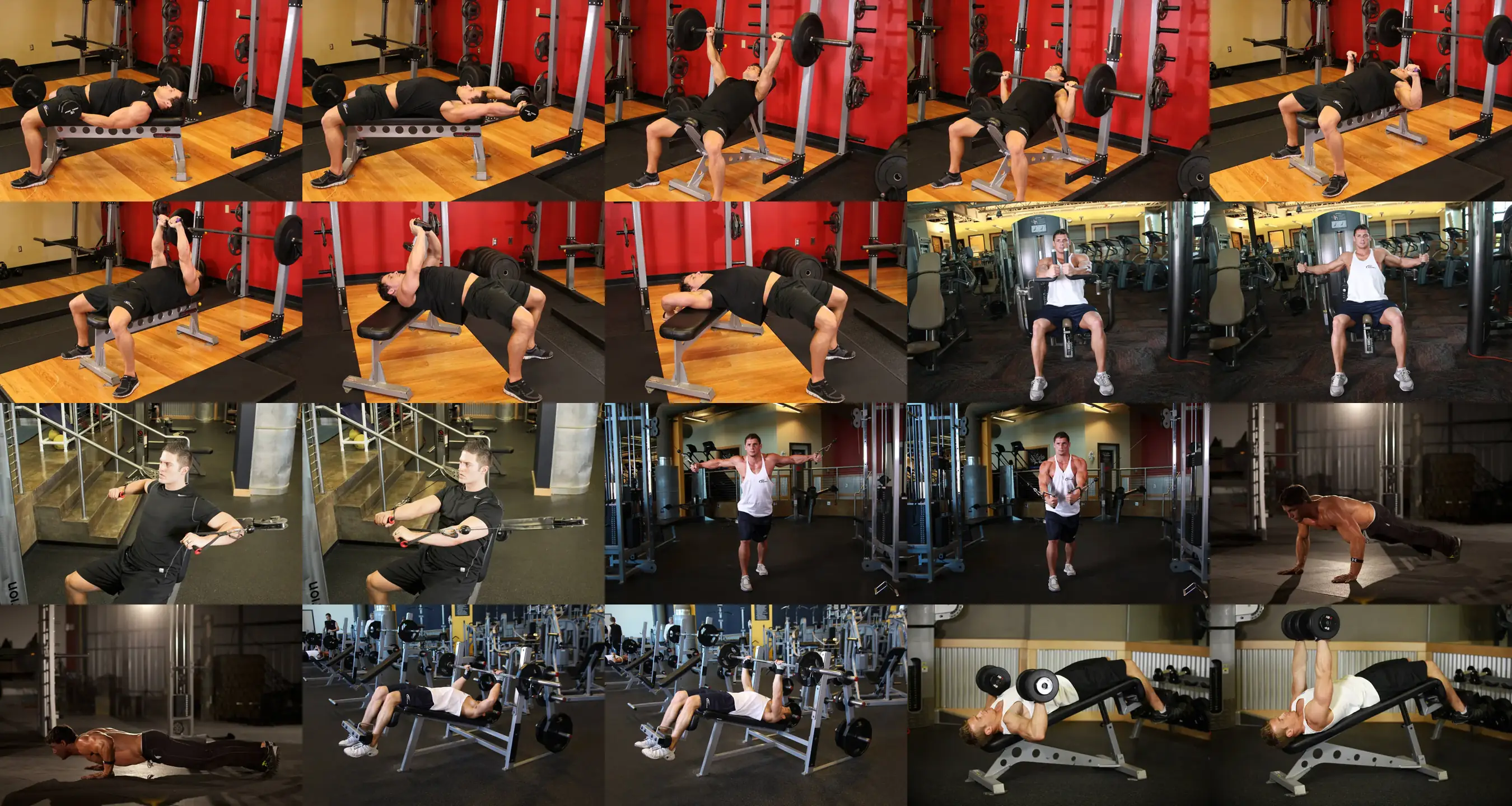
Set the decline bench to about 15 to 30 degrees and lock your legs securely under the pads. Start with a moderate weight for 8 to 12 reps and always use a spotter, since reracking a failed rep is hard in this position.
How to do the decline barbell bench press step by step
- Hook your legs under the pads and lie back on the decline bench with eyes under the bar and shoulder blades set.
- Grip the bar a bit wider than your shoulders and unrack it, ideally with a spotter's help, until it is over your chest.
- Breathe in and lower the bar slowly to your lower chest, near the bottom of your sternum.
- Keep your elbows about 45 to 60 degrees from your torso and your wrists stacked over your elbows.
- Exhale and press the bar up until your arms are straight, without slamming your elbows into lockout.
- When finished, rerack the bar with straight arms and make sure it is secure before sitting up.
Form cues
- Lock your legs in before unracking the bar
- Touch the bar to your lower chest
- Shoulder blades pinned back into the bench
- Always use a spotter on heavy sets
Common mistakes
- Training without a spotter: a failed rep traps the bar near your neck, so get help or use safeties.
- Lowering to your neck or upper chest: it strains the shoulder, so touch your lower chest.
- Bouncing the bar off your chest: you lose control, so lower slowly and press deliberately.
- Sitting up quickly afterward: the head-down position can make you dizzy, so rise slowly.
How to make it easier or harder
To regress, use decline dumbbell or machine presses, or reduce the decline angle. To progress, add weight gradually, pause on your chest or pair it with chest dips.
Sets and reps for your goal
Hypertrophy
3-4 x 8-12 · rest 60-90 s3-4 sets of 6-12 reps (up to 15-20 on isolation exercises) at 65-80% of your max. Rest 1 to 2 minutes.
Get close to failure (0-3 reps in reserve) and control the lowering for 2-3 seconds. Accumulate 10-20 sets per muscle per week.
Max Strength
4-5 x 3-6 · rest 2-3 min3-6 sets of 1-6 reps at 80-90% of your max (1RM). Rest 2 to 5 minutes.
Leave 1-3 reps in reserve. If your technique breaks down, lower the weight: strength is built with good reps.
A guide for healthy adults. Adjust the load to your level and see a professional if you have an injury.
Check your form
Film yourself from the side or ask someone to watch, then tick what you get right.
Frequently asked questions
What is the decline bench press good for?
It emphasizes the lower chest and lets you handle heavy loads with less shoulder stress. It is a useful complement to flat and incline pressing for training your chest from different angles.
Why can I lift more on decline bench?
The decline shortens the bar path and puts your chest in a mechanically strong position with less shoulder involvement. That is why many lifters press a bit more than on the flat bench.
Sports it suits
Gear for this exercise
- Olympic barbell and platesTo keep progressing on the big lifts with heavy loads.
As an Amazon Associate, Muscle Atlas earns from qualifying purchases.