Setup and loading
Use a cone or mini hurdle 6 to 12 inches high and leave 10 to 15 yards clear for the sprint. Adjust difficulty with obstacle height, hop duration and how quickly the signal comes.
How to do the side hop to sprint step by step
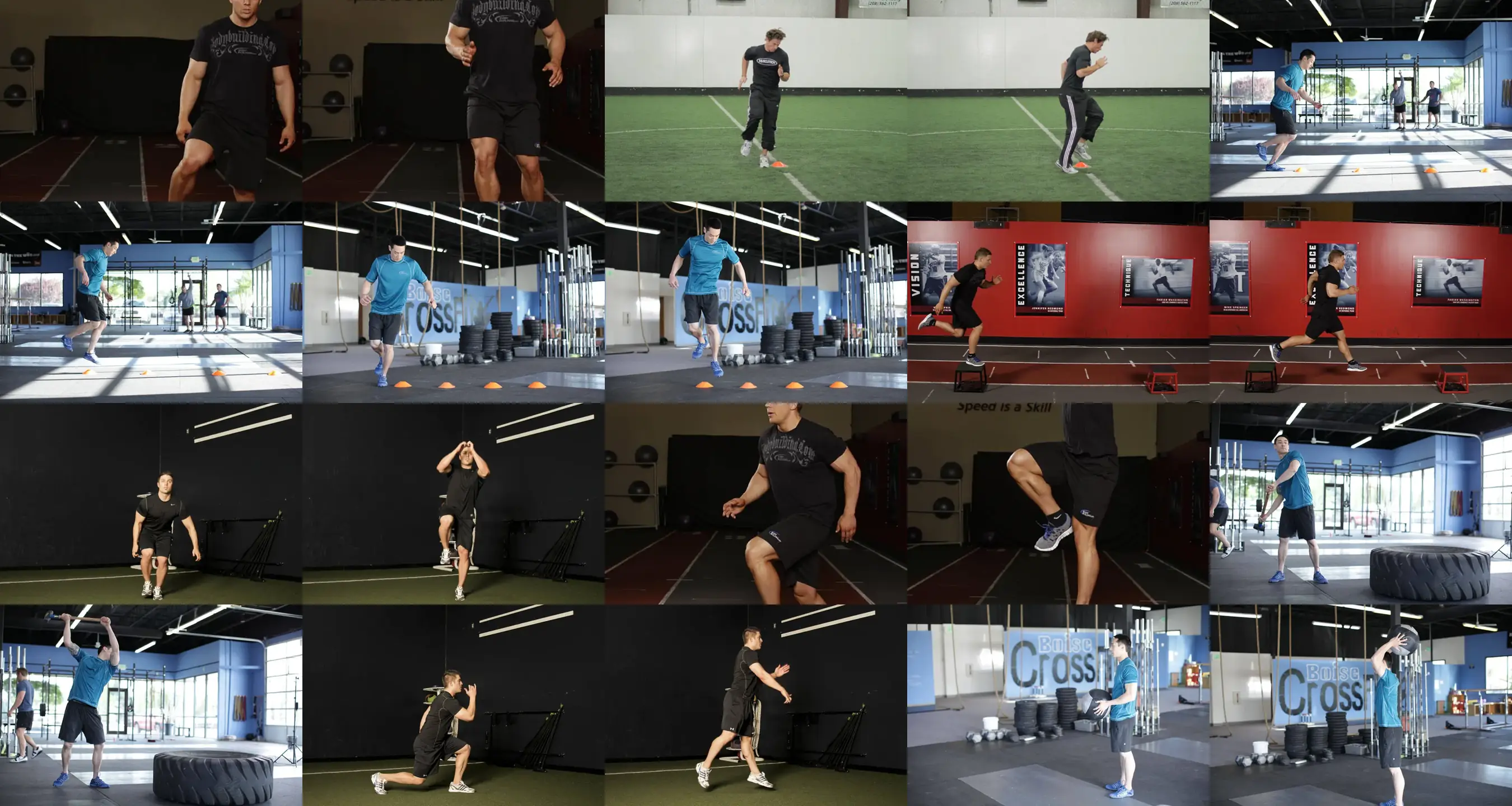
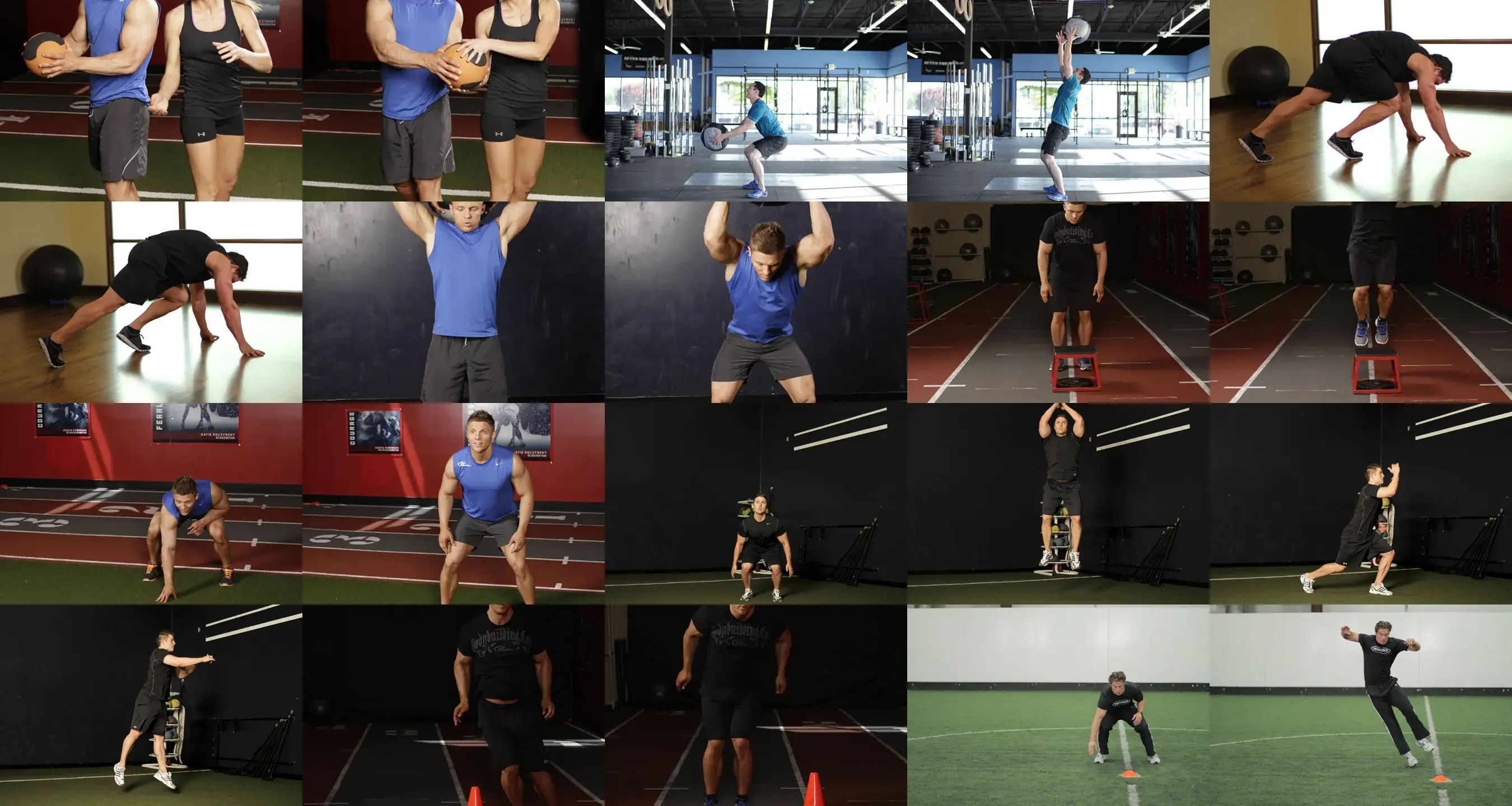
- Stand sideways next to the cone with feet together, soft knees and weight on the balls of your feet.
- Hop sideways over the cone with both feet and land on the other side with a short contact.
- Rebound immediately back to the starting side, keeping your shoulders square and your breathing rhythmic.
- Keep hopping side to side as fast as possible for 5 to 10 seconds or until the signal.
- On the signal, turn your hips toward the running direction and sprint out with short steps and a forward lean.
- Sprint 5 to 10 yards, slow down gradually and walk back for the next rep.
Form cues
- Quick, light feet
- Shoulders still and square
- Turn the hips and accelerate
- Short, leaning first steps
Common mistakes
- Hopping too high: contacts get long; keep hops low and quick.
- Turning your shoulders on each hop: you lose control; keep your torso facing forward.
- Sprinting out upright: you lose acceleration; lean and take short steps.
- Reacting late to the signal: the drill loses its purpose; stay focused on the cue.
How to make it easier or harder
As a regression, hop side to side over a line without the sprint. To progress, raise the hurdle, lengthen the sprint, or use visual cues that tell you which direction to run.
Sets and reps for your goal
Speed
4-6 x 10-30 m or 5-10 s · full rest4-8 reps of 10-40 meters (or 3-6 seconds). Full rest: 1 minute for every 10 meters.
Always at 95-100%. If your time gets more than 3-5% slower or your technique falls apart, stop: running tired trains endurance, not speed.
Plyometrics
3-5 x 3-6 jumps · rest 1-2 min3-6 sets of 3-8 jumps. In total, 60-100 contacts per session (40-60 if you're a beginner). Rest 1 to 2 minutes between sets.
Short, quiet ground contact. If the jump loses height or your foot sticks to the ground, stop: the set is no longer training reactivity. Two sessions per week, 48 h apart.
A guide for healthy adults. Adjust the load to your level and see a professional if you have an injury.
Check your form
Film yourself from the side or ask someone to watch, then tick what you get right.
Frequently asked questions
What are side hop sprints good for?
They improve foot speed and your ability to react and accelerate after lateral movement. That situation comes up constantly in soccer, basketball, tennis and handball.
How many side hop sprint reps should you do?
Four to eight reps with full rest is usually enough. Every rep should be high quality, so if your speed drops, it is better to stop.
Sports it suits
Gear for this exercise
- Plyo boxFoam boxes forgive missed jumps.
As an Amazon Associate, Muscle Atlas earns from qualifying purchases.