Setup and loading
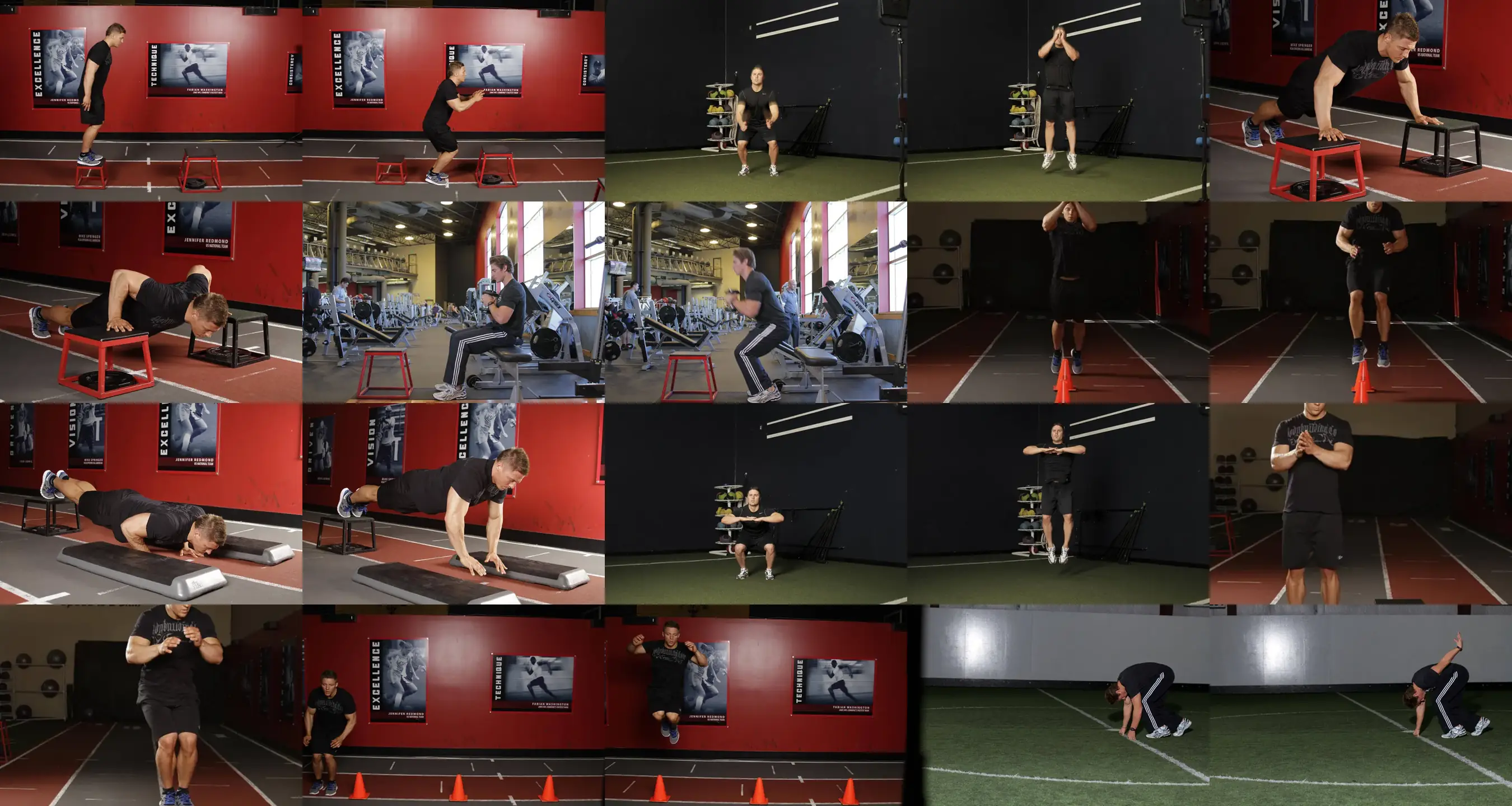
Place your feet on a 12 to 18 inch box and your hands on two 4 to 6 inch steps set slightly wider than your shoulders. Higher feet and steps add load; if you cannot get back onto the steps with control, lower the heights or put your feet on the floor.
How to do the incline push-up depth jump step by step
- Rest your feet on the box and your hands on the steps with arms straight and body in a straight line.
- Squeeze your abs and glutes so your hips do not sag, and breathe in.
- Pull both hands off together and let them drop to the floor between the steps, shoulder width apart.
- Absorb by bending your elbows about 45 degrees from your body through a short range.
- Rebound immediately with an explosive push, exhaling as your hands return to the steps.
- Stabilize and repeat 4 to 6 times, stopping if your hips start to sag.
Form cues
- Hips in line with shoulders and heels
- Short contact on the floor
- Elbows close to your body
- Quick hands back to the steps
Common mistakes
- Sagging hips with feet elevated: it loads your lower back; squeeze abs and glutes.
- Landing on stiff arms: impact goes into the joints; give with your elbows.
- Sinking too deep on the drop: contact gets long; keep the range short and reactive.
- Steps that slide: you risk a wrist injury; use firm, non slip surfaces.
How to make it easier or harder
As a regression, do drop push ups with your feet on the floor or explosive push ups with hands elevated. To progress, raise the foot box or the steps, or add a clap before returning.
Sets and reps for your goal
Plyometrics
3-5 x 3-6 jumps · rest 1-2 min3-6 sets of 3-8 jumps. In total, 60-100 contacts per session (40-60 if you're a beginner). Rest 1 to 2 minutes between sets.
Short, quiet ground contact. If the jump loses height or your foot sticks to the ground, stop: the set is no longer training reactivity. Two sessions per week, 48 h apart.
A guide for healthy adults. Adjust the load to your level and see a professional if you have an injury.
Check your form
Film yourself from the side or ask someone to watch, then tick what you get right.
Frequently asked questions
How is this different from a regular drop push up?
The difference is the elevated feet. Raising them shifts more weight onto your arms and makes the movement resemble an incline press, so your shoulders and upper chest work harder.
How many sets of plyometric push ups should you do?
Three to five sets of 4 to 6 reps with full rest is usually enough. Upper body plyometrics are tough on the wrists, so prioritize quality over volume.
Sports it suits
Gear for this exercise
- Plyo boxFoam boxes forgive missed jumps.
As an Amazon Associate, Muscle Atlas earns from qualifying purchases.