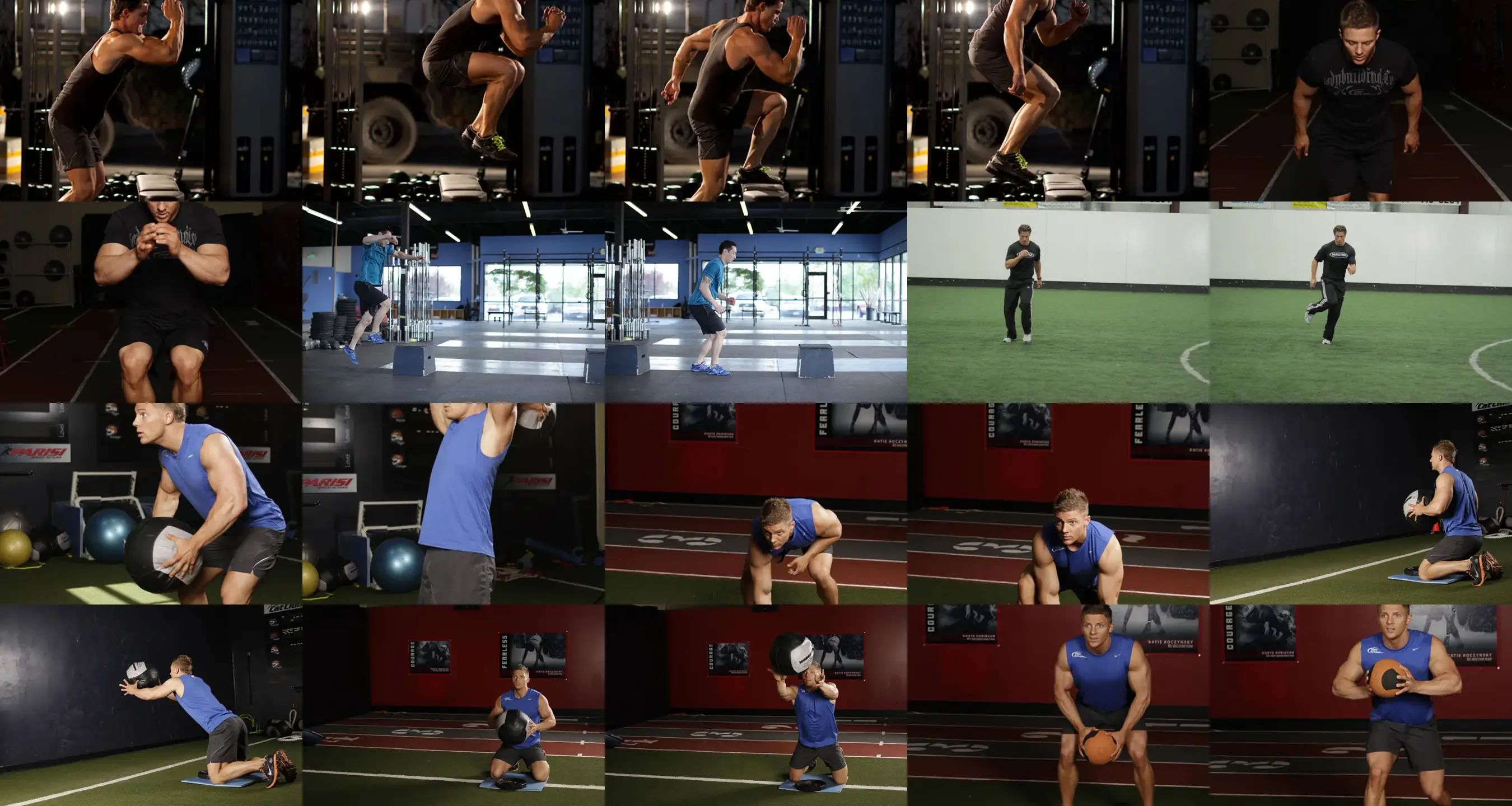
Setup and loading
Use a 6 to 10 pound medicine ball and stand 3 to 6 feet from a solid wall. The right weight is one you can throw fast on every rep; if the ball leaves slowly or in an arc, it is too heavy.
How to do the medicine ball chest pass step by step
- Stand facing a solid wall with your feet shoulder-width apart and your knees slightly bent.
- Hold the ball with both hands on its sides at chest height, elbows out in a natural position.
- Breathe in, dip slightly at the knees and load the ball into your chest like a spring.
- Extend your legs and arms together and fire the ball straight at the wall, exhaling hard.
- Finish with your arms straight and palms facing out, as if still pushing the ball.
- Catch the ball with bent arms, absorbing it back toward your chest, reset and repeat.
Form cues
- Every throw at maximum speed
- Legs and arms extend together
- Throw on a line, not an arc
- Exhale sharply on release
Common mistakes
- Ball too heavy: the throw slows down and loses power; pick a ball that leaves your hands fast.
- Throwing with your arms only: you waste your legs; push the floor away right before release.
- Catching with stiff arms: it can hurt your wrists and fingers; absorb by bending your elbows.
- Too many reps in a row: speed drops off; use short sets of 5 to 8 throws.
How to make it easier or harder
For an easier start, throw from your knees or seated against the wall with a light ball. To progress, try a step-in chest pass, a chest pass into a sprint, or a supine chest throw straight up with a slightly heavier ball.
Sets and reps for your goal
Power
4 x 5-63-6 sets of 1-5 reps with light or moderate loads (30-60% of your max on the main lifts), or with a ball or your bodyweight. Rest 2 to 3 minutes.
Every rep at the highest possible speed. As soon as you notice it moving slower (a 10-20% velocity loss), end the set. Train power fresh, never fatigued.
A guide for healthy adults. Adjust the load to your level and see a professional if you have an injury.
Check your form
Film yourself from the side or ask someone to watch, then tick what you get right.
Frequently asked questions
What weight medicine ball should I use for chest passes?
Six to 10 pounds works for most adults. Beginners or people with less upper body strength can start at 4 pounds. Throwing speed is the priority, not the weight of the ball.
What kind of medicine ball is best for wall throws?
Soft balls with a controlled bounce, like wall balls or grippy rubber balls, work best. Avoid very bouncy balls when standing close to the wall, because they can come back faster than you expect.
Sports it suits
Gear for this exercise
- Medicine ball3-6 kg (6-13 lb) for power throws.
As an Amazon Associate, Muscle Atlas earns from qualifying purchases.