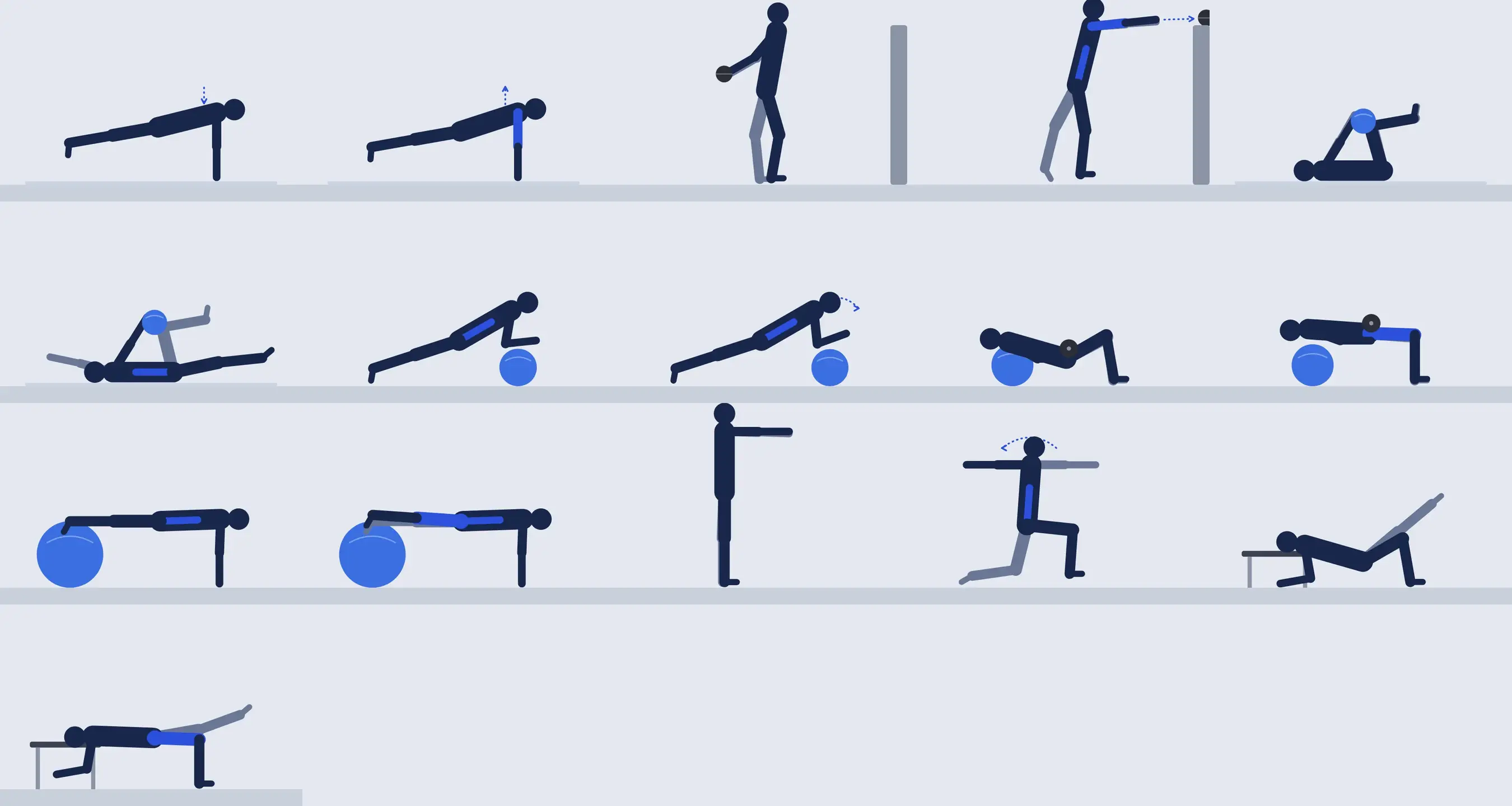
Setup and loading
Set up about a hand's length from the wall, hands slightly wider than your shoulders, with a mat or pad under your head. Adjust difficulty with range and support: if you cannot hold a handstand yet, start with pike push-ups or feet elevated on a box.
How to do the handstand push-up step by step
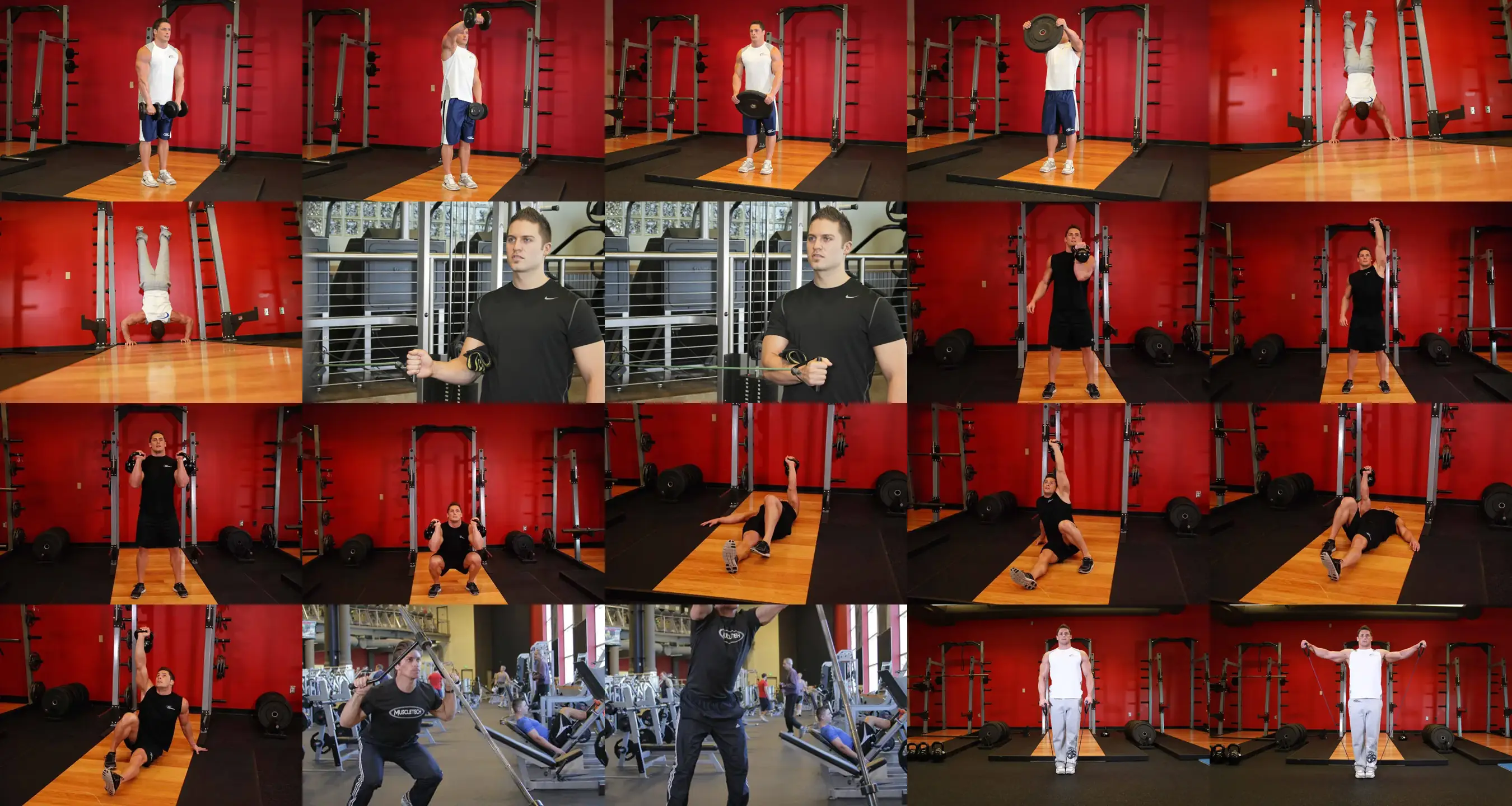
- Place your hands on the floor 6 to 8 inches from the wall, slightly wider than shoulder width.
- Kick up with control into a handstand, heels on the wall, body straight and abs braced.
- Inhale and bend your elbows, lowering your head toward the floor to form a triangle with your hands.
- Lightly touch the mat with your head without dumping weight onto your neck.
- Exhale and push the floor away hard until your arms are straight, keeping your ribs tucked.
- When done, come down one leg at a time with control and rest before the next set.
Form cues
- Head and hands form a triangle
- Ribs tucked, no arching
- Push the floor away
- Elbows slightly forward
Common mistakes
- Flaring the elbows wide: it stresses the shoulders; aim them about 45 degrees forward.
- Heavy arching against the wall: it loads the lower back; squeeze glutes and abs.
- Dropping onto your head: the neck takes a hit; lower with control and use a mat.
- Trying them before owning a handstand: risk of falling; practice pike push-ups and wall holds first.
How to make it easier or harder
As a regression, do pike push-ups on the floor, then with feet on a box, and practice static wall handstands. To progress, increase range with hands on parallettes or plates, face the wall, or work toward freestanding reps.
Sets and reps for your goal
Hypertrophy
3-4 x 8-12 · rest 60-90 s3-4 sets of 6-12 reps (up to 15-20 on isolation exercises) at 65-80% of your max. Rest 1 to 2 minutes.
Get close to failure (0-3 reps in reserve) and control the lowering for 2-3 seconds. Accumulate 10-20 sets per muscle per week.
Max Strength
4-5 x 3-6 · rest 2-3 min3-6 sets of 1-6 reps at 80-90% of your max (1RM). Rest 2 to 5 minutes.
Leave 1-3 reps in reserve. If your technique breaks down, lower the weight: strength is built with good reps.
A guide for healthy adults. Adjust the load to your level and see a professional if you have an injury.
Check your form
Film yourself from the side or ask someone to watch, then tick what you get right.
Frequently asked questions
How do I start doing handstand push-ups?
Begin with pike push-ups, hips high and head toward the floor, then elevate your feet on a box. At the same time, practice holding a wall handstand for 30 to 60 seconds. Once that is solid, try partial range reps.
Can handstand push-ups replace the overhead press?
They train the same muscles and can serve a similar role, especially in bodyweight programs. The difference is that the overhead press lets you add load in small steps, while here you adjust range and support instead.
Sports it suits
Gear for this exercise
- Exercise matThick (8-10 mm) for floor work.
As an Amazon Associate, Muscle Atlas earns from qualifying purchases.