Setup and loading
The height of the surface sets the difficulty: a 12 inch step is a good start and an 18 inch bench is already demanding. Choose a height that lets you do 8 to 15 full reps while keeping your body straight.
How to do the feet-elevated push-up step by step
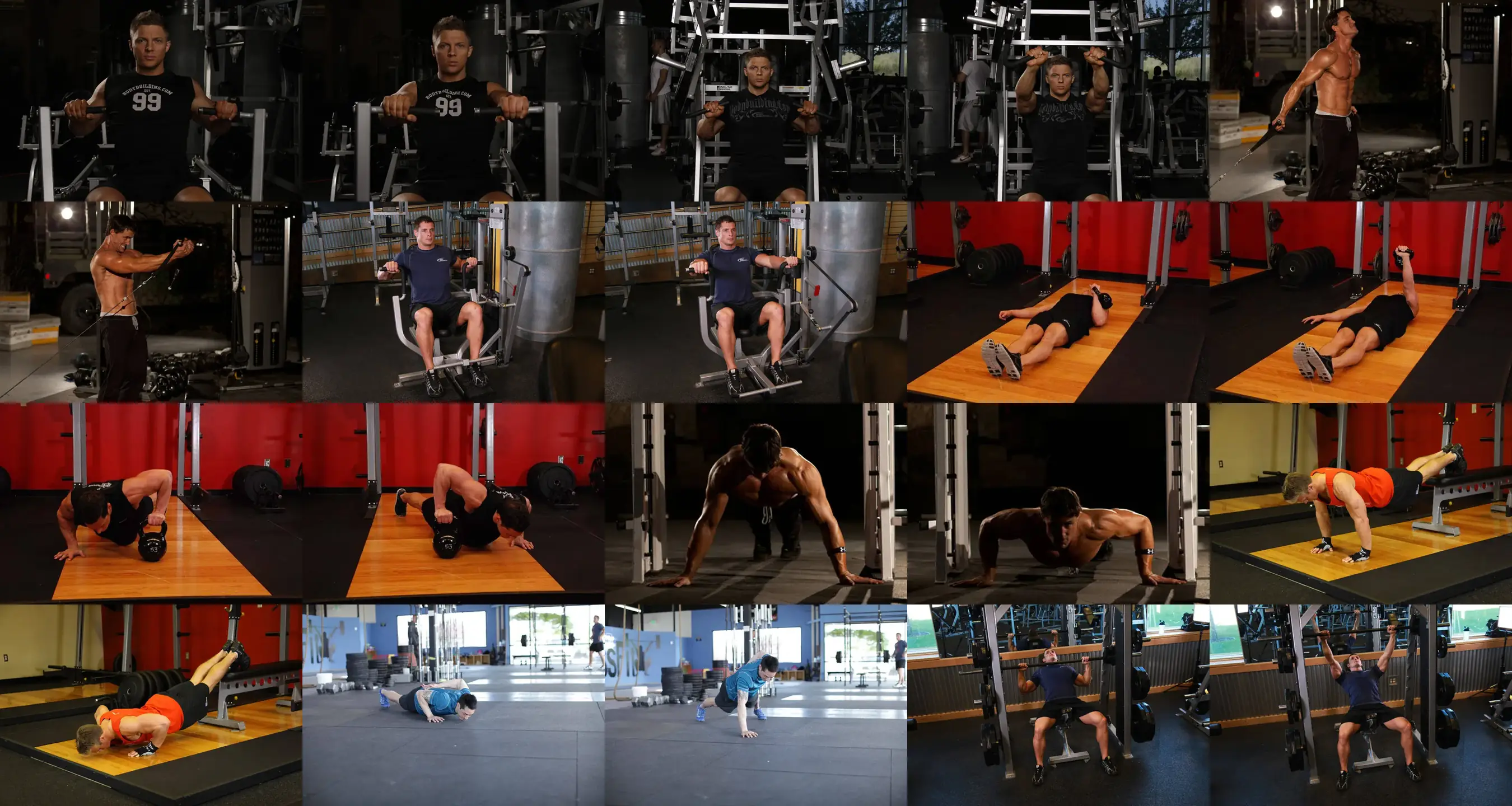
- Place your feet together on a sturdy bench or box and your hands on the floor slightly wider than your shoulders.
- Stack your hands under your shoulders, squeeze your glutes and abs, and make a straight line from heels to head.
- Breathe in and lower your chest toward the floor with your elbows about 45 degrees from your body.
- Descend until your chest nearly touches the floor without letting your hips sink.
- Breathe out and push the floor away until your arms are straight, keeping your neck neutral.
- When you finish, lower your knees to the floor first so you can step off safely.
Form cues
- Heels, hips and head in one line
- Elbows about 45 degrees from your torso
- Look at the floor slightly ahead
- Push the floor away from you
Common mistakes
- Arching your back: your low back caves and you lose strength; squeeze glutes and tuck your pelvis.
- Piking your hips up: takes load off your chest; keep your body completely straight.
- Feet too high: it turns into a shoulder press; start with a low surface.
- Partial reps: limit the training effect; lower until your chest nearly touches the floor.
How to make it easier or harder
If it feels hard, go back to regular floor push-ups or use a lower surface. To progress, raise the bench height, add a weighted vest, or do feet-elevated push-ups on rings or a suspension trainer.
Sets and reps for your goal
Hypertrophy
3-4 x 8-12 · rest 60-90 s3-4 sets of 6-12 reps (up to 15-20 on isolation exercises) at 65-80% of your max. Rest 1 to 2 minutes.
Get close to failure (0-3 reps in reserve) and control the lowering for 2-3 seconds. Accumulate 10-20 sets per muscle per week.
Max Strength
4-5 x 3-6 · rest 2-3 min3-6 sets of 1-6 reps at 80-90% of your max (1RM). Rest 2 to 5 minutes.
Leave 1-3 reps in reserve. If your technique breaks down, lower the weight: strength is built with good reps.
A guide for healthy adults. Adjust the load to your level and see a professional if you have an injury.
Check your form
Film yourself from the side or ask someone to watch, then tick what you get right.
Frequently asked questions
What do feet-elevated push-ups work?
They work your chest, front delts and triceps, with more emphasis on your upper chest than a regular push-up. Your core also works harder to hold a straight line at the steeper angle.
How high should my feet be for decline push-ups?
Start around 12 inches, like a stair step, and build up to bench height over time. The higher your feet, the more weight your arms carry and the closer it gets to a shoulder press.
Sports it suits
Gear for this exercise
- Exercise matThick (8-10 mm) for floor work.
As an Amazon Associate, Muscle Atlas earns from qualifying purchases.