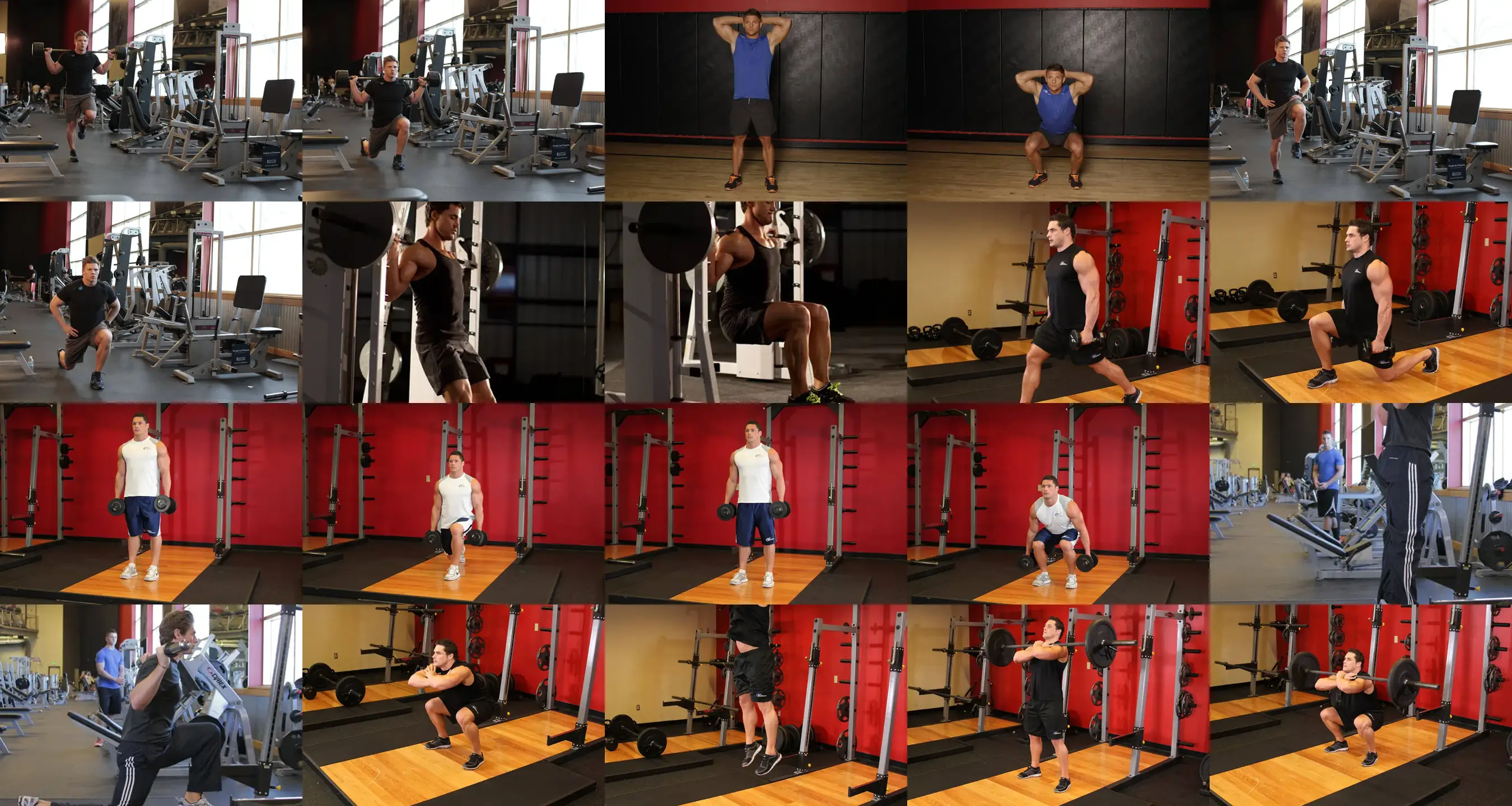
Setup and loading
Hold a dumbbell in each hand with your arms hanging at your sides and stand with your feet hip width apart. Choose a weight that allows 8 to 12 reps per leg without your grip giving out before your legs.
How to do the dumbbell reverse lunge step by step
- Stand with a dumbbell in each hand, arms at your sides, and feet hip width apart.
- Inhale, brace your core, and take a long step back with your left leg, landing on the ball of your foot.
- Lower by bending both knees until your back knee is an inch or two above the floor.
- Keep your weight on the front foot and your front knee in line with your toes.
- Exhale and drive through your front heel to bring your feet back together.
- Alternate legs or finish all reps on one side before switching.
Form cues
- Take a long, controlled step straight backward
- Weight stays in the front heel
- Torso tall with dumbbells hanging still
- Back knee nearly brushes the floor
Common mistakes
- Stepping back too short: your front knee travels far forward; lengthen your step.
- Pushing off the back leg: the front leg does less; rise through your front heel.
- Swinging the dumbbells: you lose balance; keep them still at your sides.
- Feet on the same line: you wobble; keep hip width between them.
How to make it easier or harder
To make it easier, do it with body weight or with one hand on a wall. To progress, add weight, try deficit reverse lunges for more range, or move to barbell reverse lunges.
Sets and reps for your goal
Hypertrophy
3-4 x 8-12 · rest 60-90 s3-4 sets of 6-12 reps (up to 15-20 on isolation exercises) at 65-80% of your max. Rest 1 to 2 minutes.
Get close to failure (0-3 reps in reserve) and control the lowering for 2-3 seconds. Accumulate 10-20 sets per muscle per week.
Max Strength
4-5 x 3-6 · rest 2-3 min3-6 sets of 1-6 reps at 80-90% of your max (1RM). Rest 2 to 5 minutes.
Leave 1-3 reps in reserve. If your technique breaks down, lower the weight: strength is built with good reps.
A guide for healthy adults. Adjust the load to your level and see a professional if you have an injury.
Check your form
Film yourself from the side or ask someone to watch, then tick what you get right.
Frequently asked questions
Are reverse lunges better than forward lunges?
Reverse lunges are usually easier on the knees and simpler to balance, since the front leg stays planted while you step back. Forward lunges demand more braking. Both are great; many people start with the reverse version.
Do reverse lunges work your glutes?
Yes. Stepping back tends to create a slight forward lean and more hip flexion, which increases work for the front leg's glutes. Leaning forward a little more accentuates that effect.
Sports it suits
Gear for this exercise
- Adjustable dumbbellsSave space and replace a whole dumbbell rack at home.
As an Amazon Associate, Muscle Atlas earns from qualifying purchases.