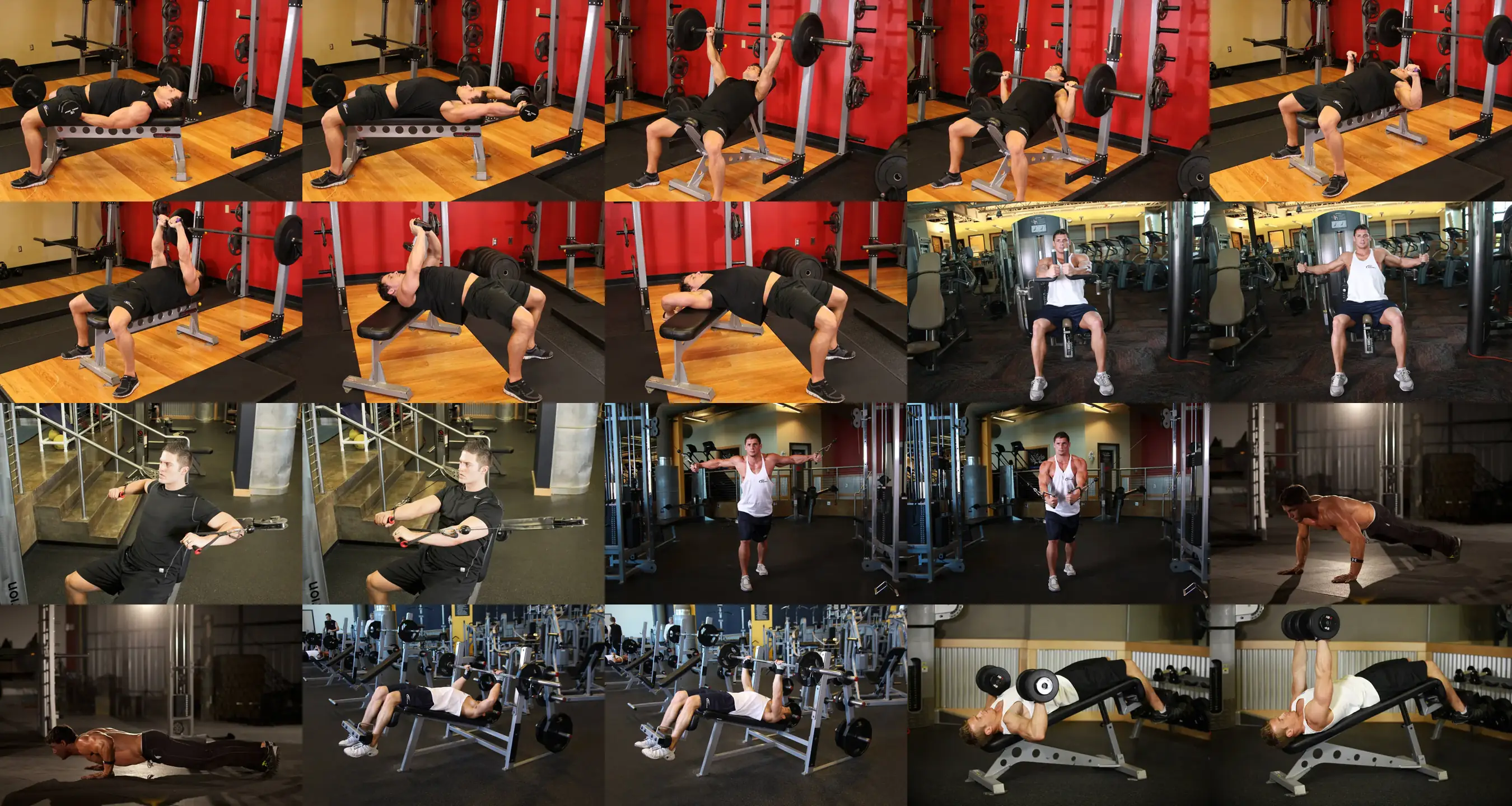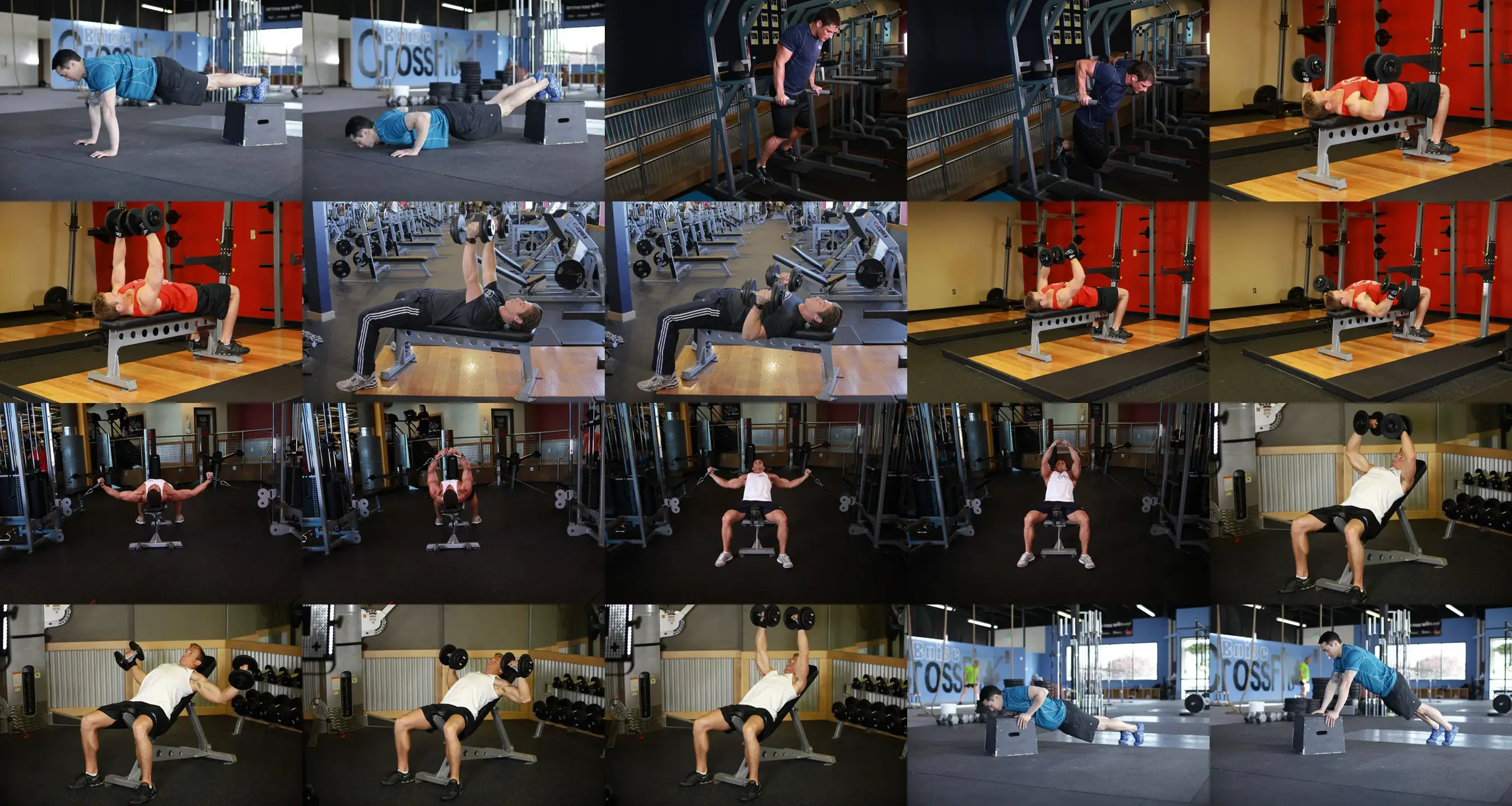
Setup and loading
Sit on the end of the bench with the dumbbells standing upright on your thighs and your feet planted. Pick a weight you can press with control for 8 to 12 reps; if you cannot get them into position on your own, it is too heavy.
How to do the dumbbell bench press step by step
- Sit on the bench with a dumbbell on each thigh, then lie back and kick them up to your shoulders with your knees.
- Set your feet, glutes, upper back and head, and pull your shoulder blades back and down with a natural arch.
- Position the dumbbells beside your chest, elbows about 45 to 60 degrees from your torso, wrists straight.
- Breathe in and press up until your arms are nearly straight, bringing the dumbbells slightly together over your chest.
- Exhale at the top without clanking the dumbbells or losing your shoulder blade position.
- Lower over two to three seconds until the dumbbells reach chest level and you feel a stretch, then repeat.
Form cues
- Shoulder blades back and down
- Elbows at 45 degrees, not flared out
- Wrists straight, stacked over elbows
- Drive your feet into the floor
Common mistakes
- Flaring your elbows wide: it stresses your shoulders; tuck them to about 45 degrees.
- Losing your shoulder blade set: the shoulder rolls forward; keep them pinched all set.
- Bouncing at the bottom: you lose control and tension; lower for two seconds and turn smoothly.
- Dropping the dumbbells to the sides at the end: it risks your shoulders; bring them to your thighs and sit up.
How to make it easier or harder
For an easier start, try the dumbbell floor press, which limits range, or incline push-ups. To progress, go heavier, try the incline dumbbell press or alternating single-arm press, or add a one-second pause at the bottom.
Sets and reps for your goal
Hypertrophy
3-4 x 8-12 · rest 60-90 s3-4 sets of 6-12 reps (up to 15-20 on isolation exercises) at 65-80% of your max. Rest 1 to 2 minutes.
Get close to failure (0-3 reps in reserve) and control the lowering for 2-3 seconds. Accumulate 10-20 sets per muscle per week.
Max Strength
4-5 x 3-6 · rest 2-3 min3-6 sets of 1-6 reps at 80-90% of your max (1RM). Rest 2 to 5 minutes.
Leave 1-3 reps in reserve. If your technique breaks down, lower the weight: strength is built with good reps.
A guide for healthy adults. Adjust the load to your level and see a professional if you have an injury.
Check your form
Film yourself from the side or ask someone to watch, then tick what you get right.
Frequently asked questions
Is the dumbbell bench press better than the barbell bench press?
The barbell lets you lift more and build max strength. Dumbbells give more range, train each side separately and tend to feel better on the shoulders. The best approach is to use both over the course of a year.
How low should you bring the dumbbells on bench press?
Lower until the dumbbells are roughly level with your chest and you feel a comfortable stretch. Going much deeper can strain your shoulders if your mobility is limited, so adjust the range to your body.
Sports it suits
Gear for this exercise
- Adjustable dumbbellsSave space and replace a whole dumbbell rack at home.
As an Amazon Associate, Muscle Atlas earns from qualifying purchases.