Setup and loading
Stand with your feet shoulder-width apart, toes turned out slightly, and your arms reaching forward for balance. If more than 20 reps feel easy, make it harder with slow descents, pauses at the bottom, or move on to a loaded variation.
How to do the bodyweight squat step by step
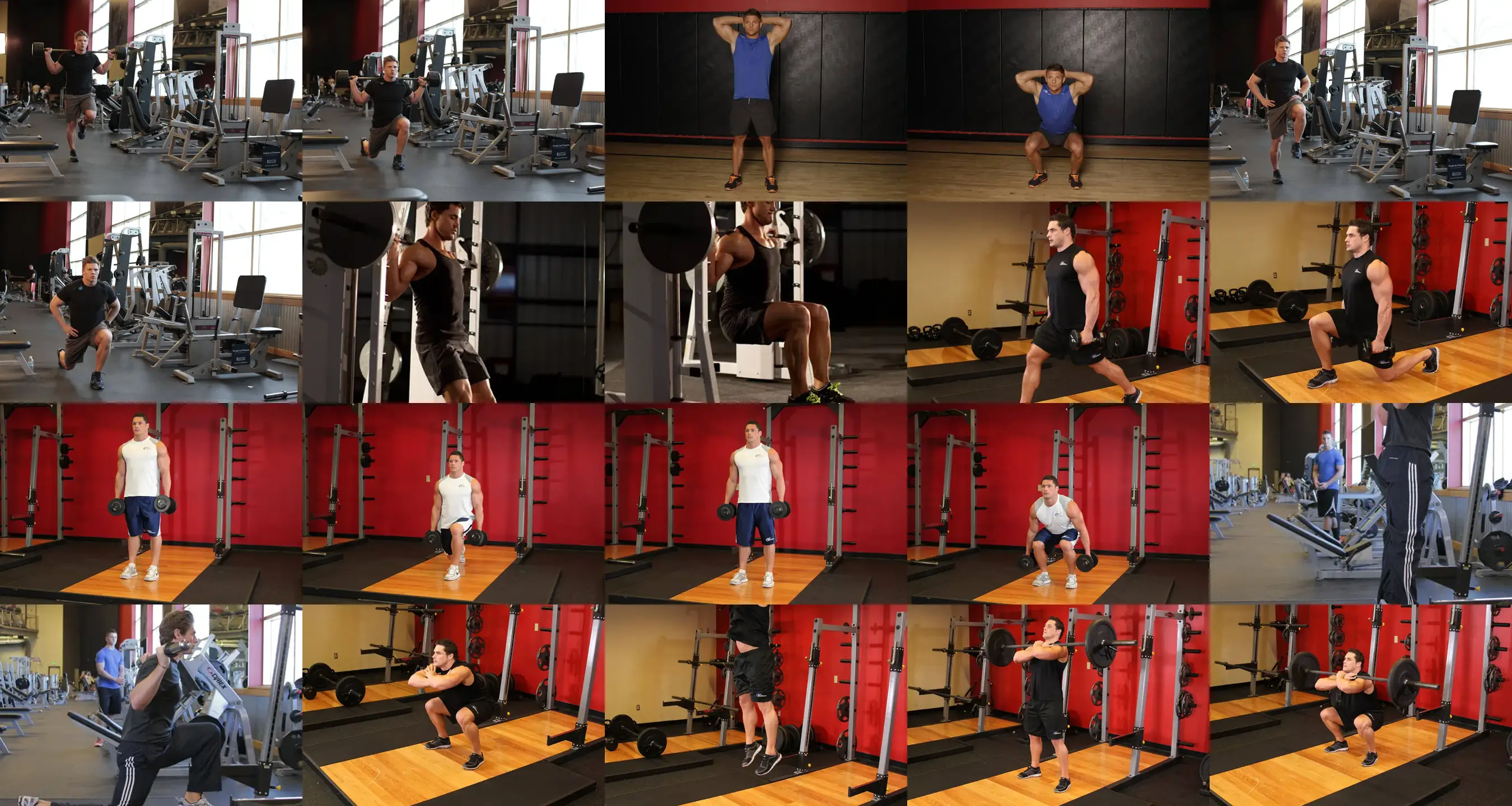
- Stand with your feet shoulder-width apart and your toes turned out slightly, about 15 to 30 degrees.
- Reach your arms forward at chest height, take a breath and brace your abs.
- Start lowering by sending your hips back and down while your knees travel in line with your feet.
- Sit as deep as you can with your heels down and chest up, ideally until your thighs pass parallel.
- Drive up through your whole foot, squeezing your glutes and breathing out.
- Finish fully standing with your hips and knees extended before starting the next rep.
Form cues
- Heels glued to the floor
- Knees out, tracking your feet
- Chest up, eyes forward
- Stand up fast by pushing the floor
Common mistakes
- Heels coming up: your weight shifts to your knees; spread pressure across your whole foot and work on mobility.
- Knees caving in: it stresses the joint; push them out in line with your second toe.
- Short range of motion: it limits glute work; sink at least until your thighs are parallel to the floor.
- Leaning too far forward: it loads your back; keep your chest up and arms forward for balance.
How to make it easier or harder
If going down is hard, squat to a bench or box, or hold a door frame for support. To progress, add a three-second pause at the bottom, try jump squats, or move on to the kettlebell goblet squat or the Bulgarian split squat.
Sets and reps for your goal
Hypertrophy
3-4 x 8-12 · rest 60-90 s3-4 sets of 6-12 reps (up to 15-20 on isolation exercises) at 65-80% of your max. Rest 1 to 2 minutes.
Get close to failure (0-3 reps in reserve) and control the lowering for 2-3 seconds. Accumulate 10-20 sets per muscle per week.
Max Strength
4-5 x 3-6 · rest 2-3 min3-6 sets of 1-6 reps at 80-90% of your max (1RM). Rest 2 to 5 minutes.
Leave 1-3 reps in reserve. If your technique breaks down, lower the weight: strength is built with good reps.
A guide for healthy adults. Adjust the load to your level and see a professional if you have an injury.
Check your form
Film yourself from the side or ask someone to watch, then tick what you get right.
Frequently asked questions
How many squats should I do a day?
It depends on your level. A good starting point is 3 or 4 sets of 10 to 20 reps three times a week. Daily squats are fine if nothing hurts, but progress comes more from increasing difficulty than from endlessly adding reps.
Is it bad if my knees go past my toes?
No, it is normal and necessary to squat deep with an upright torso. What matters is keeping your heels down and your knees tracking your feet. Artificially restricting your knees usually puts more stress on your back.
Sports it suits
Gear for this exercise
- Exercise matThick (8-10 mm) for floor work.
As an Amazon Associate, Muscle Atlas earns from qualifying purchases.