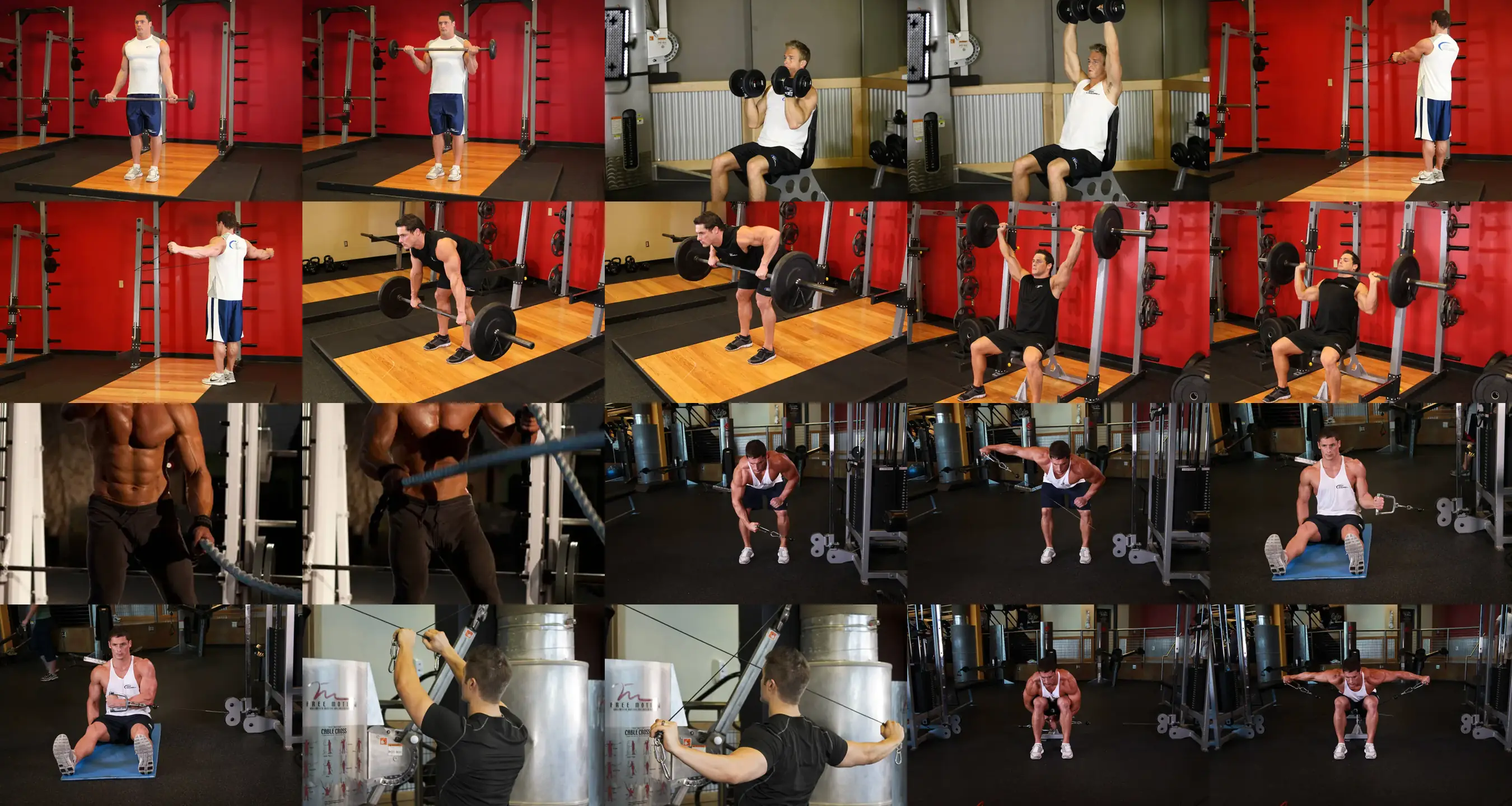
Setup and loading
Set the pulley at its lowest position with a single handle and stand sideways, holding the handle in the hand farthest from the tower. Choose a light weight you can move through a wide arc for 12 to 20 reps without twisting your torso.
How to do the bent-over low cable rear delt raise step by step
- Stand sideways to the low pulley and grab the handle with your far hand, reaching across your body.
- Hinge at the hips until your torso is nearly horizontal, knees bent and free hand braced on your thigh.
- With a slight bend in the elbow, exhale and sweep your arm out and up in a wide arc.
- Stop when the arm reaches shoulder height, in line with your torso, and squeeze for a second.
- Inhale and let the cable bring your arm back slowly across your body.
- Finish your reps, then switch sides by standing on the other side of the pulley.
Form cues
- Torso nearly parallel to the floor
- Wide arc, elbow barely bent
- Reach the hand out, not up
- Still chest, no twisting
Common mistakes
- Twisting your torso to lift: your back does the work; brace the free hand and lock your chest.
- Bending the elbow like a row: the lats take over; keep the elbow angle fixed.
- Lifting above shoulder height: the traps dominate; stop when the arm is level with your shoulder.
- Going too heavy: you lose the arc and shrug; drop the load and aim for higher reps.
How to make it easier or harder
As a regression, do it seated on the edge of a bench or with your chest supported on an incline bench. To progress, add weight gradually or hold two seconds at the top, and once the pattern is solid try two arm cable rear delt flyes.
Sets and reps for your goal
Hypertrophy
3 x 10-15 · rest 60 s3-4 sets of 6-12 reps (up to 15-20 on isolation exercises) at 65-80% of your max. Rest 1 to 2 minutes.
Get close to failure (0-3 reps in reserve) and control the lowering for 2-3 seconds. Accumulate 10-20 sets per muscle per week.
A guide for healthy adults. Adjust the load to your level and see a professional if you have an injury.
Check your form
Film yourself from the side or ask someone to watch, then tick what you get right.
Frequently asked questions
Why use a cable instead of dumbbells for rear delts?
With dumbbells there is almost no tension at the start, when your arm hangs straight down. The cable pulls diagonally and keeps tension from the very first inch, which makes every rep more effective and the lowering easier to control.
Will this exercise strain my lower back?
Your lower back works to hold the hinge, but with light weight and your free hand braced on your thigh the demand is low. If it bothers you, support your chest on an incline bench or do it seated.