Setup and loading
Lie lengthwise on a flat bench with your head at the end and hold an EZ or straight bar at shoulder width. Choose a weight for 8 to 12 reps that lets you lower to a comfortable shoulder range without arching your lower back.
How to do the bent-arm barbell pullover step by step
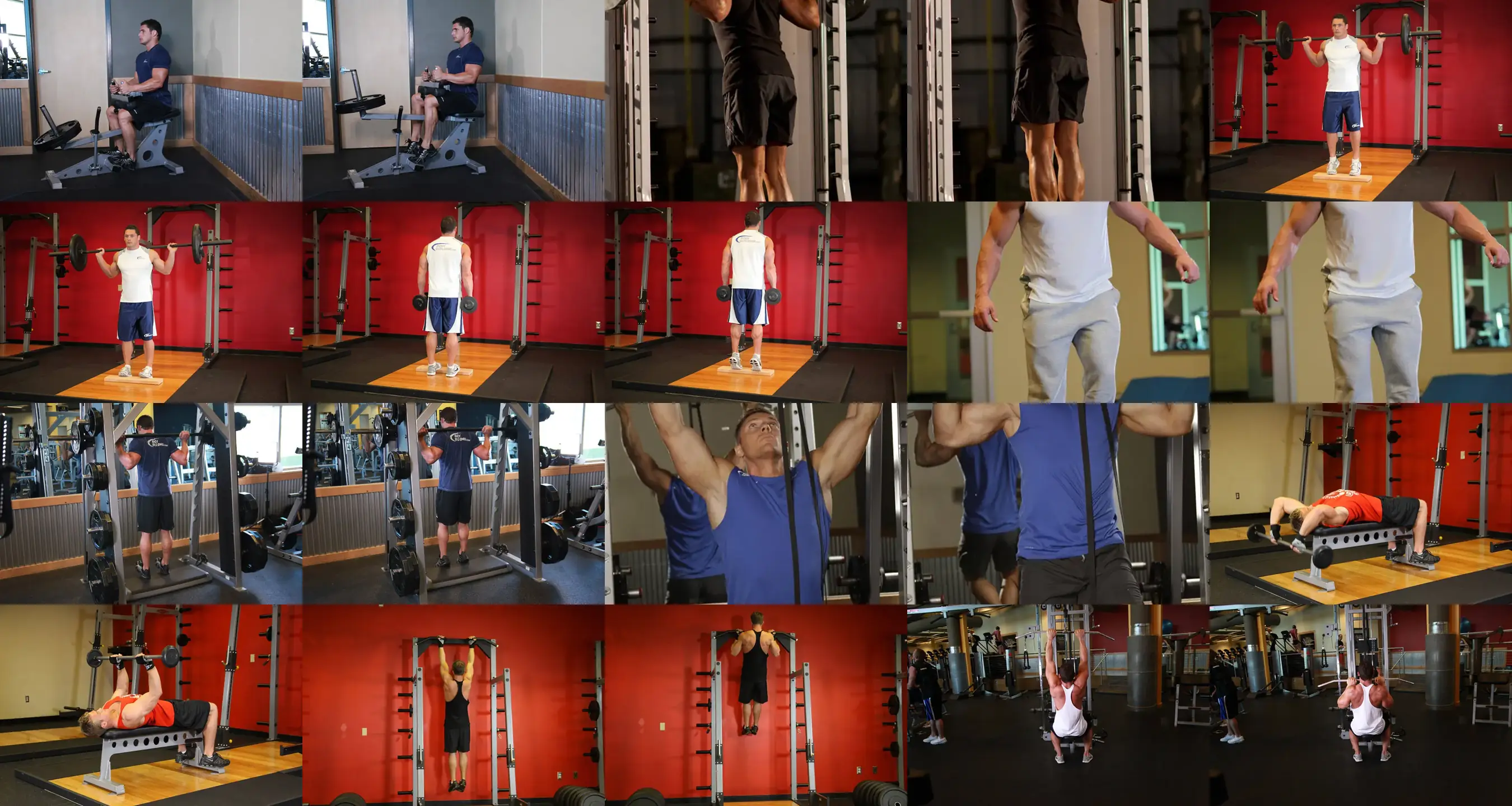
- Lie on a flat bench with feet on the floor and hold the bar over your chest with a shoulder-width grip and bent elbows.
- Lock your elbow angle at about 90 degrees or slightly wider and keep it for the whole movement.
- Inhale as you lower the bar in an arc over your face and behind your head, moving slowly.
- Stop when you feel a good stretch in your lats and chest, without your back lifting much off the bench.
- Exhale and pull the bar back along the same arc until it is over your chest, driving your elbows toward your hips.
- Repeat without letting your elbows flare or change angle.
Form cues
- Elbows bent and locked
- Slow lowering in an arc
- Ribs down, abs braced
- Pull with your elbows, not your hands
Common mistakes
- Lowering past your comfort: it stresses the shoulder; limit the range to pain-free.
- Turning it into a triceps extension: bending and straightening the elbows changes the move; lock the angle.
- Arching your back hard: it hides poor mobility; brace your abs and keep your ribs down.
- Flaring the elbows out: it reduces lat work; keep them pointing toward your feet.
How to make it easier or harder
To make it easier, start with a single dumbbell held in both hands or a cable straight-arm pulldown. To progress, add load, pause in the stretch, or try a lying cable pullover.
Sets and reps for your goal
Hypertrophy
3-4 x 8-12 · rest 60-90 s3-4 sets of 6-12 reps (up to 15-20 on isolation exercises) at 65-80% of your max. Rest 1 to 2 minutes.
Get close to failure (0-3 reps in reserve) and control the lowering for 2-3 seconds. Accumulate 10-20 sets per muscle per week.
Max Strength
4-5 x 3-6 · rest 2-3 min3-6 sets of 1-6 reps at 80-90% of your max (1RM). Rest 2 to 5 minutes.
Leave 1-3 reps in reserve. If your technique breaks down, lower the weight: strength is built with good reps.
A guide for healthy adults. Adjust the load to your level and see a professional if you have an injury.
Check your form
Film yourself from the side or ask someone to watch, then tick what you get right.
Frequently asked questions
Does the pullover work chest or back more?
It works both. With bent arms and tucked elbows the lats usually dominate; with straighter arms and flared elbows the chest does more. Focusing on pulling with your elbows also helps you feel your back.
Is the pullover bad for your shoulders?
Not if you respect your mobility. Taking a heavy bar past your comfortable range can stress the shoulder. Warm up, use moderate loads, and increase the range gradually.
Sports it suits
Gear for this exercise
- Olympic barbell and platesTo keep progressing on the big lifts with heavy loads.
As an Amazon Associate, Muscle Atlas earns from qualifying purchases.