Setup and loading
Use a stable, low bench around 12 to 18 inches high with nothing wobbly, on a non slip surface. Start with single forward jumps and move to linked lateral jumps only when you clear the bench comfortably on every rep.
How to do the bench jump step by step
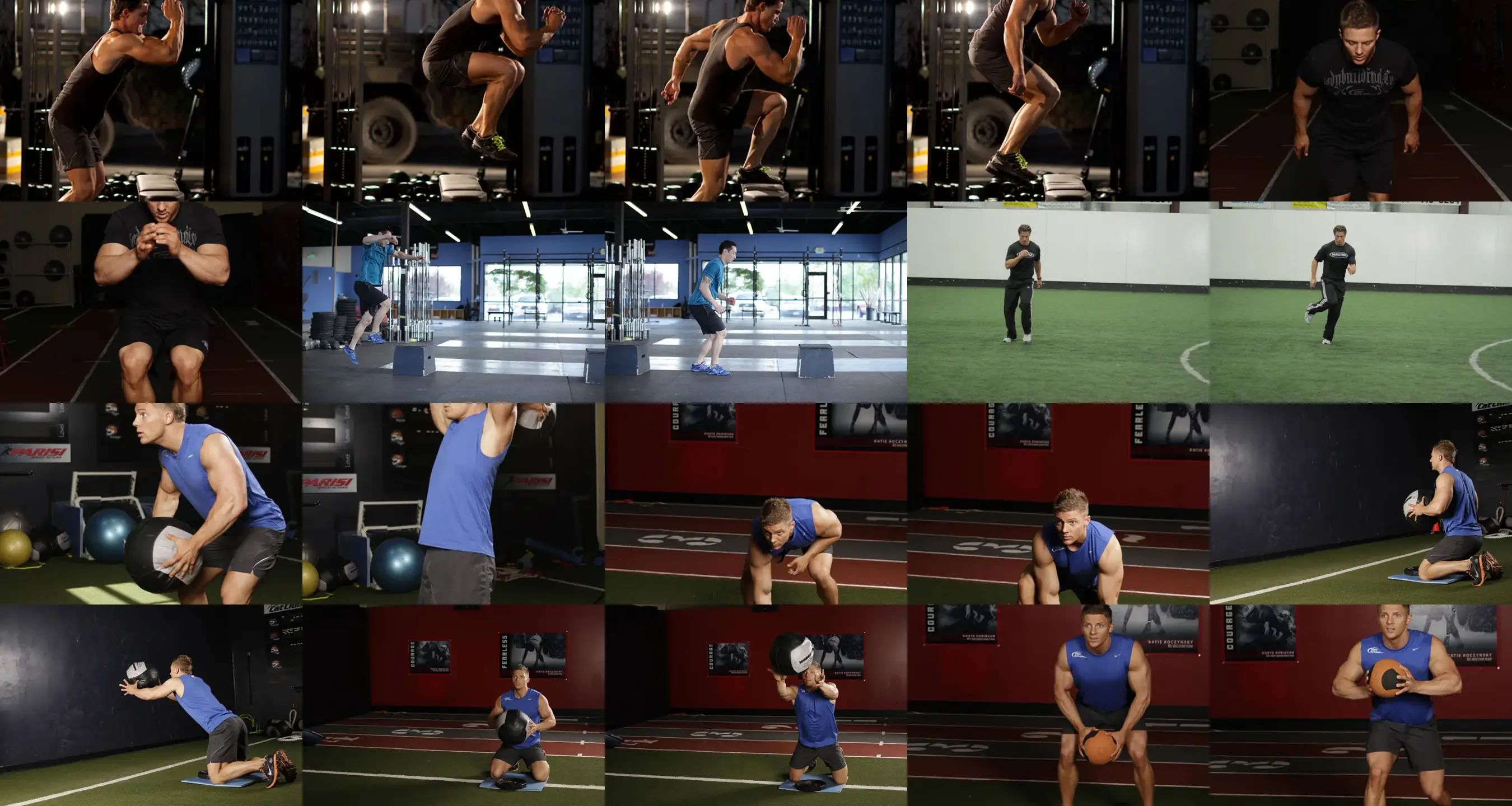
- Stand with the bench 1 to 2 feet in front of you or to your side, feet hip width apart.
- Drop quickly into a half squat while swinging your arms back and breathing in.
- Jump hard, driving your arms up and pulling your knees in to clear the bench with room to spare.
- Land on the other side on the balls of your feet, lowering your heels and bending hips and knees to land quietly.
- Exhale on landing and, if you are linking reps, rebound immediately back to the starting side.
- Do 5 to 10 jumps per set and stop as soon as height or landing control drops off.
Form cues
- Knees up to clear the bench
- Quiet, springy landing
- Arms pull your body upward
- Eyes forward, not on the bench
Common mistakes
- Clipping the bench: it can cause a fall; start lower and tuck your knees more.
- Landing stiff legged: impact travels to knees and back; bend and absorb every landing.
- Knees caving on landing: it stresses the joint; push your knees out over your toes.
- Continuing while fatigued: technique breaks down fast; end the set when height drops.
How to make it easier or harder
As a regression, jump over a line on the floor or a low foam hurdle. To progress, raise the obstacle, shorten ground contact between jumps, or line up several benches or hurdles in a row.
Sets and reps for your goal
Plyometrics
3-5 x 3-6 jumps · rest 1-2 min3-6 sets of 3-8 jumps. In total, 60-100 contacts per session (40-60 if you're a beginner). Rest 1 to 2 minutes between sets.
Short, quiet ground contact. If the jump loses height or your foot sticks to the ground, stop: the set is no longer training reactivity. Two sessions per week, 48 h apart.
A guide for healthy adults. Adjust the load to your level and see a professional if you have an injury.
Check your form
Film yourself from the side or ask someone to watch, then tick what you get right.
Frequently asked questions
What height bench should you jump over?
Start with a standard 12 to 18 inch gym bench. The key is clearing it easily on every jump; if you clip it or land stiff, use something lower.
Is a bench jump the same as a box jump?
No. In a box jump you land on top of the box, which reduces impact. In a bench jump you clear it and land on the floor, so the landing and rebound demand is higher.
Sports it suits
Gear for this exercise
- Exercise matThick (8-10 mm) for floor work.
- Plyo boxFoam boxes forgive missed jumps.
As an Amazon Associate, Muscle Atlas earns from qualifying purchases.