Setup and loading
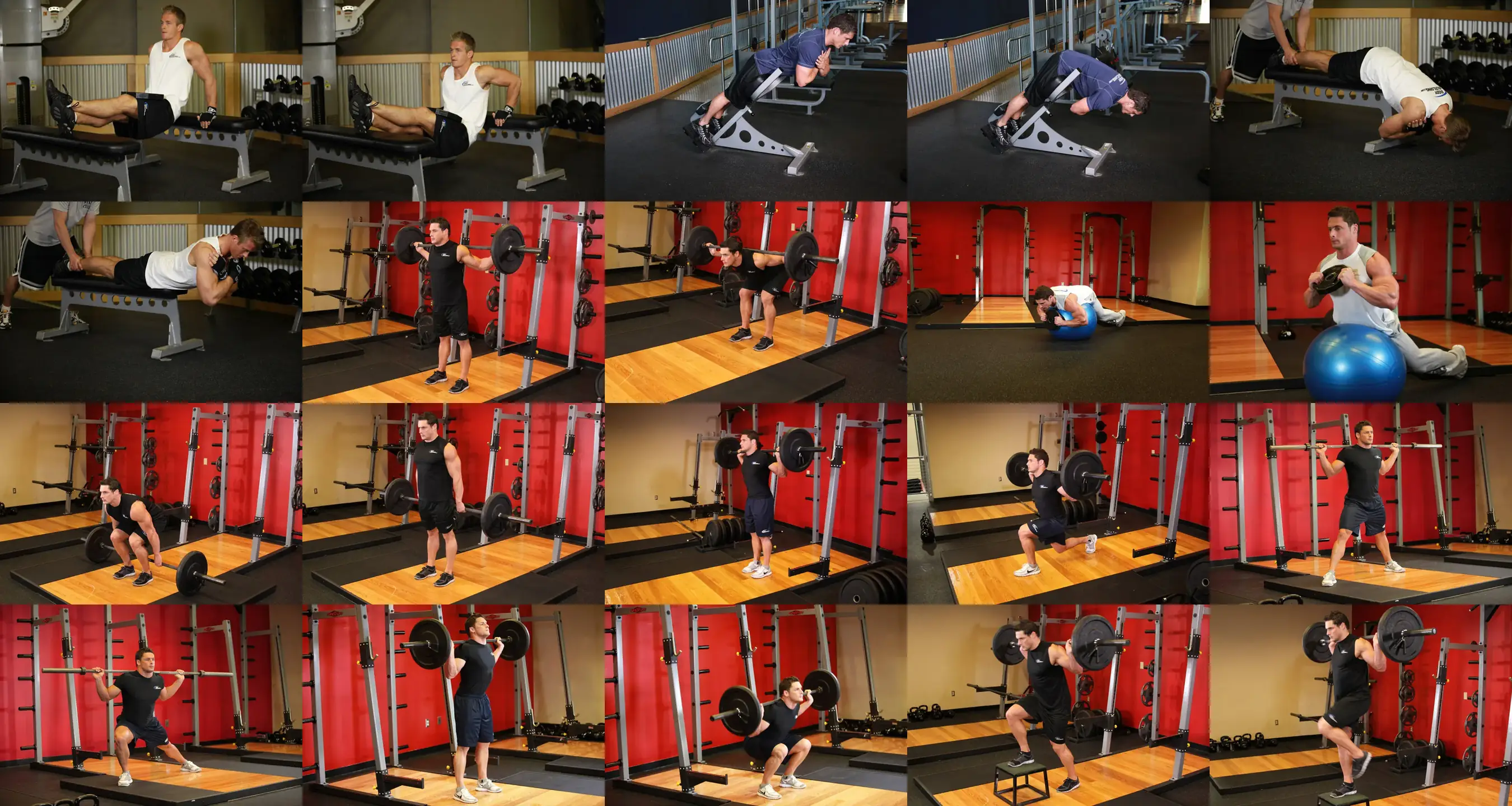
Adjust the pad so it sits at the top of your thighs, just below your hip bones, so you can hinge freely. Start with bodyweight and arms crossed; once 15 reps feel easy, hug a plate to your chest.
How to do the back extension (hyperextension) step by step
- Adjust the bench so the pad sits at the top of your thighs and hook your ankles under the rollers.
- Start with your body straight, arms crossed over your chest or hands beside your temples.
- Inhale and lower your torso by hinging at the hips, back straight, until you feel a stretch in your hamstrings.
- Squeeze your glutes and press your hips into the pad to begin the lift.
- Exhale and rise until your body forms a straight line from ankles to head, without going past it.
- Pause briefly at the top with your glutes squeezed, then lower slowly into the next rep.
Form cues
- Lift with your glutes, not just your back
- Stop at a straight line, no arching
- Slow, controlled movement
- Neutral chin, eyes on the floor ahead
Common mistakes
- Hyperextending at the top: it compresses your lower back; stop when your body is straight.
- Swinging up with momentum: muscles lose tension; take two seconds up and two down.
- Pad set too high: it blocks the hip hinge; position it just below your hip bones.
- Cranking your head up: it strains your neck; keep your gaze on the floor.
How to make it easier or harder
To make it easier, do floor supermans or glute bridges, or shorten the range of motion. To progress, hold a plate to your chest, place a barbell on your back, add a pause at the top, or try the single-leg version.
Sets and reps for your goal
Hypertrophy
3 x 10-15 · rest 60 s3-4 sets of 6-12 reps (up to 15-20 on isolation exercises) at 65-80% of your max. Rest 1 to 2 minutes.
Get close to failure (0-3 reps in reserve) and control the lowering for 2-3 seconds. Accumulate 10-20 sets per muscle per week.
A guide for healthy adults. Adjust the load to your level and see a professional if you have an injury.
Check your form
Film yourself from the side or ask someone to watch, then tick what you get right.
Frequently asked questions
Are back extensions good for lower back pain?
Strengthening the lower back and glutes helps many people feel better, but back extensions are not a treatment. If you have pain, start with a short range and no load, and see a professional if it persists.
How do you make back extensions target the glutes?
Round your upper back slightly, turn your feet out a little, and drive your hips into the pad. This makes the motion come more from the hips, so your glutes work harder than your spinal erectors.