Setup and loading
Set the platform a short step away with the stone between your feet; if the rules allow it, use tacky on your forearms and wear sleeves. Start with light stones to learn the pattern and progress in small jumps.
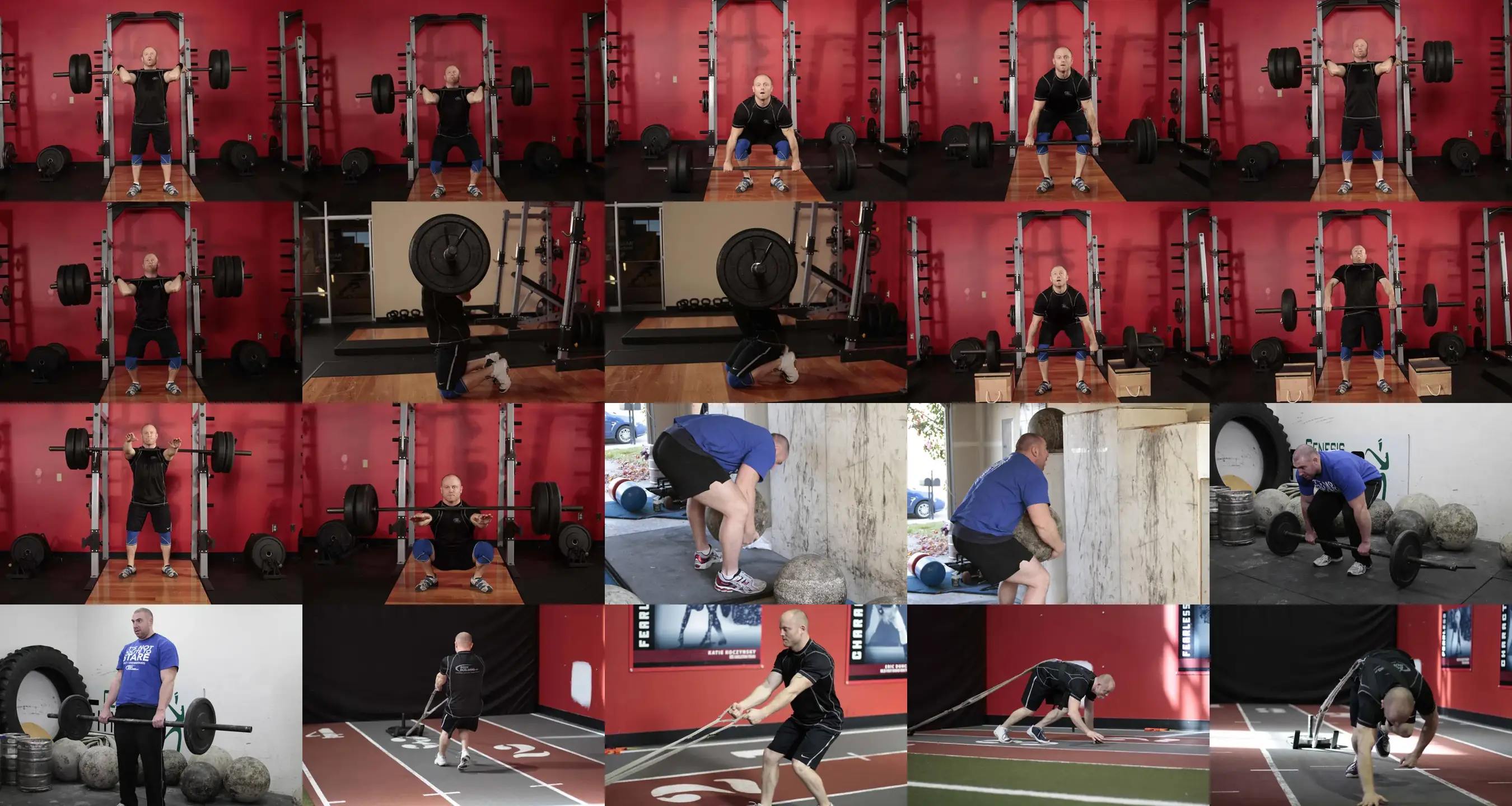
How to do the atlas stones step by step
- Stand with the stone between your feet, slightly wider than hips, and fold over it with your hands underneath.
- Hug the stone with fingers under it and forearms pressed on its sides, then breathe in and brace.
- Partly extend your hips to break it off the floor and roll it onto your upper thighs in a squat.
- Regrip higher, squeeze it into your chest, and tuck your chin over the top of the stone.
- Explosively extend your hips toward the platform, driving the stone with your chest until it rests on top.
- Exhale, release the stone under control, and lower or roll it back carefully for the next rep.
Form cues
- Hug the stone, do not curl it
- Lap the stone on your thighs first
- Chin over the stone, chest forward
- Explosive hips toward the platform to finish
Common mistakes
- Pulling with straight arm biceps: it risks a biceps tear; hug and use your hips.
- Skipping the lap: you lose control; settle it on your thighs before extending.
- Platform too far away: you must throw it and miss; set it one short step away.
- Jumping weight too fast: technique breaks down; progress in small steps from light stones.
How to make it easier or harder
To learn, practice sandbag to platform loads or Zercher sandbag squats. To progress, increase stone weight, raise the platform height, or link several loads back to back.
Sets and reps for your goal
Max Strength
4-5 x 3-6 · rest 2-3 min3-6 sets of 1-6 reps at 80-90% of your max (1RM). Rest 2 to 5 minutes.
Leave 1-3 reps in reserve. If your technique breaks down, lower the weight: strength is built with good reps.
Endurance
2-4 x 15-25 or 30-60 s2-4 sets of 15-30 reps or 30-60 seconds at 40-60% of your max. Rest 30 to 60 seconds.
Steady pace and clean technique to the end. Circuits help you build volume with little rest.
A guide for healthy adults. Adjust the load to your level and see a professional if you have an injury.
Check your form
Film yourself from the side or ask someone to watch, then tick what you get right.
Frequently asked questions
How do you grip an Atlas stone?
You hug it, with fingers under the stone and forearms squeezing the sides, rather than pulling with your hands. Once it is in your lap, regrip higher and squeeze it into your chest before extending your hips.
Can you train Atlas stones without stones?
Yes, a sandbag or a filled training ball mimics the movement fairly well. Use them to learn the hug, the lap and the hip extension before moving to real stones.