Setup and loading
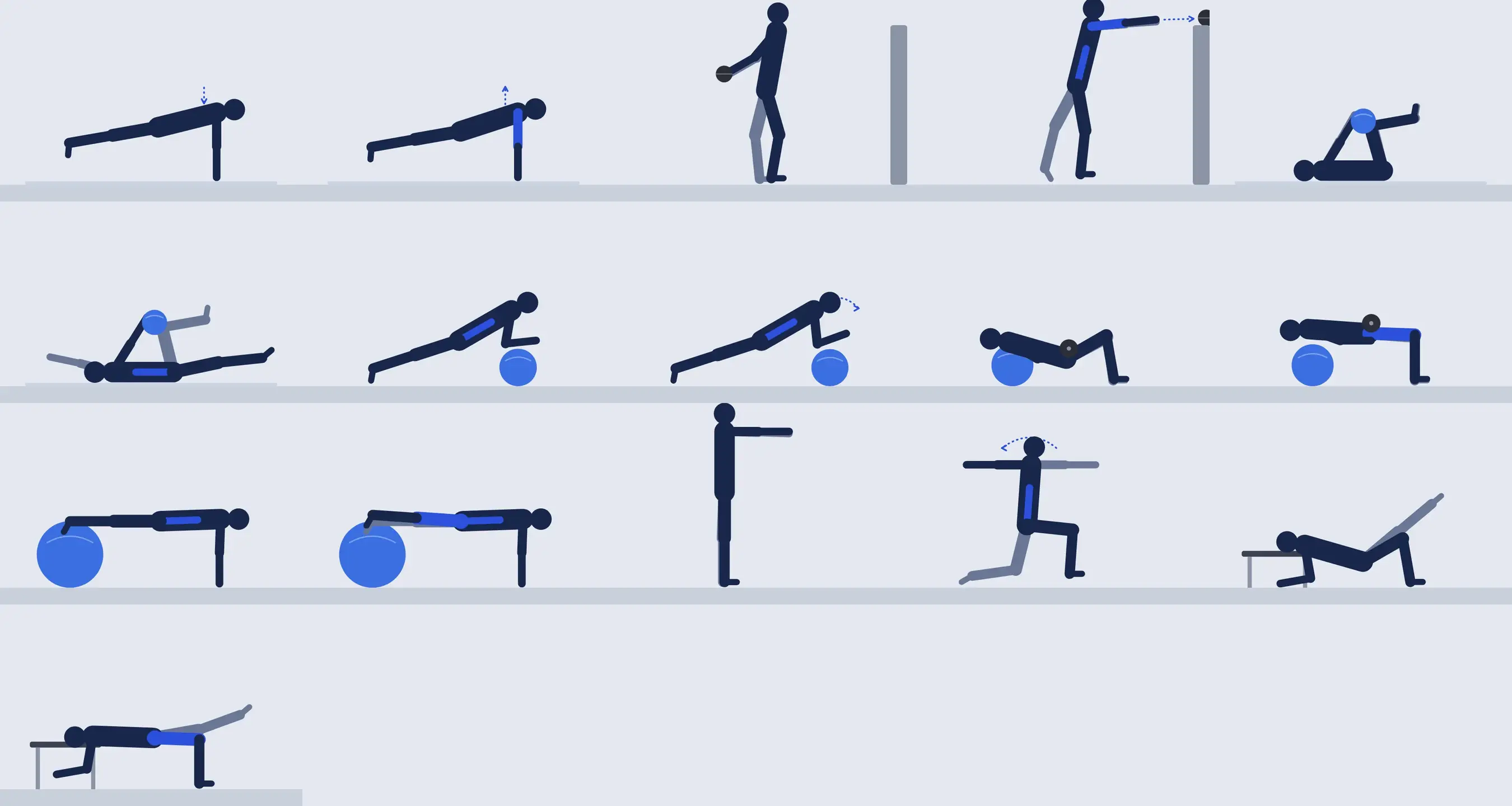
Lie on a mat with a small or medium stability ball between your hands and knees. Make it harder by lowering the extended leg closer to the floor, slowing each rep, or squeezing the ball harder.
How to do the stability ball dead bug step by step
- Lie on your back with arms reaching to the ceiling and knees over hips at 90 degrees, holding the ball between hands and knees.
- Exhale, press your lower back into the floor, and squeeze the ball with your hands and knees.
- Inhale as you reach your right arm overhead and extend your left leg forward close to the floor.
- Keep your left hand and right knee pressing the ball so it does not shift or drop.
- Exhale and return to the start, bringing that arm and leg back against the ball.
- Switch sides and alternate 8 to 12 reps per side with control.
Form cues
- Lower back glued to the floor
- Squeeze the ball hard
- Exhale on the return
- Move slowly, no rush
Common mistakes
- Arching your back as you extend: abs lose control; shorten the leg reach.
- Easing off the ball: core activation drops; keep the pressure constant.
- Lifting your head and neck: adds needless tension; rest your head relaxed.
- Going too fast: reduces control; take two or three seconds each way.
How to make it easier or harder
To regress, move only your arms or only your legs, or do a regular dead bug with a shorter range. To progress, lower the leg further, hold 3 seconds extended, or move to banded or dumbbell dead bugs.
Sets and reps for your goal
Core & Stability
3 x 30 s alternating3-4 sets of 20-45 seconds or 8-12 slow reps. Rest 45 to 60 seconds.
Neutral spine, tight abs and controlled breathing. Progress in time or leverage before adding weight.
Injury Prevention
3 x 8 per side2-3 sets of 10-15 slow reps with a light or moderate load, 2-3 times per week.
Control the lowering (about 3 seconds). This is quality work, not fatigue work: finish every set feeling good.
A guide for healthy adults. Adjust the load to your level and see a professional if you have an injury.
Check your form
Film yourself from the side or ask someone to watch, then tick what you get right.
Frequently asked questions
What does the ball add to a dead bug?
Pressing the ball with the opposite hand and knee forces your abs to work harder and helps keep your lower back down. It also gives clear feedback: if the ball drops or shifts, you have lost tension.
Are dead bugs good for back pain?
They are widely used to train the core without loading the spine, since your back stays supported. They can help build lower back control. If you have pain, keep it pain free and check with a professional to adapt it.
Sports it suits
Gear for this exercise
- Stability ballPick the diameter for your height (55-65 cm for most people).
As an Amazon Associate, Muscle Atlas earns from qualifying purchases.