Setup and loading
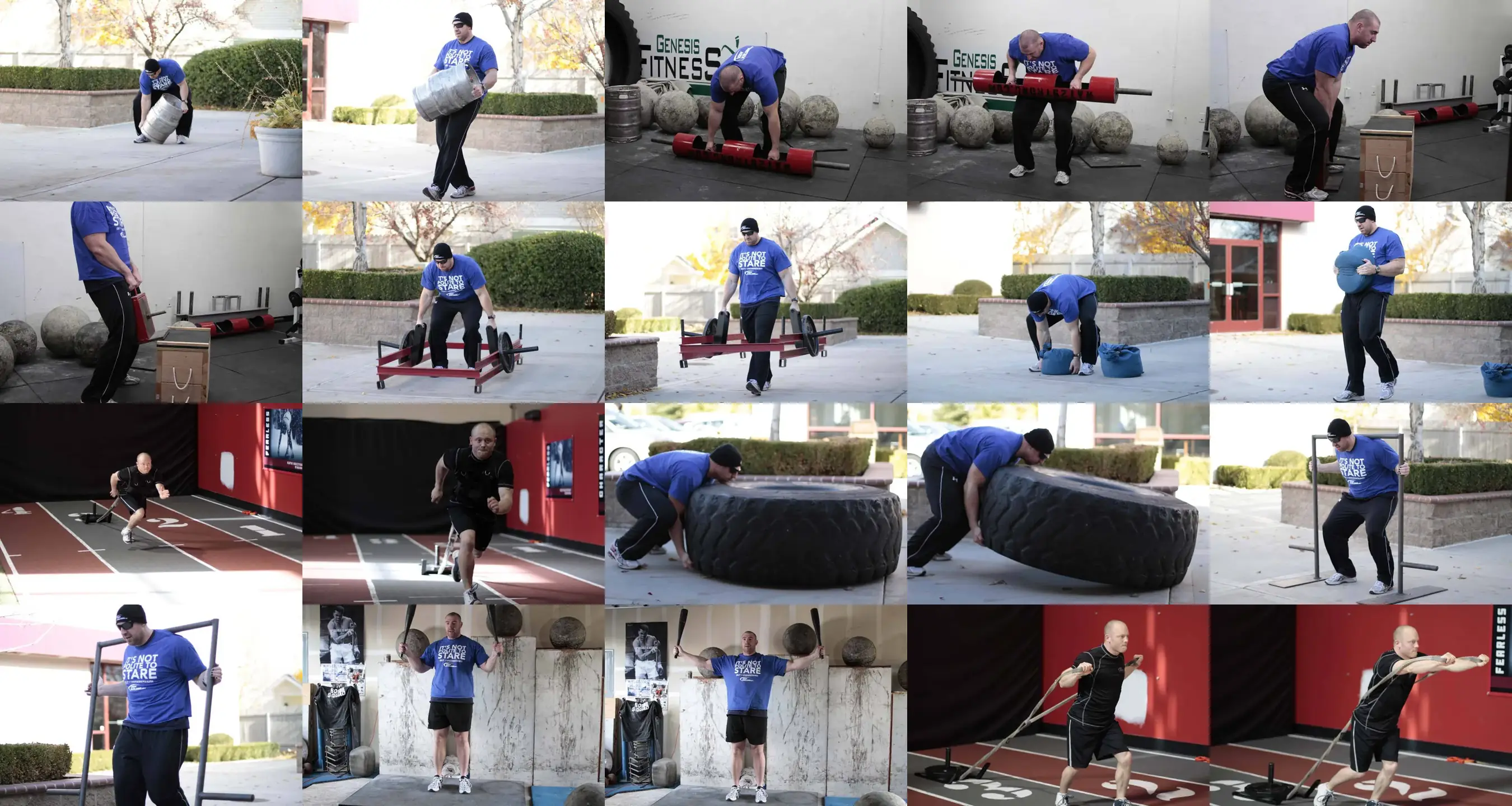
Stand centered inside the frame with the handles on each side at hand height. Start with light weight and short distances, because the frame tends to tip forward or back.
How to do the rickshaw carry step by step
- Step into the frame and stand centered with feet hip width apart and handles at your sides.
- Hinge and grab the handles hard, spine neutral and shoulders over your hands.
- Breathe in, brace, and lift the frame by driving through your heels, like a trap bar deadlift.
- Steady the frame at the top with straight arms and shoulders back before moving.
- Walk quickly with short, controlled steps, taking short breaths without losing your brace.
- When finished, stop, hinge, and lower the frame to the floor under control.
Form cues
- Crush the handles with your whole hand
- Steady the frame before your first step
- Short, quick steps, do not sprint
- Shoulders back, torso rigid throughout
Common mistakes
- Walking before stabilizing: the frame sways; settle it before stepping.
- Long steps: the frame pushes you and control is lost; take short, quick steps.
- Rounding the back on the lift: it loads the spine; use your hips and stay neutral.
- Leaning forward: the frame tips forward; keep your torso upright.
How to make it easier or harder
To make it easier, practice trap bar deadlifts and dumbbell farmer's walks. To progress, add load, extend the distance, or race it for time.
Sets and reps for your goal
Max Strength
4-5 x 3-6 · rest 2-3 min3-6 sets of 1-6 reps at 80-90% of your max (1RM). Rest 2 to 5 minutes.
Leave 1-3 reps in reserve. If your technique breaks down, lower the weight: strength is built with good reps.
Endurance
4 x 30-40 m2-4 sets of 15-30 reps or 30-60 seconds at 40-60% of your max. Rest 30 to 60 seconds.
Steady pace and clean technique to the end. Circuits help you build volume with little rest.
A guide for healthy adults. Adjust the load to your level and see a professional if you have an injury.
Check your form
Film yourself from the side or ask someone to watch, then tick what you get right.
Frequently asked questions
What is the difference between a rickshaw carry and a farmer's walk?
In a farmer's walk you carry two separate implements. The rickshaw is a single frame partly supported by wheels or skids that tends to tilt, demanding more core control.
How can I train for the rickshaw without one?
Combine trap bar deadlifts with trap bar carries or heavy dumbbell farmer's walks. That trains the pick, the grip and the carry, though without the frame's unique instability.