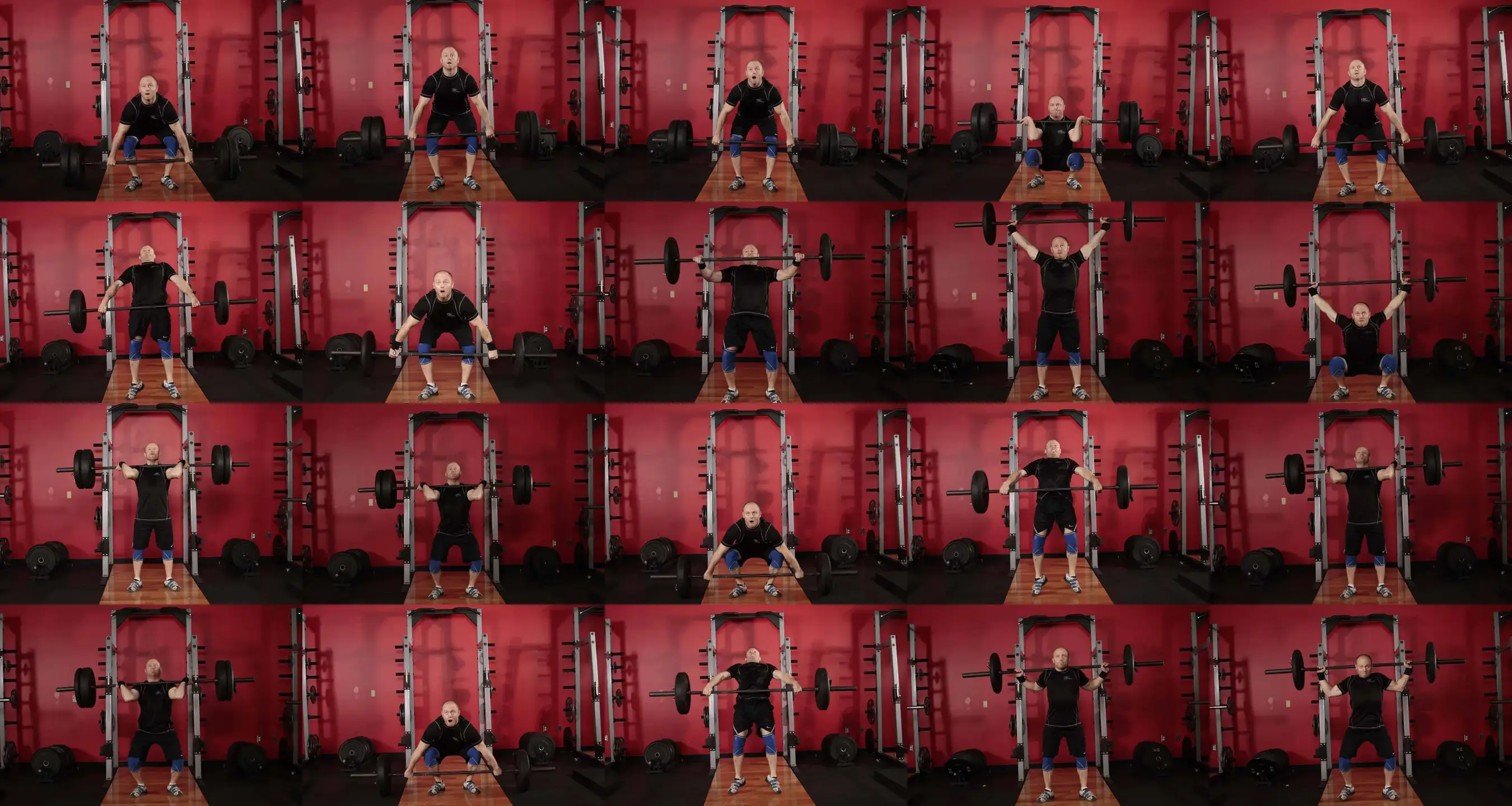
Setup and loading
Use your wide snatch grip and hip width feet. Loads are usually 70 to 85 percent of your full snatch because you need more bar height; if you catch below parallel, the weight is too heavy.
How to do the power snatch step by step
- Set up with the bar over midfoot, a wide hook grip, and hips slightly higher than in a clean.
- Breathe in, brace, and push the floor away to lift the bar, with shoulders over the bar.
- Keep the bar close and, as it reaches your hip crease, explosively extend your hips, knees and ankles.
- Pull your elbows high and out and turn your arms over to drop under the bar quickly.
- Catch with locked arms in a partial squat, feet slightly wider, and the bar over the back of your neck.
- Stand up while stabilizing the bar overhead, exhale, and lower it under control to your thighs and the floor.
Form cues
- Bar to the hip crease before extending
- Pull with your elbows high and out
- Catch the bar high with arms locked
- Land with fast, firm feet in place
Common mistakes
- Catching below parallel: it becomes a full snatch; reduce weight if you sink.
- Pulling with the arms too early: you lose hip extension; wait for hip contact.
- Catching with bent elbows: it turns into a press out; lock out on landing.
- Jumping forward: the bar travels out front; extend vertically and land in place.
How to make it easier or harder
To make it easier, start with the muscle snatch or hang power snatch from the thigh. To progress, add load or move to the full snatch with a deep squat catch.
Sets and reps for your goal
Power
4-6 x 2-5 · full rest3-6 sets of 1-5 reps with light or moderate loads (30-60% of your max on the main lifts), or with a ball or your bodyweight. Rest 2 to 3 minutes.
Every rep at the highest possible speed. As soon as you notice it moving slower (a 10-20% velocity loss), end the set. Train power fresh, never fatigued.
Max Strength
4-5 x 3-6 · rest 2-3 min3-6 sets of 1-6 reps at 80-90% of your max (1RM). Rest 2 to 5 minutes.
Leave 1-3 reps in reserve. If your technique breaks down, lower the weight: strength is built with good reps.
A guide for healthy adults. Adjust the load to your level and see a professional if you have an injury.
Check your form
Film yourself from the side or ask someone to watch, then tick what you get right.
Frequently asked questions
What is the difference between a power snatch and a snatch?
In a power snatch you catch the bar above parallel in a partial squat. In a full snatch you catch it in a deep squat, which allows more weight but demands more mobility. The power snatch especially builds pull height and speed.
Are power snatches good for athletes?
Yes, they are popular in power sports because they train explosive hip extension and coordination. They are technical, though, so learn them with a coach and light loads before pushing the weight.
Sports it suits
Gear for this exercise
- Olympic barbell and platesTo keep progressing on the big lifts with heavy loads.
As an Amazon Associate, Muscle Atlas earns from qualifying purchases.