Setup and loading
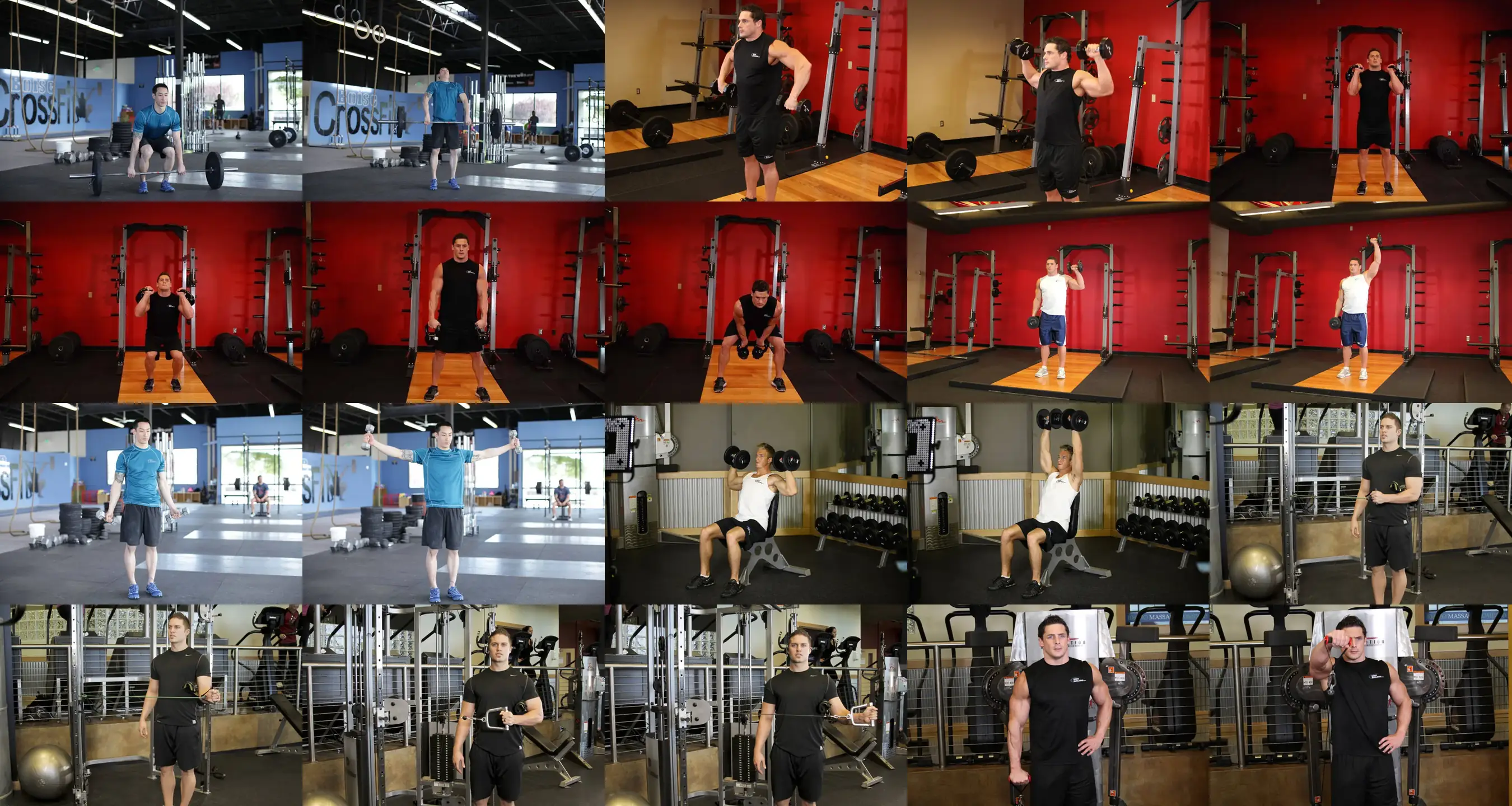
Hold two kettlebells in the rack position, elbows close to your body and handles diagonal across your palms, feet shoulder width apart. Choose a weight you can drive overhead with leg power for 8 to 12 reps without losing squat posture.
How to do the kettlebell thruster step by step
- With two kettlebells racked, stand with feet shoulder width apart and toes slightly turned out.
- Take a breath, brace your abs, and squat with a tall chest until your thighs are parallel or lower.
- Drive hard through the floor and, as your hips extend, use that momentum to press the bells overhead.
- Finish with arms locked out overhead, exhaling, with your body in a straight line.
- Bring the kettlebells back to the rack, absorbing with your legs, and flow into the next squat.
- Keep a smooth rhythm without losing depth or torso position.
Form cues
- Elbows in, chest up
- Drive up fast with your legs
- One smooth path
- Biceps by your ears at the top
Common mistakes
- Separating squat and press: you lose leg drive; press right as your hips extend.
- Letting the elbows drop in the squat: your torso tips forward; keep elbows under the bells.
- Squatting too shallow: you cut leg work; reach at least parallel.
- Arching your back overhead: lower back strain; squeeze your glutes at lockout.
How to make it easier or harder
As a regression, use one kettlebell held by the horns at your chest or split the front squat and push press. To progress, add weight, extend sets into timed intervals, or move to barbell thrusters.
Sets and reps for your goal
Power
4-6 x 2-5 · full rest3-6 sets of 1-5 reps with light or moderate loads (30-60% of your max on the main lifts), or with a ball or your bodyweight. Rest 2 to 3 minutes.
Every rep at the highest possible speed. As soon as you notice it moving slower (a 10-20% velocity loss), end the set. Train power fresh, never fatigued.
Endurance
2-4 x 15-25 or 30-60 s2-4 sets of 15-30 reps or 30-60 seconds at 40-60% of your max. Rest 30 to 60 seconds.
Steady pace and clean technique to the end. Circuits help you build volume with little rest.
A guide for healthy adults. Adjust the load to your level and see a professional if you have an injury.
Check your form
Film yourself from the side or ask someone to watch, then tick what you get right.
Frequently asked questions
What does the kettlebell thruster work?
It works the legs and glutes in the squat and the shoulders and triceps in the press, with the abs stabilizing throughout. Because it involves so many muscles at once, it raises your heart rate quickly and is popular for conditioning.
Are kettlebell or barbell thrusters better?
With kettlebells, each arm works independently, the rack position feels natural to many people, and they are easy to do at home. A barbell lets you load more weight. Both are valid depending on your equipment and goals.
Sports it suits
Gear for this exercise
- KettlebellStart with 12-16 kg (26-35 lb) for women or 16-24 kg (35-53 lb) for men.
As an Amazon Associate, Muscle Atlas earns from qualifying purchases.